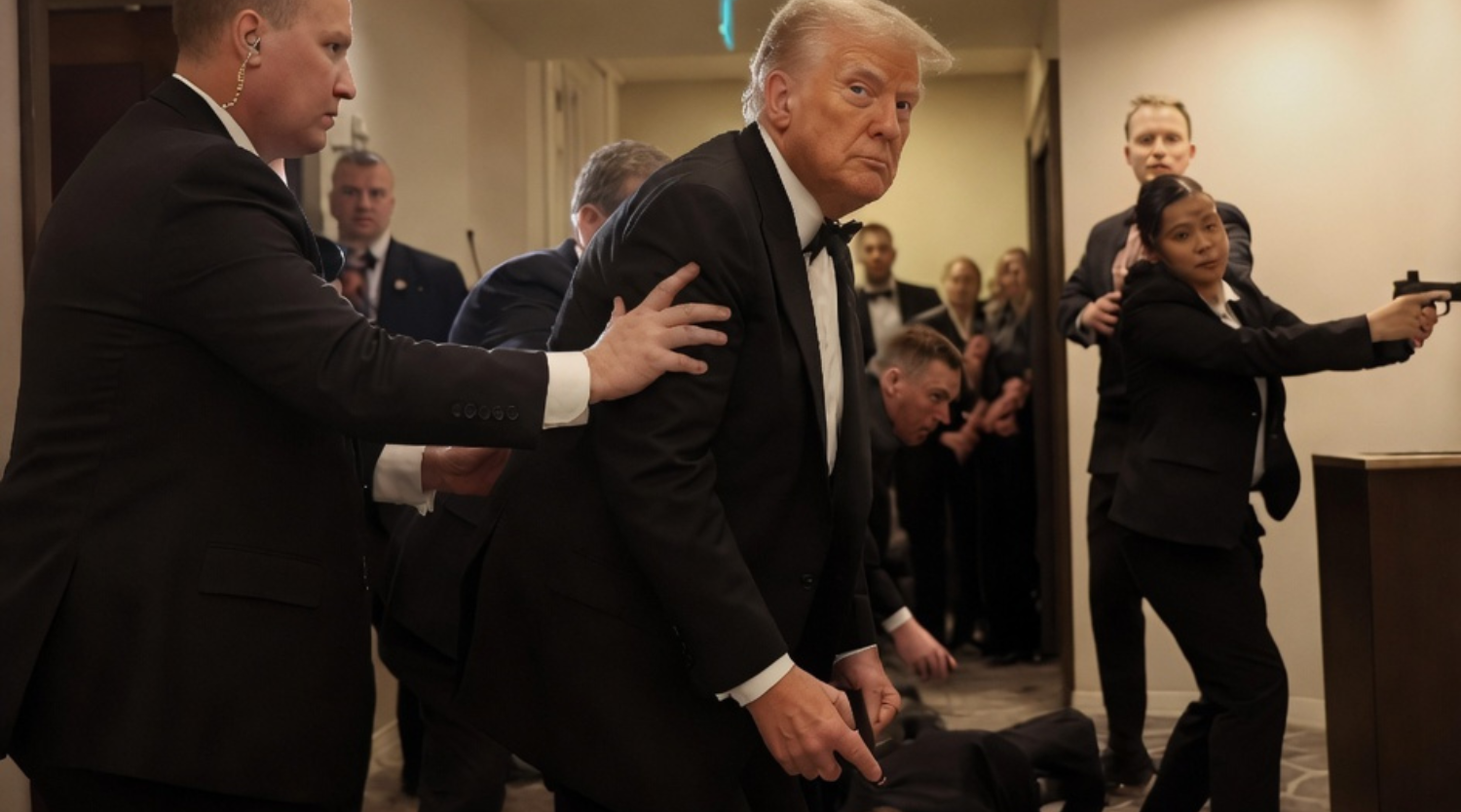
The prestigious White House Correspondents’ Association dinner, an annual fixture of high-society networking and political satire, was abruptly transformed into a scene of absolute chaos and terror on Saturday night. What was intended to be a celebration of the nation’s press corps at the Washington Hilton turned into a frantic emergency evacuation after a gunman opened fire just outside the main ballroom. The sudden eruption of violence forced the immediate and dramatic extraction of President Trump, the First Lady, and high-ranking administration figures, including White House Press Secretary Karoline Leavitt. The event, colloquially known as the “nerd prom,” saw a terrifying shift from celebratory toasts to a high-stakes security crisis, leaving the star-studded audience in a state of confusion and panic.
Law enforcement officials later identified the suspect as Cole Allen, a resident of California who was reportedly a guest at the hotel. According to evidence released by Interim DC Police Chief Jeffrey Carroll, Allen was apprehended in the lobby after charging toward a security checkpoint in a direct attempt to reach the President’s location. Photographic evidence from the scene depicted a shirtless Allen being pinned to the floor by Secret Service agents. The suspect was heavily armed, carrying a shotgun and multiple knives. During the violent confrontation, one Secret Service agent was shot at close range by what the President described as a “very powerful gun.” Fortunately, the agent survived the encounter with non-life-threatening injuries, thanks to the vital protection provided by a bulletproof vest. The intensity of this lobby confrontation highlighted the extreme danger posed to the attendees and the critical role of law enforcement in preventing a potential massacre inside the crowded ballroom. In the immediate aftermath, President Trump offered high praise for the rapid intervention of law enforcement, stating that the agents did a “fantastic job” and acted with incredible speed to neutralize the threat before the situation could escalate further. At a subsequent press briefing, he labeled the suspect a “sick person” and confirmed that authorities were already conducting a thorough search of Allen’s residence in California. Despite the trauma of the night, the President reflected on a surprising atmosphere of togetherness that emerged among the journalists and politicians present. He noted that the common danger unified the diverse group in a way he described as “very beautiful,” emphasizing a shared sense of resilience in defense of freedom of speech. While organizers initially sought to proceed with the night’s programming, the gravity of the security breach led to the official cancellation of the event by 9:45 p.m. President Trump indicated that he had “fought like hell” to continue the dinner, as he was prepared to deliver a sharp critique of the media. Ultimately, the decision was made to reschedule the gala within the next 30 days. This incident stands as one of the most significant security failures at a high-profile political gathering in Washington, D.C. history, prompting an urgent and comprehensive review of safety protocols at the Washington Hilton. The breach has sparked a national conversation regarding the safety of public officials and the press in an increasingly volatile climate, ensuring that future security measures will be under intense scrutiny.