President Donald Trump, Vice President JD Vance, Secretary of State Marco Rubio and other top administration officials are finalizing key elements of a potential agreement aimed at ending the ongoing conflict with Iran, with the secure reopening of the strategically vital Strait of Hormuz at the center of negotiations.
“The straits have to be open, they’re going to be open,” Trump declared during a recent trip to India. “What’s happening there is unlawful, it’s illegal, it’s unsustainable for the world, it’s unacceptable.”
Secretary Rubio confirmed Monday that active talks were taking place in Qatar. “There were some talks going on in Qatar today, so we’ll see if we can make progress,” he said. Rubio emphasized that President Trump is determined to secure either a strong, enforceable deal or no agreement at all. “He’s either going to make a good deal or no deal,” Rubio added.
The diplomatic efforts come amid recent military developments. U.S. Central Command carried out what it described as “self-defense strikes” in southern Iran on Monday, targeting missile launch sites and Iranian boats attempting to place mines in the region. The operations were intended to protect American troops from direct threats posed by Iranian forces, according to Capt. Tim Hawkins, a CENTCOM spokesperson.
The strikes occurred near the Iranian port and naval base at Bandar Abbas. At the time, dozens of American warplanes and nearly two dozen Navy warships — including two aircraft carriers and their escort vessels — were enforcing a blockade against vessels trying to enter or exit Iranian ports in the Gulf of Oman and Arabian Sea. Several U.S. ships reportedly faced threats from Iranian surface-to-air missiles. CENTCOM officials stressed that U.S. forces continue to exercise restraint while defending themselves during the fragile cease-fire period.
Iran Acknowledges Progress but Urges Caution
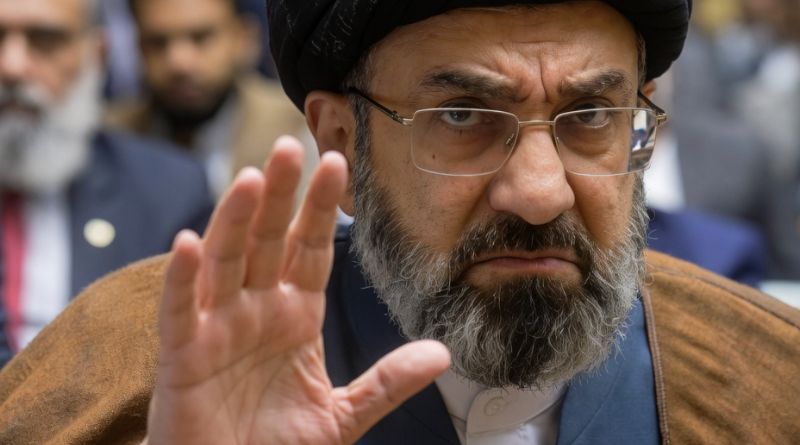
Iranian officials stated Monday that Tehran and Washington have reached understandings on numerous issues during the negotiations, yet warned against expectations of an imminent final agreement. One spokesman accused the U.S. side of shifting positions at times and emphasized that “to say that this means the signing of an agreement is imminent — no one can make such a claim.”
Under the emerging framework, Iran would reopen the Strait of Hormuz in exchange for the United States lifting its naval blockade of the waterway. The strait, through which roughly one-fifth of global oil supplies pass, has been a flashpoint in the conflict.
President Trump has repeatedly vowed that any deal with Iran must be “good and proper,” drawing sharp contrasts with the Obama administration’s 2015 nuclear agreement. He has criticized that deal for delivering “massive amounts of CASH” to Iran while paving “a clear and open path to a Nuclear Weapon.”
Administration sources say the current talks are progressing constructively, with most parties aligned on the basic principles. Officials expressed satisfaction with the trajectory, noting that Iran appears more willing to compromise following recent U.S. military actions. “The source said that most people agree on the basic ideas, and the Trump administration is pleased with how things are going, even though they are still working on finishing up the specifics,” one official familiar with the discussions told reporters.
A senior U.S. official highlighted that enforcement mechanisms will be critical, regardless of whether commitments extend 20 or 30 years. The administration believes the prospective agreement could surpass the 2015 deal by imposing stricter limits on enrichment activities and establishing more robust verification measures.
Work continues on bridging remaining gaps, particularly on long-term compliance and regional security guarantees. While challenges remain, the combination of sustained military pressure and active diplomacy has created what officials describe as the most promising opening in years for a durable resolution to the Iran conflict.