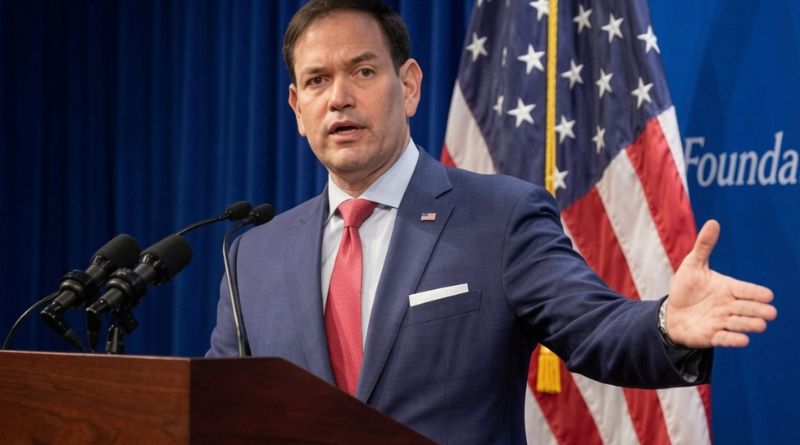
In a significant escalation of the Trump administration’s crackdown on individuals linked to adversarial foreign regimes, Secretary of State Marco Rubio announced the arrest of Adys Lastres Morera, the sister of a high-ranking Cuban military official, following the revocation of her U.S. permanent resident status.
Federal authorities took Lastres Morera into custody in Florida last week. She is now in the custody of U.S. Immigration and Customs Enforcement (ICE) pending deportation proceedings. Rubio, who is of Cuban descent, personally determined that her presence in the United States posed a threat to American foreign policy interests due to her familial ties to Cuba’s repressive communist regime.
Lastres Morera entered the United States as a lawful permanent resident on January 13, 2023, during the Biden administration. According to Rubio and ICE officials, she was managing real estate assets in Florida while allegedly aiding Havana’s communist regime.
Her sister, Ania Guillermina Lastres Morera, serves as the Executive President of Grupo de Administración Empresarial S.A. (GAESA), a sprawling military-controlled conglomerate that dominates key sectors of Cuba’s economy. GAESA is accused of controlling approximately 70 percent of the island’s economic activity, including tourism, remittances, and the export of Cuban medical professionals. These operations generate substantial revenue that primarily benefits regime elites rather than the Cuban people, who continue to endure severe economic hardship.
Rubio detailed the case in a statement and on X, formerly Twitter. “Adys Lastres Morera is the sister of the Executive President of GAESA, the Cuban military-controlled financial conglomerate that steals millions in aid for the Cuban people at the behest of the regime,” he posted. “Morera was managing real estate assets and living in Florida, while also aiding Havana’s communist regime, until I terminated her permanent resident status.”
In a broader policy declaration, Rubio stated: “For far too long, the family members of terrorist organizations, repressive anti-American regimes, and other bad actors who would threaten the national security of the United States have been given a free pass to enjoy the privileges of living in the United States.”
He continued, “Past Administrations have permitted the families of Cuban military elites, Iranian terrorists, and other reprehensible organizations to enjoy lavish lifestyles in our country funded by stolen blood-money, while the people they repress at home suffer in increasingly dire circumstances. No longer. Under President Trump, we are removing from our country the family members of IRGC terrorists and Cuban regime elites.”
Rubio emphasized the administration’s firm stance: “Let me be very clear: if you threaten the national security of the United States, there will be nowhere on this earth — much less in our country — that you and your cronies can live lavishly. We will find you, and we will hold you accountable.”
ICE Homeland Security Investigations (HSI) echoed this position. Acting Executive Associate Director John Condon said Lastres Morera’s presence “has potentially serious adverse foreign policy consequences for our nation,” and that Secretary Rubio determined she is removable under Section 237(a)(4)(C) of the Immigration and Nationality Act.
“Allowing Lastres Morera to remain in the country would send a signal that Cuban regime-affiliated networks could continue to access the U.S.’s financial, educational and social institutions — but that is not the case,” Condon added. “HSI will continue to investigate those with ties to our nation’s adversaries and take appropriate actions to neutralize threats against our homeland.”
GAESA is believed to hold as much as $20 billion in illicit funds concealed in overseas bank accounts. The conglomerate operates as the financial engine of the Cuban regime, channeling profits from tourism, remittances, and the widely criticized Cuban doctor program directly to military and communist party insiders.
This action represents a notable use of executive authority to revoke lawful permanent resident status based on foreign policy considerations. Legal observers note that such determinations rest with the Secretary of State under provisions of immigration law, though family members of the arrested woman have expressed concerns about the process.
The move aligns with the Trump administration’s renewed focus on maximum pressure against the Cuban regime, including sanctions on GAESA and its leadership. It signals a shift from previous policies perceived as more lenient toward regime-linked individuals residing in the U.S.
As deportation proceedings advance, the case underscores ongoing U.S. efforts to disrupt financial networks supporting adversarial governments and to prioritize national security in immigration enforcement. Officials indicate similar actions against other regime affiliates may follow.