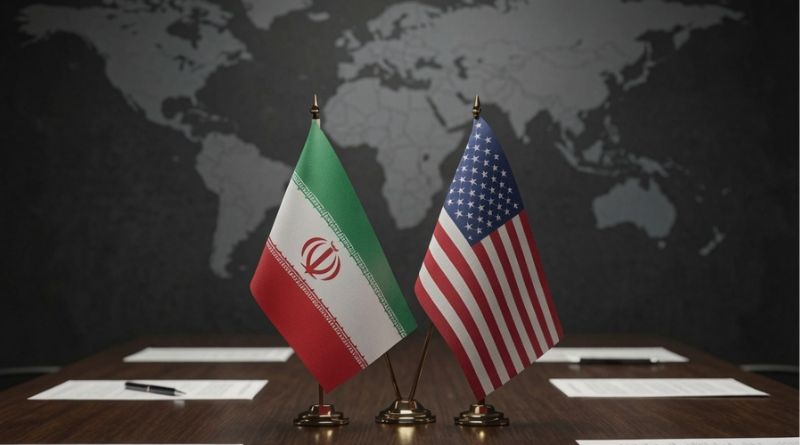
President Donald Trump announced Sunday that the United States and Iran have reached a significant memorandum of understanding to formally end months of conflict, marking a major diplomatic breakthrough in the Middle East.
The announcement came ahead of a scheduled White House UFC event, with Trump declaring the deal complete via his Truth Social platform. Iran’s Supreme National Security Council simultaneously confirmed the agreement, stating that Tehran and Washington had finalized terms aimed at de-escalating tensions that had escalated over the past year.
According to the council’s statement, all military operations across multiple theaters — including those involving Iranian-backed forces in Lebanon — will cease “immediately and permanently” beginning Sunday night. In a reciprocal move, the United States will fully lift its naval blockade of Iran, effective immediately, Iranian state-affiliated media and Iran International reported.
The initial framework establishes a phased approach to peace. Both sides must first fulfill commitments outlined in the memorandum before broader negotiations commence. Those talks, expected to focus heavily on Iran’s nuclear program and the contours of a long-term comprehensive agreement, are slated to begin after the memorandum’s formal signing on June 19. The process includes a 60-day negotiating window.
Iranian officials expressed gratitude to Pakistan and Qatar for their mediation efforts, which helped facilitate the indirect talks between the longstanding adversaries.
“The Deal with the Islamic Republic of Iran is now complete. Congratulations to all!” Trump posted on Truth Social. He followed up with operational directives: “I hereby fully authorize the toll free opening of the Strait of Hormuz, and, simultaneously herewith, authorize the immediate removal of the United States Naval blockade. Ships of the World, start your engines. Let the oil flow!”
In additional posts, the president framed the agreement as a historic achievement. “This Great Deal will bring Peace and Security to the whole Region. Many presidents have tried to make Peace with Iran, and all have failed before me,” he wrote. Trump highlighted that regional leaders have, “for the first time, found a President who can help them achieve real Peace.” He also noted that oil flows would resume on both ends of the Strait following mine removal operations tied to the signing.
The development drew positive reactions from key international figures. German Chancellor Friedrich Merz welcomed the pact on X, stating, “I welcome the agreement between the U.S. and Iran and congratulate President Trump and the Iranian side on this diplomatic breakthrough. This can pave the way for a reinvigorated global economy and a more secure Middle East. It is crucial to implement it with determination.”
U.S. Ambassador Michael Waltz echoed the optimism, praising Trump’s approach. “The President has put our country first and negotiated a peace deal that will keep us safe and prevent Iran from ever getting a nuclear weapon,” Waltz said. He added that the administration “maximized our leverage, limited casualties and brought credible military force to ensure the best possible outcome.” Waltz concluded with a personal note: “This is one hell of a way to celebrate a birthday. Congratulations, Mr. President.”
Financial markets reacted swiftly to the reduced geopolitical risk. On Monday, oil prices tumbled to their lowest levels since March. Brent crude futures fell $3.58, or 4.1 percent, to $83.75 per barrel by early trading, while U.S. West Texas Intermediate crude dropped $4.01, or 4.7 percent, to $80.87 per barrel, according to Reuters. The declines built on a more than 3 percent selloff the previous Friday as traders anticipated eased tensions and restored shipping through the critical Strait of Hormuz.
The initial agreement represents a notable de-escalation after prolonged indirect negotiations. While implementation of the ceasefire and blockade lift will be closely watched, analysts caution that the true test lies in the upcoming comprehensive talks addressing Iran’s nuclear ambitions and regional security concerns. For now, the deal offers a tentative step toward stability in a region long plagued by conflict, with potential ripple effects for global energy markets and international diplomacy.