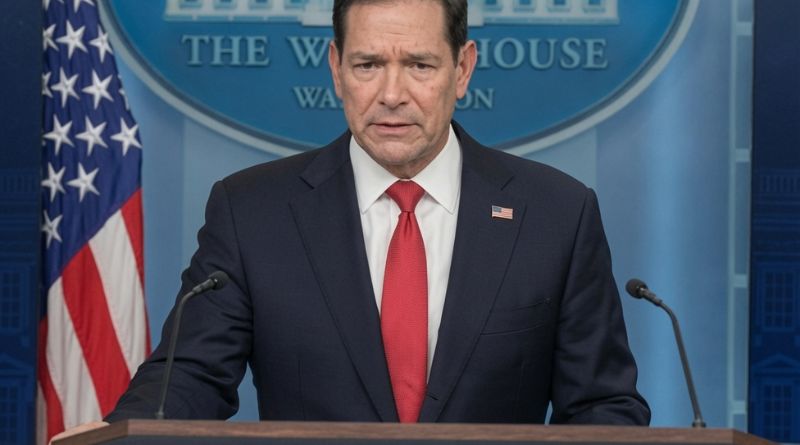
The Trump administration has escalated its campaign against Cuba’s long-standing communist regime, with Secretary of State Marco Rubio announcing the arrest and impending deportation of Adys Lastres Morera, a Florida resident with alleged ties to Cuban military and government elites.
Lastres Morera, the sister of sanctioned Cuban official Ania Guillermina Lastres, was taken into custody by federal authorities in Florida last week. She entered the United States as a lawful permanent resident on January 13, 2023, during the Biden administration. Rubio personally revoked her green card, determining that her presence posed a threat to U.S. foreign policy and national security interests due to connections with the Cuban regime and its military-controlled business conglomerate, GAESA.
In a strongly worded statement, Rubio emphasized a policy shift under President Trump. “For far too long, the family members of terrorist organizations, repressive anti-American regimes, and other bad actors who would threaten the national security of the United States have been given a free pass to enjoy the privileges of living in the United States,” he said. “Past Administrations have permitted the families of Cuban military elites, Iranian terrorists, and other reprehensible organizations to enjoy lavish lifestyles in our country funded by stolen blood-money, while the people they repress at home suffer in increasingly dire circumstances.”
“No longer,” Rubio continued. “Under President Trump, we are removing from our country the family members of IRGC terrorists and Cuban regime elites.”
The move is part of a broader hemispheric strategy dubbed the “Donroe Doctrine,” reflecting the administration’s laser focus on the Americas. Rubio, a Florida Republican of Cuban descent and former senator, has played a central role in shaping U.S. policy toward Cuba, drawing on both his personal heritage and deep foreign policy experience.
Additional recent actions underscore the administration’s determination. The U.S. has moved to disrupt Venezuelan oil shipments to Cuba, a critical lifeline for the island’s energy needs. Last week, the Justice Department also unsealed an indictment against Raúl Castro, the brother of the late Fidel Castro and a longtime pillar of the regime.
Cuba has been governed by the Communist Party since Fidel Castro’s revolution in 1959, nearly 70 years ago. The regime has faced persistent economic hardship, political repression, and international isolation, with millions of Cubans fleeing to the United States over the decades. Supporters of the Trump approach argue that targeted sanctions, immigration enforcement, and diplomatic pressure can finally undermine the entrenched power structure.
Critics, however, caution that such measures could exacerbate humanitarian challenges on the island without guaranteeing regime change. Administration officials counter that decades of engagement and eased restrictions under previous administrations failed to produce meaningful reform.
For President Trump, successfully confronting Cuba’s dictatorship — alongside other foreign policy initiatives — would represent a major legacy achievement. Rubio’s stewardship of these efforts has positioned him as one of the administration’s most influential figures on Latin American affairs.
As deportation proceedings against Lastres Morera advance, the case serves as a tangible signal of the Trump administration’s commitment to a harder line against adversaries in the Western Hemisphere.