President Donald Trump declared that Iran “must now agree to end this war” after the United States carried out precision strikes on three major Iranian nuclear facilities, inserting American forces directly into the escalating conflict between Israel and Iran. The operation, which targeted the Fordow, Natanz, and Isfahan sites, has drawn sharp international reactions ranging from strong condemnation to calls for de-escalation and diplomatic engagement.
In a Truth Social post announcing the strikes’ completion, Trump stated that U.S. forces had successfully hit the primary targets, with all aircraft safely returning. “IRAN MUST NOW AGREE TO END THIS WAR,” he wrote, signaling that the action was intended to force Tehran toward negotiations on more favorable terms. The strikes represent the first direct U.S. military attack on Iranian soil in this phase of hostilities and mark a significant escalation in a region already on edge.
Iranian officials responded defiantly. Foreign Minister Abbas Araghchi described the events as “outrageous” with “everlasting consequences.” In a statement on X, he asserted that Iran “reserves all options” under the UN Charter’s self-defense provisions to protect its sovereignty, interests, and people. Araghchi specifically condemned the targeting of what he called Iran’s “peaceful nuclear installations” as a “grave violation of the UN Charter, international law, and the Nuclear Non-Proliferation Treaty (NPT).”
Israeli Prime Minister Benjamin Netanyahu offered strong support. Speaking shortly after the strikes, Netanyahu hailed Trump’s “bold decision” as one that “will change history.” He invoked the shared mantra of “peace through strength,” stating, “First comes strength, then comes peace. And tonight, Donald Trump and the United States acted with a lot of strength.” The comments underscored the close coordination between the two allies.
Major Powers Express Alarm and Call for Calm
China issued one of the firmest rebukes among global powers. The Chinese Foreign Ministry strongly condemned the U.S. attack on Iranian nuclear facilities monitored by the International Atomic Energy Agency (IAEA). In a statement, Beijing said the move “seriously violates the United Nations Charter and worsens tensions in the Middle East.” Chinese officials urged all parties, particularly Israel, to immediately cease attacks and return to dialogue and negotiations.
Russia’s Dmitry Medvedev, a senior security official and former president, took a more pointed tone. In a Telegram post, he questioned the prospects of Trump receiving a Nobel Peace Prize despite a recent nomination, arguing that the U.S. leader, who entered office as a peacemaker, had instead “started a new war for the United States.”
In Europe, reactions emphasized the need for restraint. The European Union’s chief diplomat, Kaja Kallas, called on “all sides to step back, return to the negotiating table and prevent further escalation,” while reiterating that Iran must not be allowed to develop nuclear weapons. EU foreign ministers were scheduled to discuss the developments on Monday. UK Prime Minister Keir Starmer described the Middle East situation as “volatile” and made stability a priority, urging Tehran to resume negotiations for a diplomatic solution. The UK, France, and Germany had been engaged in recent efforts to de-escalate tensions with Iran.
Iran’s Araghchi pushed back against Western calls, stating in response to Britain and the EU: “It is Iran which must ‘return’ to the table. But how can Iran return to something it never left, let alone blew up?”
Regional Allies and Neighbors Voice Concern
Within the Middle East, reactions reflected a complex web of alliances and rivalries. Saudi Arabia, a key U.S. partner that only revived diplomatic relations with Iran in March 2023 after a seven-year rift, said it was following developments in “sisterly” Iran with “great concern.” Yemen’s Iran-backed Houthi militants denounced the U.S. “blatant aggression” in a statement carried by the Yemeni News Agency. Lebanon’s presidency, noting Hezbollah’s Iranian ties and ongoing exchanges with Israel, warned that the bombing of nuclear facilities could threaten security and stability across multiple regions and urged all parties to exercise restraint.
Latin American and Asian Voices
Several Latin American nations issued strong condemnations. The Bolivarian Republic of Venezuela “firmly and categorically” denounced the U.S. strikes, carried out “at the request of the State of Israel,” against the Fordow, Natanz, and Isfahan complexes. Cuba’s President Miguel Díaz-Canel condemned the attacks on X, calling them a “dangerous escalation” that violates the UN Charter and international law, plunging humanity into a crisis with “irreversible consequences.”
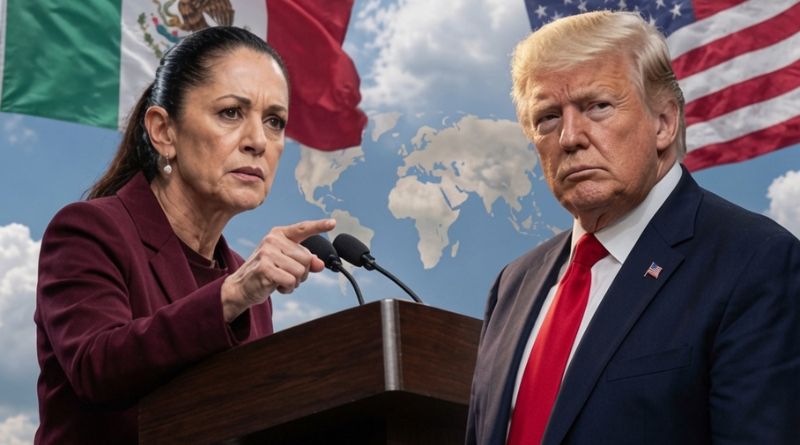
Mexico’s Ministry of Foreign Affairs called for “diplomatic dialogue for peace” between the involved parties. In line with its constitutional principles and pacifist foreign policy tradition, Mexico reiterated the need to de-escalate tensions and restore peaceful coexistence in the region as the highest priority.
In Asia, Japan’s Prime Minister Shigeru Ishiba told reporters it was “paramount to calm the situation down soon.” While stressing that “Iran’s nuclear development must be blocked,” he stopped short of fully endorsing the U.S. action and noted that his government would fully discuss the developments. South Korea’s National Security Council convened an emergency meeting, with presidential advisor Wi Sung-lac directing ministries to minimize the impact of the events in the Middle East.
Australia, while acknowledging threats posed by Iran’s nuclear and ballistic missile programs, called for de-escalation. A government spokesperson noted the U.S. President’s statement that “now is the time for peace” and emphasized dialogue and diplomacy amid a “highly volatile” security situation.
UN, Religious Leaders Warn of Catastrophic Risks
United Nations Secretary-General Antonio Guterres expressed deep concern, stating that the U.S. strikes represent a “dangerous escalation in an already volatile region” and pose a “serious threat to global peace and security.” He warned of the growing risk that the conflict could “rapidly get out of control – with catastrophic consequences for civilians, the region, and the world.” Guterres stressed, “There is no military solution. The only path forward is diplomacy. The only hope is peace.”
Pope Leo addressed the issue during his weekly prayer, urging the international community to avoid war that risks opening an “irreparable abyss.” He said every member of the international community has a “moral responsibility to stop the tragedy of war before it becomes an irreparable abyss.” The pontiff added: “No armed victory can compensate for the pain of mothers, the fear of children, the stolen future. Let diplomacy silence the weapons, let nations chart their future with peace efforts, not with violence and bloody conflicts.”
Broader Context and Implications
The U.S. strikes come amid heightened tensions in the Israel-Iran conflict. According to U.S. officials, the operation involved significant air and naval assets, targeting facilities central to Iran’s nuclear program. Trump has claimed the sites were “completely and totally obliterated,” though independent assessments of damage are ongoing. Iran’s Atomic Energy Organization confirmed the attacks but insisted its work would continue.
Analysts note that the action raises critical questions about international law, non-proliferation norms, and the risk of wider war. Supporters argue the strikes were necessary to prevent Iran from acquiring nuclear weapons capability, while critics contend they undermine diplomatic efforts and could provoke retaliatory actions across the region, including through proxy groups like Hezbollah and the Houthis.
The involvement of the United States shifts the dynamics significantly. While Israel has conducted operations against Iranian targets, direct U.S. participation marks a new phase. Trump has warned of further strikes if Iran retaliates, stating there are “many targets left” and that additional action would come with “precision, speed and skill.”
As reactions continue to pour in, markets, energy prices, and global diplomacy are expected to feel the ripple effects. Oil markets, already sensitive to Middle East instability, are being closely watched, as is the potential for disruptions in key shipping routes.
Diplomats and officials worldwide are now focused on preventing further escalation. Calls for a return to negotiations dominate statements from Europe, Asia, and Latin America, even as key players like Israel and the United States emphasize strength as a prerequisite for peace. Iran, for its part, maintains its right to respond while signaling openness to diplomacy on its own terms.
The coming days will test whether the strikes achieve their stated goal of forcing a settlement or instead ignite a broader confrontation with far-reaching consequences for global security, energy markets, and international relations. As one senior UN official noted, the stakes could not be higher for civilians caught in the crossfire and for the stability of an already fragile region.