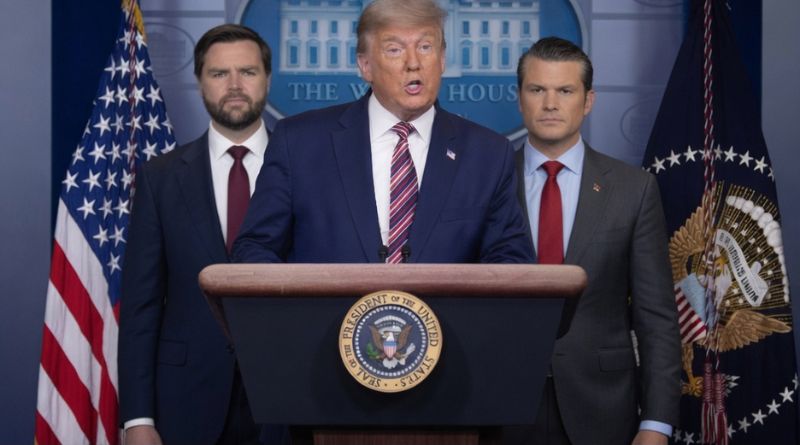
President Donald Trump confirmed on July 9, 2026, that Iranian officials had contacted the United States expressing interest in a new agreement, but he expressed deep skepticism about the regime’s trustworthiness and its history of compliance.
“They want a deal. Badly,” Trump said, according to reports from aboard Air Force One after the NATO summit. However, he added: “I just don’t know if they’re worthy of making a deal. I don’t know that they’re going to honor the deal. That’s the problem.” The president noted that Iran “has very little left” following U.S. military actions but questioned whether further talks would yield lasting results.
The remarks come amid a fragile ceasefire and renewed hostilities. An interim memorandum of understanding (MOU) signed remotely in mid-June between the U.S. and Iran had aimed to halt fighting across multiple fronts—including Lebanon—reopen the Strait of Hormuz to unrestricted commercial shipping, and lay groundwork for broader nuclear negotiations. Trump initially hailed the agreement as a significant step toward regional stability.
Implementation challenges quickly emerged. Iran has been accused of restricting passage to certain vessels and routes under Islamic Revolutionary Guard Corps (IRGC) influence, while attacks on commercial tankers in the strait prompted U.S. retaliation. In recent days, U.S. Central Command reported strikes on more than 80 Iranian targets, including coastal radar, anti-ship missiles, command networks, and IRGC fast-attack craft. Iran responded with strikes on U.S.-affiliated sites in Bahrain and Kuwait.
Oil tanker traffic through the vital waterway, which carries about one-fifth of global oil supplies, has been severely disrupted, with many vessels turning back or rerouting amid heightened risks.
Historical Pattern and Policy Debate
The current cycle echoes decades of U.S.-Iran tensions. Since the 1979 Islamic Revolution, relations have been marked by periods of confrontation, sanctions, limited diplomacy, and accusations of Iranian support for proxy groups across the Middle East. Past agreements, including the 2015 Joint Comprehensive Plan of Action (JCPOA) from which Trump withdrew in 2018, have been criticized by opponents as temporary respites that allowed Iran to advance its nuclear and regional activities. Proponents of diplomacy counter that sustained engagement with robust verification offers the best path to preventing nuclear proliferation without wider war.
Trump’s administration has emphasized military pressure as a tool to force concessions, arguing that recent strikes have left Iran in a weakened position. “We can knock down their bridges… We can knock out their energy supply,” he has said in prior comments. Iranian officials, meanwhile, have rejected threats and asserted sovereignty over the strait while signaling openness to talks on their terms.
As the situation evolves, questions remain about the future of negotiations. U.S. officials have indicated willingness to continue talks toward a “great and meaningful” final deal, but only if Iran demonstrates verifiable compliance on nuclear issues, shipping security, and de-escalation. Analysts warn that repeated cycles of escalation and temporary pauses risk entrenching instability in a region critical to global energy markets.