World Leaders React to U.S. Strikes on Iranian Nuclear Facilities
President Donald Trump announced on Saturday that the United States had carried out a “very successful attack” on three key Iranian nuclear sites, including the heavily fortified Fordow facility. In a post on Truth Social, Trump hailed the operation as “an HISTORIC MOMENT FOR THE UNITED STATES OF AMERICA, ISRAEL, AND THE WORLD,” declaring that “IRAN MUST NOW AGREE TO END THIS WAR.” The strikes, which targeted nuclear installations at Fordow, Natanz, and Isfahan, have drawn swift and sharply divided reactions from governments and international organizations worldwide, underscoring deep divisions over the use of military force against Iran’s nuclear program.
The announcement marks a significant escalation in longstanding tensions between the United States, its allies, and Iran. Trump’s administration has framed the operation as a necessary step to neutralize what it describes as a critical threat to regional and global security. However, many nations have condemned the action as a dangerous breach of international norms, raising fears of broader conflict in an already volatile Middle East.
Iran Vows Strong Response
Iran’s response was immediate and uncompromising. Foreign Minister Abbas Araghchi stated on X that his nation “reserves all options” in responding to the attack. “The events this morning are outrageous and will have everlasting consequences,” Araghchi said. He described the strikes on Iran’s “peaceful nuclear installations” as “a grave violation of the UN Charter, international law and the NPT,” referring to the Nuclear Non-Proliferation Treaty.
Araghchi further argued that the attacks by a permanent member of the UN Security Council set a dangerous precedent. He called on all UN members to recognize the “extremely dangerous, lawless and criminal behavior” and affirmed Iran’s right to self-defense under the UN Charter. Iranian officials have maintained that the facilities were civilian in nature and essential for the country’s energy needs, rejecting claims that they were part of a weapons program. This stance has been consistent in Tehran’s public diplomacy, even as Western intelligence agencies and Israel have long expressed concerns about Iran’s nuclear ambitions.
Israel Praises ‘Bold Decision’
In contrast, Israeli Prime Minister Benjamin Netanyahu offered strong support. Speaking minutes after the strikes, Netanyahu said Trump’s action “will change history.” He invoked a shared mantra with the U.S. president: “Peace through strength. First comes strength, then comes peace.” Netanyahu credited Trump and the United States with acting decisively, stating, “Tonight, Donald Trump and the United States acted with a lot of strength.”
The Israeli leader’s endorsement reflects the close security partnership between the two countries. Israel has viewed Iran’s nuclear program as an existential threat and has conducted its own operations against Iranian targets in the past. Netanyahu’s remarks signal alignment with the U.S. approach, potentially opening the door for further coordinated efforts if Iran chooses retaliation.
China Condemns Violation of International Law
China issued a firm rebuke on Sunday. The Chinese foreign ministry strongly condemned the U.S. attack on Iranian nuclear facilities under International Atomic Energy Agency (IAEA) supervision. In a statement posted on its website, Beijing said the move “seriously violates the United Nations Charter and worsens tensions in the Middle East.”
China urged all parties, particularly Israel, to immediately cease attacks and return to dialogue and negotiations. As a major power with significant economic ties to Iran and a permanent UN Security Council member, China’s position carries substantial weight. Beijing has historically advocated for diplomatic solutions to the Iranian nuclear issue, including support for the 2015 Joint Comprehensive Plan of Action (JCPOA), from which the U.S. withdrew during Trump’s first term.
UN Chief Warns of Catastrophic Risks
United Nations Secretary-General António Guterres expressed grave concern, describing the strikes as a “dangerous escalation in an already volatile region” that poses a “serious threat to global peace and security.” In a statement reported by Reuters, Guterres highlighted the growing risk that the conflict could “rapidly get out of control—with catastrophic consequences for civilians, the region, and the world.”
“There is a growing risk that this conflict could rapidly get out of control,” he reiterated. “At this perilous hour, it is critical to avoid a spiral of chaos. There is no military solution. The only path forward is diplomacy. The only hope is peace.” Guterres’ comments reflect the UN’s longstanding role in mediating Middle East disputes and its emphasis on multilateralism amid unilateral military actions.
European Calls for Restraint
The European Union’s chief diplomat, Kaja Kallas, urged “all sides to step back, return to the negotiating table and prevent further escalation.” She stressed that Iran must not be permitted to develop a nuclear weapon. EU foreign ministers are scheduled to discuss the developments on Monday.
In the United Kingdom, Prime Minister Keir Starmer acknowledged the volatile situation in the Middle East, prioritizing regional stability. Starmer called on Tehran to resume negotiations and pursue a diplomatic solution. The UK, along with France and Germany—the so-called E3—has recently engaged in efforts to de-escalate tensions through rapprochement with Iran.
Iranian Foreign Minister Araghchi responded pointedly to Western appeals, stating that it is Iran which is being asked to “return” to the table despite never having left it. This exchange highlights ongoing disputes over responsibility for the breakdown in talks.
Regional Reactions in the Middle East
Saudi Arabia, a key U.S. ally that restored relations with Iran in March 2023 after a seven-year rift, expressed “great concern” while monitoring developments in “sisterly” Iran. The statement reflects Riyadh’s delicate balancing act: maintaining its partnership with Washington while avoiding further destabilization that could affect oil markets and regional security.
Yemen’s Iran-backed Houthi militants denounced the U.S. “blatant aggression” in a statement carried by the Yemeni News Agency. Lebanon’s presidency, noting the influence of Hezbollah—which receives Iranian support—warned that the bombing of nuclear facilities could escalate tensions threatening security across multiple regions. It too called for restraint.
Voices from Asia and the Americas
Japan’s Prime Minister Shigeru Ishiba told reporters it is “paramount to calm the situation down soon.” While emphasizing that “Iran’s nuclear development must be blocked,” Ishiba stopped short of fully endorsing the U.S. action and said his government would thoroughly discuss the matter. Japan, with its strong alliance to the U.S. and history of nuclear sensitivity, occupies a nuanced position.
In Latin America, reactions were largely critical. Venezuela’s Foreign Minister Yvan Gil condemned the strikes on Telegram, demanding an immediate cessation of hostilities and framing them as aggression requested by Israel. Cuba’s President Miguel Díaz-Canel echoed this on X, calling the bombing a violation of the UN Charter with potentially irreversible global consequences.
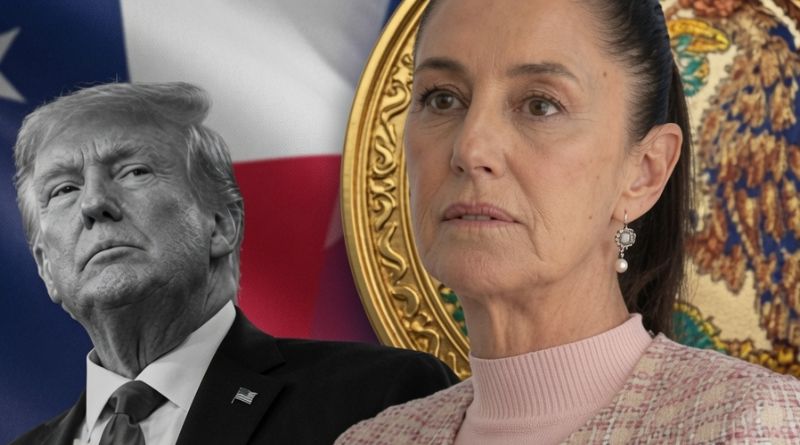
Mexico’s Ministry of Foreign Affairs posted on X, urgently calling for “diplomatic dialogue for peace” in line with its constitutional pacifist principles. It reiterated the priority of restoring peaceful coexistence in the region.
Australia advocated de-escalation, dialogue, and diplomacy. While acknowledging Iran’s nuclear and missile programs as threats to international security, Canberra noted Trump’s call for peace and stressed the volatile regional situation.
South Korea convened its National Security Council on Sunday. Advisor Wi Sung-lac urged relevant ministries to minimize the impact of developments in the Middle East, according to a presidential spokesperson.
Moral Appeal from the Vatican
Pope Leo addressed the international community during his weekly prayer, urging efforts to avoid war that risks opening an “irreparable abyss.” “Every member of the international community has a moral responsibility: to stop the tragedy of war before it becomes an irreparable abyss,” he said. The pontiff added, “No armed victory can compensate for the pain of mothers, the fear of children, the stolen future. Let diplomacy silence the weapons, let nations chart their future with peace efforts, not with violence and bloody conflicts.”
Russia’s Dmitry Medvedev, a senior security official and former president, questioned the prospects for Trump receiving a Nobel Peace Prize, suggesting the leader who entered office as a peacemaker had instead initiated a new war for the United States.
Broader Implications and Outlook
The global reactions reveal a fractured international landscape. Supporters view the strikes as a decisive measure against nuclear proliferation, while critics see them as undermining the rules-based international order and risking wider war. Economically, the strikes could affect global energy markets, with potential disruptions to oil supplies from the Persian Gulf. Diplomatically, they complicate ongoing efforts to revive nuclear negotiations.
As leaders continue to weigh their positions, the coming days will be critical. EU discussions, UN deliberations, and bilateral engagements may shape whether the conflict de-escalates or expands. For now, the world watches closely as Iran considers its response and major powers seek to influence the trajectory toward either renewed diplomacy or further confrontation.