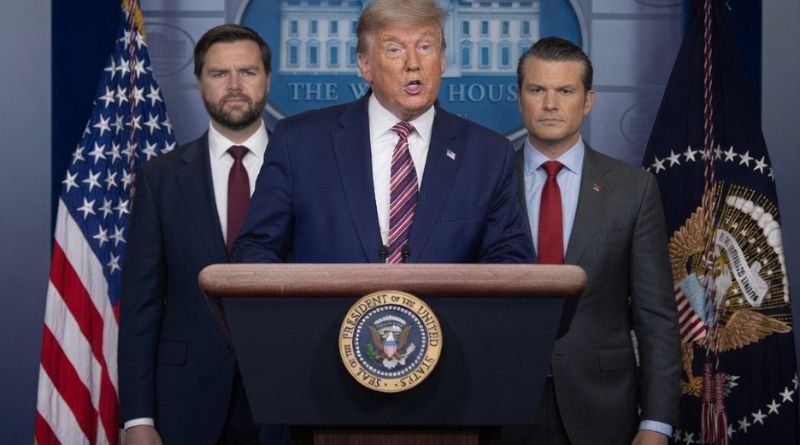
President Donald Trump disclosed that Iranian officials have reached out to the United States seeking negotiations, describing the contact as evidence that recent American strikes have significantly weakened Tehran’s position. The development marks a potential turning point in the long-running standoff between the two nations, though Trump voiced strong doubts about Iran’s reliability as a negotiating partner.
“I just don’t know if they’re worthy of making a deal. I don’t know that they’re going to honor the deal. That’s the problem,” Trump said, reflecting deep skepticism rooted in decades of fractured diplomacy. The comments come after U.S. strikes targeted Iranian military infrastructure, nuclear-related sites, and assets linked to the Islamic Revolutionary Guard Corps (IRGC). Administration officials claim the operations have left Iran with “very little left” in terms of immediate offensive capacity, forcing the regime to seek relief.
The outreach follows a familiar cycle in U.S.-Iran relations that has persisted since the 1979 Iranian Revolution. For years, Iran has supported proxy militias across the Middle East, including Hezbollah in Lebanon, while advancing its nuclear program and periodically threatening commercial shipping through the Strait of Hormuz — a critical chokepoint for global oil supplies. Previous American administrations have alternated between sanctions, diplomatic agreements, and limited military responses, often resulting in temporary pauses rather than lasting resolutions.
A recently negotiated memorandum of understanding had raised hopes for de-escalation. Under its terms, Iran reportedly agreed to reopen the Strait of Hormuz to international vessels and halt hostilities across multiple fronts. However, implementation quickly faltered. Reports indicate Iranian forces continued restricting passage to vessels approved by the IRGC, while Hezbollah maintained rocket attacks into northern Israel. Subsequent talks in Switzerland collapsed amid mutual accusations, with Iranian representatives allegedly projecting confidence that time was on their side.
Critics of past U.S. policy argue this pattern reflects a structural imbalance: Iran has rarely prevailed in direct military confrontations but has frequently extracted concessions at the negotiating table. By absorbing calibrated pressure and then offering talks, Tehran has often secured breathing room to rebuild its capabilities. Trump’s administration appears determined to break this cycle, emphasizing that any future agreement must include ironclad verification and irreversible limits on Iran’s nuclear ambitions and proxy activities.
Supporters of a diplomatic path caution that prolonged military pressure risks broader regional instability, higher oil prices, and unintended escalation involving actors such as Russia or China. They argue that combining sustained sanctions with credible negotiations remains the most viable route to constraining Iran without full-scale war.
As of now, the White House has not committed to immediate talks. U.S. military commanders continue to assess the damage inflicted by recent strikes, while intelligence agencies monitor Iran’s remaining nuclear infrastructure and proxy networks. Trump has signaled that the United States will not squander its current leverage, prioritizing the complete neutralization of threats posed by the Islamic Republic over hasty agreements that could repeat the shortcomings of prior deals.
The situation remains highly dynamic, with significant implications for Middle East security, global energy markets, and American foreign policy priorities heading into the coming months.