U.S. forces carried out precision airstrikes against Iranian military sites on Friday, marking the first direct American military action against Iran since the two nations entered a fragile ceasefire earlier this month. The operation came in response to a drone assault by Tehran on a commercial cargo vessel transiting the strategic Strait of Hormuz.
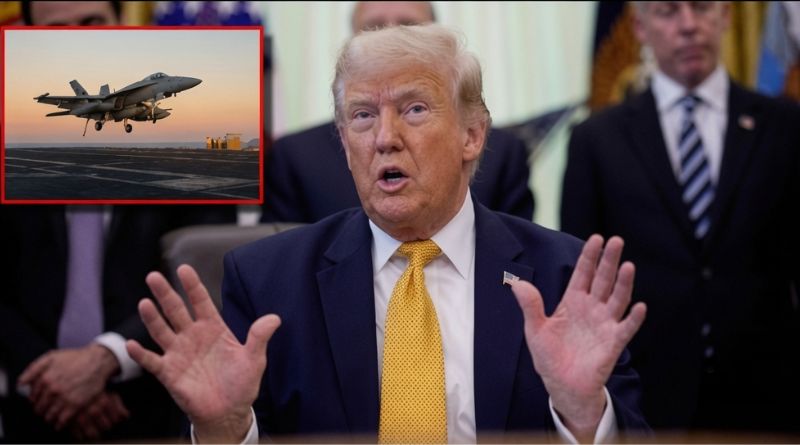
President Donald Trump quickly denounced the incident, confirming that Iranian forces had launched at least four one-way attack drones toward vessels in the vital waterway. One drone struck the upper deck of a large cargo ship, inflicting damage but allowing the vessel to proceed safely. U.S. defenses successfully intercepted the remaining three drones. In a Truth Social post, Trump labeled the strike “a foolish violation of our Ceasefire Agreement.” When pressed by reporters on potential consequences, the president responded curtly, “You’ll find out.”
Hours later, U.S. Central Command (CENTCOM) announced that six American aircraft had conducted targeted strikes on Iranian missile and drone storage facilities, as well as radar installations along the Strait of Hormuz and Qeshm Island. CENTCOM described the operation as a “powerful response” to Iran’s “unwarranted aggression against commercial shipping.”
The drone attack targeted a Singapore-flagged vessel operating near the Omani coast. Officials reported damage to the ship’s bridge, with no casualties or environmental damage. The incident followed a warning from Iran’s Persian Gulf Strait Authority that vessels deviating from designated routes would not receive safe-passage assurances or insurance coverage.
The exchange risks undermining the 14-point memorandum of understanding reached between Washington and Tehran just weeks ago. Under the temporary deal, Iran agreed to ensure safe, toll-free passage through the Strait of Hormuz for 60 days as broader talks continue on its nuclear program and regional security. Since the ceasefire took effect, commercial traffic through the chokepoint has surged, helping ease global oil prices. However, disputes remain over preferred shipping lanes, with the U.S. advocating routes closer to Oman and Iran pushing for paths nearer its territory. Tehran has also hinted at imposing tolls once the initial period expires.
Vice President JD Vance, who has played a key role in diplomacy, defended the U.S. action. “Iran signed a ceasefire agreement. We have honored it,” Vance stated on social media. “If they have disagreements about how the memorandum of understanding is being applied, they can pick up the phone. But violence will be met with violence.”
The strikes have injected new uncertainty into ongoing negotiations as both sides strive to forge a more lasting agreement amid heightened tensions in the region.