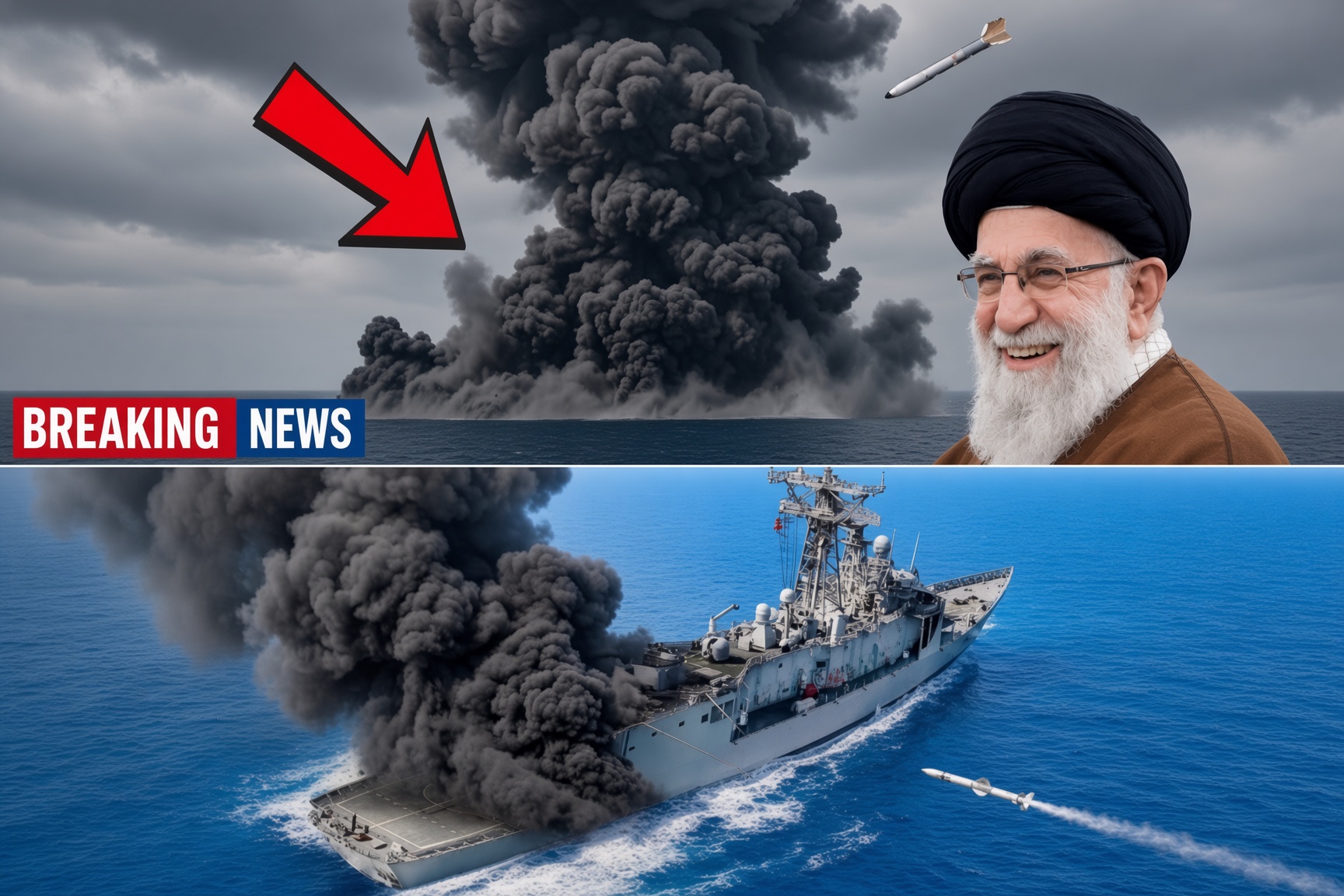
Thirty-Two Minutes in Hormuz: A Fictional Study of Saturation Attack and Carrier Defense
In the narrow waters of the Strait of Hormuz, a tense standoff unfolds. Iran believes it has designed the perfect ambush. Thirty-two anti-ship missiles sit ready, aimed at a U.S. aircraft carrier. Nearly 4,700 lives hang on a clock measured in minutes. Time of flight is estimated at three minutes and forty seconds. The scene is fictional. The problem it illustrates is not. Modern naval war is decided less by who fires first than by who can see, decide, intercept, and answer before a carefully planned strike becomes a strategic disaster.
The Strait of Hormuz is one of the world’s most important maritime chokepoints. A large share of seaborne oil still passes through its confined lanes. That geography has always invited coercion. In this scenario, Iranian planners treat surprise and saturation as a path to a decisive result against a carrier strike group. History and doctrine both warn that launching missiles at such a force is not a local tactic. It is a bet on the entire kill chain—detection, targeting, coordinated launch, penetration of layered defenses—and on what happens after the first warheads are in the air.
The attack is imagined as a coordinated saturation strike. Coastal batteries, concealed from casual radar search, fire together so that incoming tracks arrive in a tight window. The missiles carry seekers meant to ride low over the water or to complicate intercept geometry in the terminal phase. The purpose is simple: exceed the number of shots the defenders can take in the time available, force the Aegis ships to spend interceptors, and hope a few leakers reach the high-value unit. As the first missiles leave their launchers, the narrative tension is the oldest one in anti-access warfare. Can mass and surprise beat a system built specifically to absorb mass and surprise?
They do not, in this telling, because the strike group is not a single ship waiting to be hit. It is a moving network. Airborne early warning and combat air patrol sit well outside the inner ring. Aegis destroyers and cruisers share tracks. Standard Missile-6 engagements begin at long range. SM-2 and Evolved SeaSparrow missiles cover the middle belt. Rolling Airframe Missiles and Phalanx guns own the last miles. Decoys and electronic attack try to pull seekers off true targets. None of this is invincible. Magazines are finite. Geometry matters. A raid that arrives from several bearings in a few tens of seconds is the nightmare the architecture was built to survive. The point of the fiction is that “survive” is an active verb. Detection, classification, and the first interceptors leave the rails within seconds of a valid track. The countdown that looked like an execution clock becomes an engagement clock.
Electronic warfare runs in parallel with the kinetic fight. Iranian operators attempt to jam radars and fracture the group’s picture of the raid. The strike group answers in the same spectrum: counter-jamming, emission control where it helps, and deception where it buys interceptors time. The electromagnetic contest does not produce cinematic explosions, but it decides whether the incoming missiles see the carrier, a decoy, or nothing useful at all. In modern naval combat, that invisible battle is not a sideshow. It is one of the layers.
As intercepts accumulate, the group’s reply is already in motion. Tomahawk cruise missiles leave vertical launch cells on surface ships and tubes on submarines. Their targets are not chosen for spectacle. They are the batteries that just revealed themselves, the radars that supported the raid, and the command nodes that made a thirty-two-missile salvo possible. The principle on display is older than Aegis: a coastal missile force that fires from fixed or poorly hidden positions trades concealment for effect. If the effect fails, the positions become a map for the counterstrike. The first shot rarely ends the engagement. The second and third salvos, and the aircraft that follow, decide whether the attacker still has a coastal strike network by nightfall.
In the compressed timeline of the story, that collapse arrives in thirty-two minutes. Real campaigns do not keep so neat a clock. Individual launchers and radars can die quickly once they emit and fire. A denial system built over years—dispersed transporters, decoys, buried communications, mines, fast attack craft, and drones—does not vanish because one raid was answered. The fiction uses the half-hour frame to make a doctrinal point, not to write an operations order. Underestimate the defender’s sensors, interceptors, and magazine depth, and a “perfect ambush” can become the opening move of a war the attacker cannot sustain.
The broader lesson is about preparedness rather than prophecy. A carrier strike group is neither a helpless teacup nor an unsinkable fortress. It is a very expensive organism that is hard to find, harder to hit cleanly, and extremely costly to miss. Even the threat of anti-ship missiles can push the group farther offshore, lengthen sorties, and tax tankers and maintenance. That operational tax is real. So is the risk to any government that treats a U.S. carrier as a trophy rather than as the center of a retaliatory system.
This scenario remains what its disclaimer says it is: a hypothetical built from public concepts, written to show how layered missile defense, electronic warfare, and rapid counterstrike interact under time pressure. It is not a record of an event, not intelligence, and not an argument for conflict. In the Strait of Hormuz, as in any chokepoint where oil, geography, and great-power navies meet, the countdown is always running. The question that matters is not only who launches first, but who can still fight after the first missiles are gone.
Disclaimer: This is a fictional scenario for educational and analytical purposes. The events, timelines, and outcomes are hypothetical and should not be read as reporting, intelligence, or official military record. It does not promote violence or represent the views of any government or armed force. Similarities to real events are coincidental.