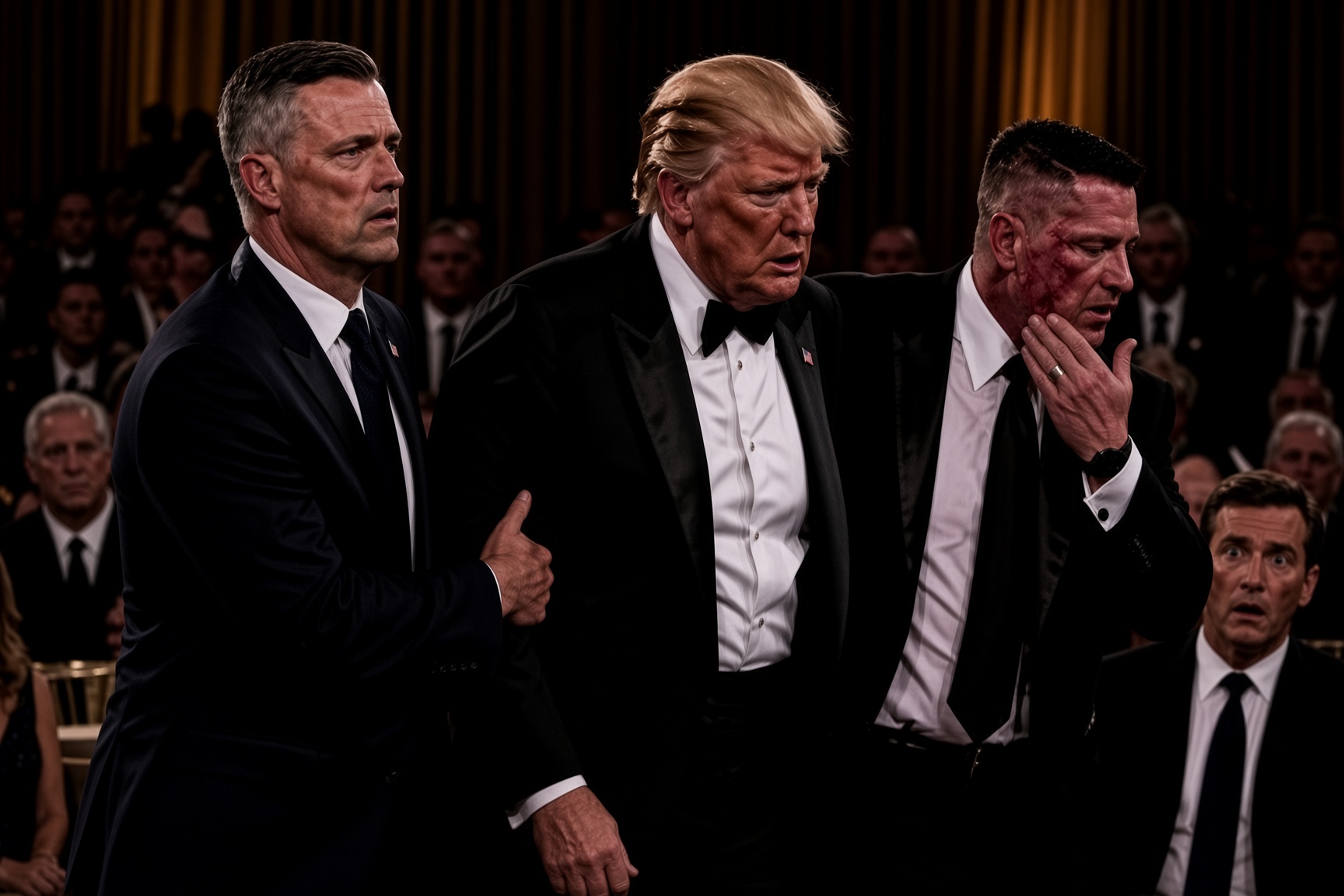
WASHINGTON — Unverified posts claiming former President Donald Trump was “shot again” in Washington, D.C., have spread rapidly online, stirring alarm and confusion. There is no credible evidence that Trump was attacked or injured in a new shooting.
As of now, no statement from the Secret Service, federal law enforcement, a hospital, or any other official source has reported that Trump was targeted or wounded in Washington. Major news organizations have also not confirmed any such incident. That absence of confirmation matters. An attack on a former president would normally produce an immediate public response from authorities and extensive coverage from established news outlets.
The latest claims appear to have started with unverified social media accounts using dramatic language. Posts of that kind can travel quickly, especially when they involve a prominent political figure. In some cases, older photographs, previously recorded video, or footage from earlier events are recirculated without context. Material from a past incident can look like proof of a new attack when it is paired with a misleading caption.
The confusion is understandable in light of recent history. Trump was seriously wounded in an assassination attempt at a campaign rally in Butler, Pennsylvania, in July 2024. That attack was widely documented, investigated, and followed by tighter security. It should not be treated as evidence of a new shooting. There is no established proof that another attack has occurred.
False reports about political leaders can do more than create online noise. They can generate unnecessary public fear, strain emergency communications, and distract authorities from real threats. Researchers and journalists have long warned that emotionally charged posts encourage people to share information before it has been independently confirmed. During periods of political tension, sensational claims often spread faster than facts.
At present, there is no verified evidence that Donald Trump has been shot again in Washington, D.C., or anywhere else. Until law enforcement, government agencies, or multiple reputable news organizations report otherwise, the allegation should be treated as an unsubstantiated social media claim.
The episode is another reminder of a basic rule of breaking news: check authoritative sources before accepting a dramatic report as fact. Official statements and reporting from multiple established outlets remain a far more reliable guide than viral posts.