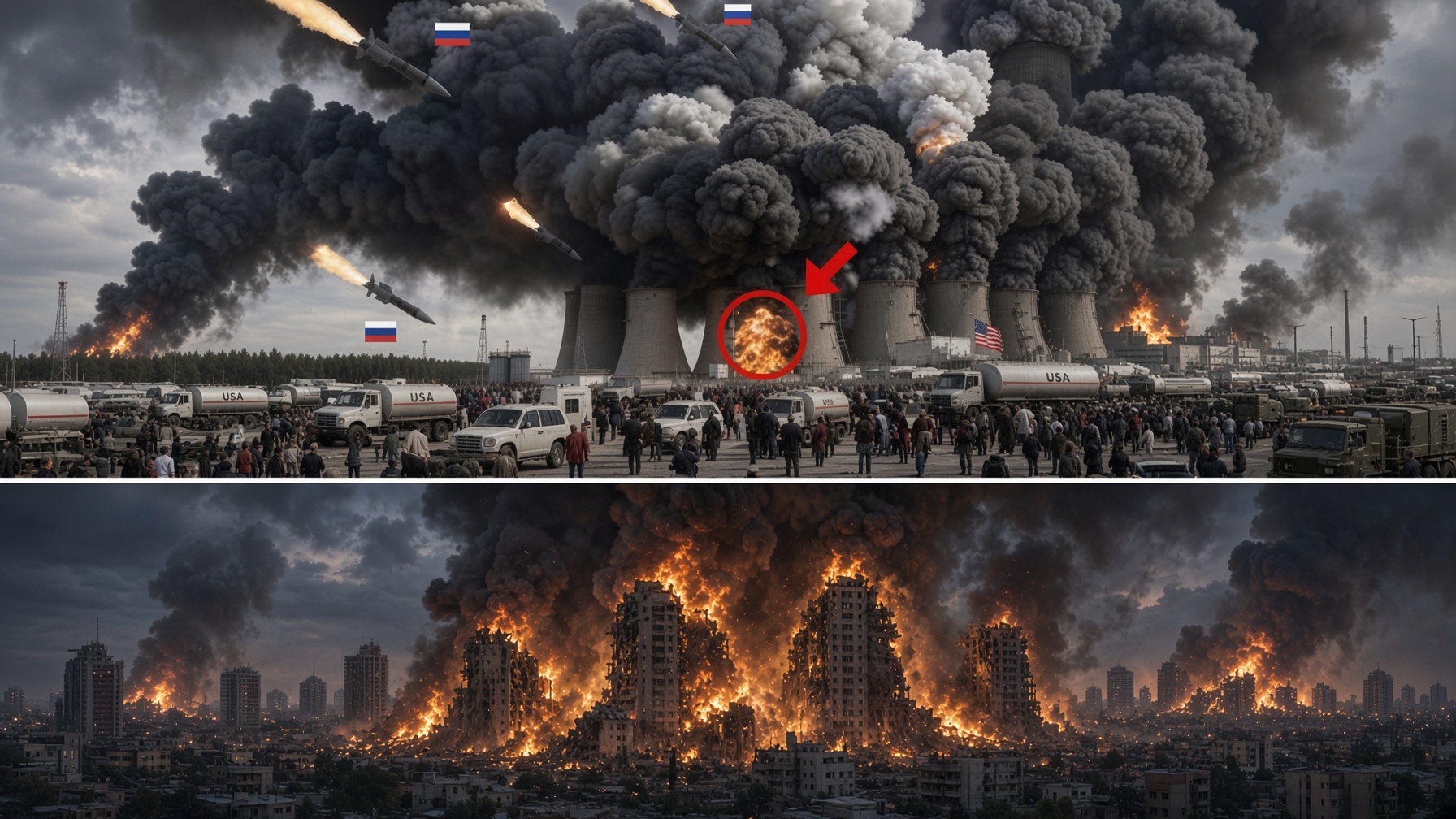
A Fictional Battlefield, Rendered in Detail: How an Arma 3 Simulation Captured Attention
A recently released video has drawn unusual interest from gaming audiences and military-simulation communities because of how thoroughly it stages a large, invented war. Built inside Bohemia Interactive’s long-running platform Arma 3, the piece presents a hypothetical clash between two major global powers. Tanks roll across ridgelines, jets cut through cloud layers, helicopters drop teams into contested streets, and special-operations elements move against high-value targets. The images look convincing. The tactics look studied. The scenario itself is not real.
That distinction matters. The creators frame the project as entertainment first and as a kind of informal strategy classroom second. They include a disclaimer that the footage does not depict actual events and should not be read as commentary on any current conflict. In a media environment where game clips are sometimes mistaken for combat footage, the reminder is not decorative. It is the condition under which the rest of the video can be watched honestly.
An invented war, assembled from familiar parts
From the opening minutes, the production tries to feel like a campaign rather than a highlight reel. Viewers are dropped into a constructed battlespace that mixes city blocks, open agricultural ground, and elevated terrain. Those settings are not only scenic. They force different kinds of movement and different kinds of risk. An armored column that looks dominant on a highway becomes vulnerable in a tight urban corridor. A hillside that offers observation also exposes vehicles to air attack. Geography, in other words, is treated as an actor rather than a backdrop.
The equipment is the usual modern inventory that Arma 3 and its large modding community have spent years refining: main battle tanks, infantry fighting vehicles, attack and transport helicopters, multirole fighters, and small teams of special forces. What the video sells is not novelty of hardware so much as coordination. Tanks do not wander independently. They move with infantry, wait for suppression, and occupy positions that make later maneuvers possible. The point is less “look at the explosion” than “watch how one element is supposed to enable another.”
That emphasis is why the piece resonates with milsim players. Arma 3 has always been less a conventional shooter than a sandbox for procedures: radio discipline, bounding overwatch, fire support requests, casualty collection, and the slow, unglamorous work of getting units to the right place at the right time. A cinematic edit can hide some of that friction, but the better sequences still leave traces of it. Timing is visible. Mistakes would be visible too, even if this particular production prefers a polished narrative arc.
Armor, air, and the logic of combined arms
Armored warfare occupies a large share of the runtime. Tanks advance, hull-down positions are taken, and supporting infantry clears dead ground that optics cannot safely watch. The video treats armor as powerful and fragile at once. A tank that outranges almost everything on the ground can still be isolated, flanked, or struck from above. Positioning, timing, and communication become the real subjects. The machines are spectacular; the doctrine is the argument.
Airpower is staged with the same thesis. Fighters conduct strikes and contest the sky. The sequences insist, as modern doctrine does, that control of the air changes what ground units are allowed to attempt. When the sky is hostile, movement slows and dispersal increases. When the sky is friendly, logistics and maneuver become easier, at least until the next threat appears. Helicopters occupy the middle of that spectrum. Attack helicopters hunt vehicles and strongpoints. Transport helicopters move troops across distances that would take hours on the ground. Their versatility is the lesson: rotary-wing aircraft are not a single mission set. They are a way of compressing time.
Special-operations sequences add another register. Small teams are shown conducting reconnaissance, raids, and support tasks that larger formations cannot perform quietly. The footage leans on stealth, timing, and the idea that a limited action against a command post, radar site, or bridge can change the shape of a wider fight. Whether those missions would succeed as neatly in a less scripted environment is another question. Inside a crafted cinematic, they function as punctuation: moments of precision inside a story about mass.
The larger claim of the video is combined arms. Ground units, aviation, and supporting elements are edited as if they belong to one plan. That is the standard language of contemporary military thinking, and simulation communities have spent years trying to reproduce it with players instead of professional staffs. The production’s strength is that it makes the idea watchable. Its limitation is that a finished edit can imply a smoothness that live operations, even virtual ones, rarely possess.
Cinema as a delivery system
Part of the video’s reach comes from presentation rather than tactics. Camera work, lighting, and sound design are used to turn simulation into something closer to a short war film. Explosions are timed to cuts. Vehicle movement is framed for scale. Environmental detail—dust, smoke, the geometry of streets and tree lines—does a lot of the persuasive work. This is where Arma 3 content often lives now: not only as after-action footage from a weekend operation, but as machinima with a beginning, middle, and end.
That cinematic layer is also why disclaimers matter. The more a sequence resembles news footage or documentary combat film, the more easily it can travel without context. Communities that make this kind of content have learned, sometimes after public confusion, that labeling is part of the craft. The video under discussion does that work up front. It asks to be judged as a hypothetical exercise, not as evidence.
What viewers can actually learn from it
The educational value is real but bounded. A spectator can see, in compressed form, why units are stacked in certain ways, why air support is requested before a crossing, why urban fighting consumes infantry, and why a plan that looks elegant on a map becomes a sequence of compromises on the ground. Those observations are useful to people who already care about strategy, history, or professional military education. They are not a substitute for staff work, field manuals, or lived experience.
The video is better understood as a demonstration of attention. It shows what happens when creators spend time on terrain, unit roles, and visual continuity. It also shows the appetite for “what if” scenarios that look serious without claiming to predict the future. That appetite is not new. Wargames, staff rides, and commercial simulations have long occupied the space between entertainment and analysis. Arma 3 simply made the pictures more convincing and the barrier to entry lower for amateur directors.
Community is part of the story. Players share missions, critique tactics, swap mods, and argue about whether a particular sequence is plausible. The best of that culture is collaborative and technically curious. The weaker side is click-driven spectacle: titles that imply real-world catastrophe, thumbnails that borrow the grammar of breaking news, and edits that flatten complexity into a single dramatic winner. Responsible productions try to keep the first impulse and restrain the second.
There is also an ethical line that the better creators try to hold. They can depict violence inside a game engine without treating real wars as content farms. They can study tanks and aircraft without turning suffering into a genre. Framing the work as fiction is the start of that discipline, not the whole of it. Tone, titles, and the refusal to impersonate journalism do the rest.
Technology, teamwork, and the shape of a story
None of this would look the way it does without the underlying engine and the years of community tools built around it. Arma 3 is old by entertainment-software standards, yet it remains a preferred canvas because it still supports large maps, scripted scenarios, player-controlled combined arms, and a visual style that, with the right mods, can pass at a glance for something more official than a game. As engines improve, the same impulse will migrate. The question will stay the same: is the extra realism being used to think more carefully, or only to startle more efficiently?
Teamwork is the theme the video returns to most often. Every unit has a job. Success, even in a scripted sense, depends on those jobs arriving in the right order. Communication is treated as infrastructure. That is closer to actual operations than any single vehicle model. It is also why these videos function as recruitment material for milsim groups. They advertise not only explosions, but a fantasy of competence.
Narrative structure helps the piece hold together. Isolated firefights can impress for a minute. A campaign-shaped edit—deployment, first contact, escalation, a shift in terrain, a culminating action—gives viewers a reason to stay. Diversity of setting does similar work. Urban fighting, open-ground armor battles, and operations on high ground each demand different solutions. Watching a force change methods as the map changes is more interesting than watching the same tactic repeated under new skies.
The equipment and procedures are rendered with care: vehicles, weapons, and routines that echo real counterparts without being a training film. That balance—recognizable detail inside an admitted invention—is the source of the video’s appeal. Strategy is visible as a chain of choices. Viewers can argue with those choices. Argument, in this genre, is a form of engagement.
How to watch it
The sensible way to watch a production like this is to keep two thoughts at once. First, the craft is impressive. Creating a coherent large-scale fight inside a simulation, then editing it so that armor, aviation, and special operations feel like parts of one story, takes planning and patience. Second, the story is a story. It is not a forecast, a documentary, or a verdict on any nation’s forces.
If the video has a lasting use, it is as a prompt. It can send a curious viewer toward better questions: How does terrain actually constrain armor? What does air superiority buy, and what does it not buy? Why do special-operations missions exist inside a larger campaign rather than instead of one? Why do real staffs spend so much time on logistics, which cinematics usually skip? Those questions survive after the last explosion fades.
In the end, the production is a polished example of what military-simulation culture can do when it aims for both spectacle and structure. It is detailed, watchable, and explicit about its fictional status. That combination—serious surfaces, invented substance, and a clear label—is the responsible version of a genre that can easily drift toward confusion. Enjoy it as a constructed exercise in coordination and scale. Leave it there. The war on screen is a scenario. The value is in seeing how a scenario is built.