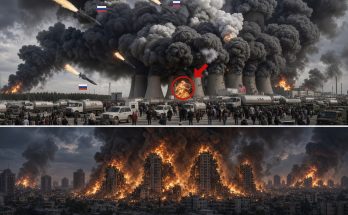
President Donald Trump declared on Truth Social that “Iran must now agree to end this war” after U.S. forces struck three of Iran’s most sensitive nuclear facilities, marking the first direct American attack on Iranian territory in this phase of the Israel-Iran conflict. The operation targeted the underground enrichment plant at Fordow, the Natanz complex, and facilities at Isfahan. In a subsequent national address, Trump said the sites had been “completely and totally obliterated” and warned of further action if Tehran refused to pursue peace. U.S. officials described a precision campaign using B-2 bombers, Tomahawk missiles, and more than 125 aircraft, insisting the aim was to degrade nuclear infrastructure rather than pursue regime change or strike civilian areas.
The raids followed intensified fighting between Israel and Iran and immediately produced a split among governments. Supporters framed the action as a necessary blow against a program they say has long exceeded peaceful limits. Critics called it a dangerous violation of international law that could ignite a wider war.
Iranian Foreign Minister Abbas Araghchi denounced the attacks on what Tehran calls “peaceful nuclear installations” as a “grave violation of the UN Charter, international law, and the NPT.” In a post on X he called the events “outrageous and will have everlasting consequences,” adding that Iran “reserves all options” to defend its sovereignty under the UN Charter’s self-defense provisions. Iranian officials have consistently maintained that the program is civilian, a claim Western governments and Israel reject, citing enrichment levels and past IAEA findings.
Israeli Prime Minister Benjamin Netanyahu welcomed the American decision. Speaking shortly after the strikes, he said Trump’s “bold decision will change history” and invoked the shared phrase “peace through strength.” “First comes strength, then comes peace. And tonight, Donald Trump and the United States acted with a lot of strength,” he said.
China issued a sharp condemnation, particularly of strikes on sites under IAEA supervision. The Foreign Ministry called the operation a serious breach of the UN Charter that would worsen Middle East tensions and urged all parties, especially Israel, to halt attacks and return to talks.
United Nations Secretary-General António Guterres warned of a “dangerous escalation in an already volatile region” that posed a “serious threat to global peace and security.” He said the conflict risked spiraling out of control with “catastrophic consequences for civilians, the region, and the world.” Guterres repeated that “there is no military solution” and that “the only path forward is diplomacy. The only hope is peace.”
European leaders struck a similar note while restating their red line on an Iranian bomb. EU foreign policy chief Kaja Kallas urged “all sides to step back, return to the negotiating table and prevent further escalation,” even as she stressed that Iran must not develop a nuclear weapon. EU foreign ministers planned an emergency discussion. British Prime Minister Keir Starmer said the situation “remains volatile” and that regional stability is a priority. He called on Tehran to resume negotiations. The United Kingdom, France, and Germany had been engaged in recent de-escalation efforts with Iran.
Araghchi rejected the European framing. Responding to Britain and the EU High Representative, he asked how Iran could “return” to a table it had never left, “let alone blew up.”
Regional reactions reflected competing alliances. Saudi Arabia, which restored ties with Iran in 2023 after a seven-year rupture, said it was following events in “sisterly” Iran with “great concern.” Yemen’s Houthi movement, aligned with Tehran, denounced “blatant aggression.” Lebanon’s presidency, operating in a country where Hezbollah remains a powerful Iranian partner, expressed fear that tensions could spread and called for restraint.
Russia’s Dmitry Medvedev, a former president and senior security official, mocked Trump’s Nobel Peace Prize ambitions. In a Telegram post he said the American leader who entered office as a “peacemaker president” had “started a new war for the United States.”
Latin American governments largely condemned the strikes. Venezuela rejected “U.S. military aggression” against the Fordow, Natanz, and Isfahan sites “carried out at Israel’s request” and demanded an immediate halt to hostilities. Cuban President Miguel Díaz-Canel called the bombing a “dangerous escalation” that violated the UN Charter and risked “irreversible consequences.” Mexico’s Foreign Ministry, citing its pacifist tradition, urged “diplomatic dialogue for peace” and de-escalation as the highest priority.
Asian responses were more measured. Japanese Prime Minister Shigeru Ishiba said it was “paramount to calm the situation down soon” and that “Iran’s nuclear development must be blocked,” while stopping short of full endorsement of the U.S. action. South Korea convened its National Security Council; adviser Wi Sung-lac instructed ministries to limit fallout from Middle East events. Australia acknowledged the threat from Iran’s nuclear and missile programs but called for de-escalation, dialogue, and diplomacy, noting Trump’s own remark that “now is the time for peace.”
Pope Leo, speaking during his weekly prayer with pilgrims, said the international community had a moral duty to stop war before it opened an “irreparable abyss.” “No armed victory can compensate for the pain of mothers, the fear of children, the stolen future,” he said. “Let diplomacy silence the weapons.”
The operation has thrown governments into intense diplomatic activity. Analysts note that even if the immediate targets were nuclear-related, the political and economic aftershocks could last far longer. Iran’s program collapsed from the 2015 JCPOA after the United States withdrew; enrichment subsequently rose and IAEA access narrowed. Supporters of the strikes argue they were required to prevent a nuclear-armed Iran and to deter further proxy attacks. Critics warn that bombing could strengthen hardliners in Tehran, invite retaliation through Hezbollah or the Houthis, and threaten oil flows through the Strait of Hormuz.
As of the latest reports, no large-scale Iranian retaliatory strike on U.S. forces had been confirmed, though Araghchi’s reservation of “all options” left room for asymmetric replies. Oil prices jumped on supply fears; European and Asian markets turned cautious. The UN Security Council was expected to meet in emergency session, where the usual divide among permanent members—the United States, Britain, and France on one side, China and Russia on the other—was likely to block any unified resolution.
European diplomats continued quiet efforts to revive talks, building on earlier rapprochement. Gulf states balanced security ties with Washington against the risk of a wider war on their borders. For the Trump administration the raids fulfilled a long-stated pledge to confront Iran directly and fit the “peace through strength” theme of his first term. Sustaining international support and containing escalation will now test U.S. diplomacy.
Whether the show of force produces a negotiated settlement or another round of confrontation remains the central question. Civilians across the region have already paid a heavy price in earlier rounds of fighting. The cost of failure to de-escalate would be measured not only in damaged centrifuges but in lives, energy markets, and the credibility of non-proliferation itself.