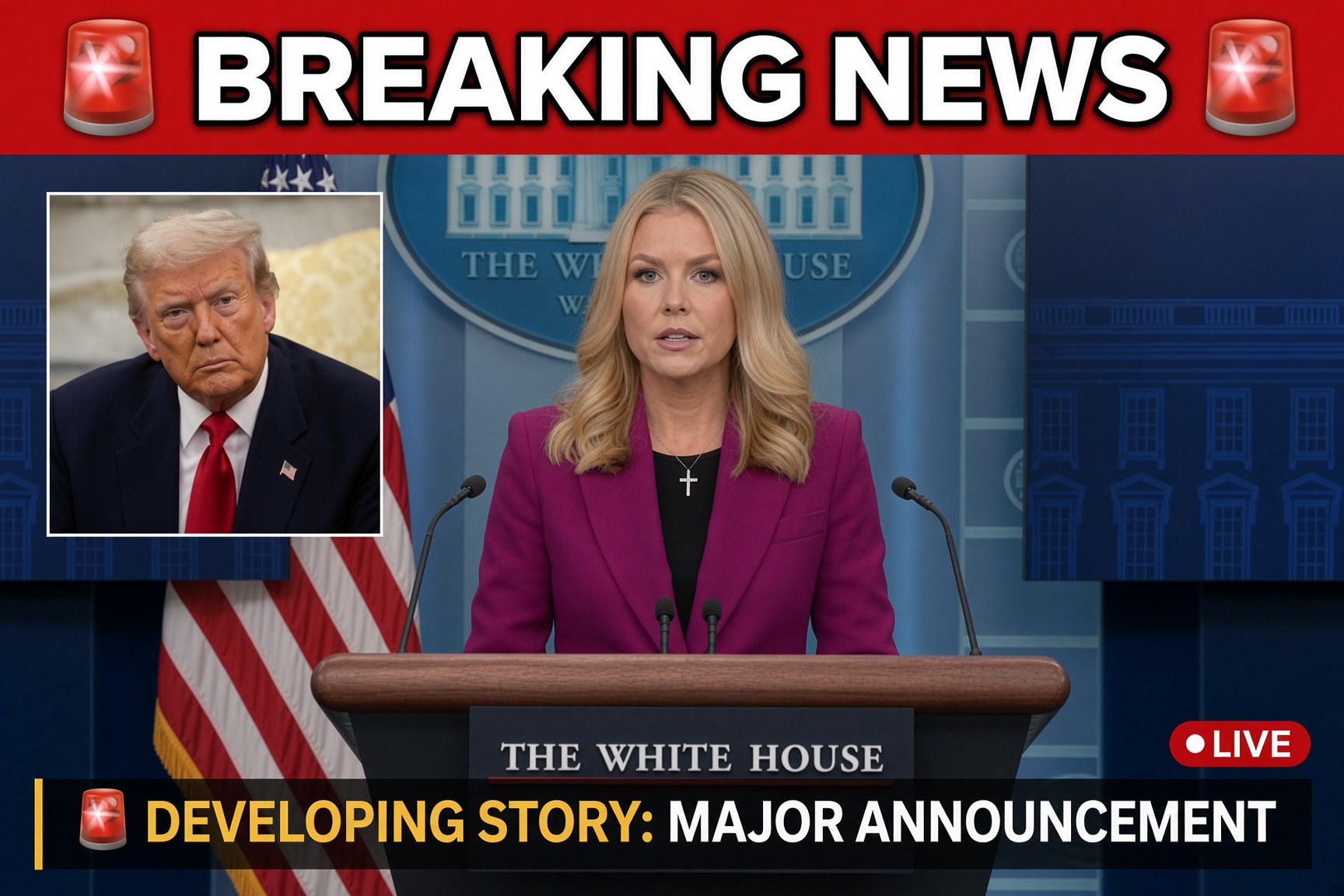
White House Press Secretary Karoline Leavitt used an Axios media event with co-founder Mike Allen to argue that President Donald Trump has been far more available to journalists than former President Joe Biden, and that recent changes to White House press arrangements are about widening access rather than shrinking it.
Allen pressed Leavitt on the administration’s decision to take control of the 13-person press pool that follows the president into tight spaces such as the Oval Office and Air Force One. He noted that the Associated Press still reaches a vast global audience and that AP photographer Evan Vucci made the iconic “Fight, fight, fight” image after the assassination attempt in Butler, Pennsylvania. Did she worry, he asked, that new rules would leave history incomplete?
Leavitt rejected the premise. “I don’t view them as restrictions,” she said. “We view them as opening access to more outlets, more voices, more news, journalists and outlets.” A handful of organizations, she argued, should not hold a permanent monopoly on the briefing room or the traveling pool. Thousands of outlets hold White House credentials, and hundreds cover the beat on a given day. “Why should a single outlet have the privilege of being in that 13-person press pool every single day?”
The White House, she said, has used the new rotation to give print outlets such as Axios a greater chance to join the pool. The result, in her telling, is more transparency and a broader mix of journalists. Coverage has not dried up. “You’re still hearing about what the administration is doing every single day, because we have good journalists who are in that room covering the president every single time.”
Allen then cited a White House Correspondents’ Association statement on the reduced standing of wire services: the government should not control the independent media that covers it. Did she agree?
Leavitt flipped the question. A small board of journalists, she said, should not decide who enters the Oval Office or rides on Air Force One. “There should be equal access for all outlets. And that’s exactly what we’re doing.” If the administration’s goal were only flattering coverage, she added, it would not keep admitting “fake news leftist outlets.” No one had been barred under the new system, she insisted; more seats had been opened to more voices.
The fight over the pool is part of a larger break with tradition. For decades the WHCA, not the White House, organized the rotation that feeds pool reports to the rest of the press corps. Early in Trump’s second term, Leavitt announced that the press office would choose daily pool members itself, arguing that legacy wires and networks should share space with digital outlets, streamers, and other “new media.” The WHCA answered that the government choosing its own press pack “tears at the independence of a free press.” Leavitt’s reply at the Axios event was consistent with that earlier line: the association should not dictate access.
She framed the shift as an extension of Trump’s 2024 campaign, which bypassed much of the traditional press and still won. “We live in a digital age, and we’re recognizing that at the White House,” she said. “The president ran a nontraditional media campaign, which propelled him back to the highest office in the land. And we felt it was our responsibility to continue that in our coverage at the White House.” Ideology, she maintained, was not the point. Variety was.
Leavitt also used the appearance to contrast Trump’s availability with Biden’s. In July 2024, Axios published “Biden’s media evasion,” drawing on tallies by presidential communications scholar Martha Joynt Kumar. At a comparable point late in his term, Biden had conducted 164 press conferences and media interviews. Trump, at the same stage of his first term, had 468. The next-lowest modern figures belonged to George W. Bush (248) and Ronald Reagan (262). Biden’s White House often pointed to informal shouted Q&As on the South Lawn; critics said those brief exchanges were no substitute for sustained questioning.
Leavitt’s message was that Trump answers questions constantly and that rearranging the pool simply matches a changed media market. Critics say the White House is now picking who stands closest to the president. The argument at the Axios event was whether that change expands the public record or filters it. Leavitt’s answer was unambiguous: more outlets in the room, she said, means more news, not less.