President Donald Trump and first lady Melania Trump ended an unusual second U.S. state visit to Britain with a brief scare in the air, a royal send-off, and a pile of investment announcements meant to bind American and British technology, energy, and capital more tightly together.
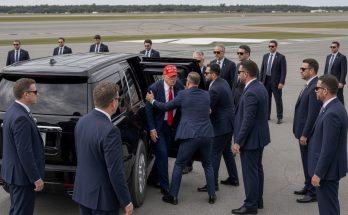
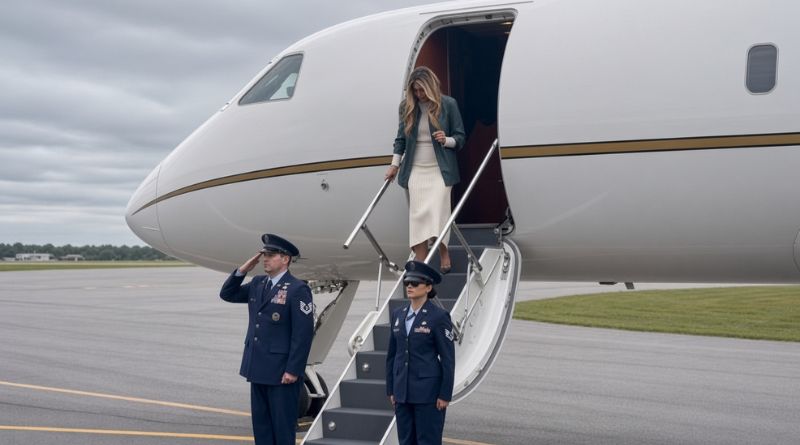
On Thursday, September 18, 2025, Marine One lifted off from Chequers, the prime minister’s country residence in Buckinghamshire, for what was supposed to be a 20-minute hop to London Stansted Airport, where Air Force One was waiting. Instead, the helicopter diverted. White House press secretary Karoline Leavitt said pilots detected a “minor hydraulic issue” and, “out of an abundance of caution,” landed at a local airfield—Luton Airport—before the couple transferred to a support helicopter and completed the trip. Emergency services were visible on the tarmac. The first couple arrived at Stansted about 20 minutes late; the whole ground-to-ground journey stretched to nearly 40 minutes. No injuries were reported. Trump later joked with reporters that they should fly safely—“because I’m on the flight.”
The incident capped two days that mixed pageantry with dealmaking. King Charles III and Queen Camilla hosted the Trumps for a second official state visit—the first time a U.S. president has received that honor twice in the modern era. Trump spent time at Windsor Castle with the King before flying by Marine One to Chequers for talks with Prime Minister Keir Starmer. Private discussions were expected to touch Ukraine, the war in Gaza, energy, migration, and speech rules. The two leaders then joined business executives for a reception and signed what both governments called a “Tech Prosperity Deal.”
Starmer described the U.S.–U.K. relationship as the most “natural partnership in the world.” The British government said U.S. firms had pledged about £150 billion in inward investment during the visit, a package it called the largest of its kind tied to a state visit and one expected to support more than 7,600 jobs. Private-equity giant Blackstone headlined the commercial list with a pledge on the order of £90–£100 billion over a decade, including data-center and related projects. Microsoft, Google, Nvidia and others announced large AI and cloud commitments. Trump, speaking in looser numbers, said the new accord was already helping “spur a massive wave of private sector deals” and singled out Blackstone and Nvidia chief Jensen Huang in the room.
Energy sat next to software. American firm X-energy and Britain’s Centrica announced plans to deploy advanced modular reactors in the United Kingdom, with Hartlepool identified as a preferred first site in a wider fleet that companies said could eventually reach several gigawatts. Officials and the firms said an initial project could support up to about 2,500 jobs, generate power for as many as 1.5 million homes, and contribute tens of billions of pounds in economic value over time. Trump framed the nuclear piece as inseparable from the AI race: “You need the energy. You have to have the energy.” He listed quantum computing, fusion, 6G, and civil nuclear power as fields where both countries should lean on deregulation and private innovation. He also argued the pact would give the United States “better access to the UK’s world-class aerospace supply chain.”
The ceremony at Chequers was as much theater as policy. Starmer welcomed Trump to his “home from home,” thanked him for greeting staff, and presented the technology partnership as a test of whether the special relationship still delivers jobs and growth. Trump thanked Charles and Camilla as “two fantastic people” and treated the second state visit as historic in its own right. After the signing, the couple left for Stansted, made the unscheduled stop at Luton, boarded Air Force One, and flew home. The president was back at the White House after the overseas swing.
What remains is implementation. Investment pledges are not the same as spent capital; reactor projects take years and regulators; AI data centers need power, planning permission, and customers. Still, the visit put a public price tag on a familiar idea: that Washington and London want to stay locked together in the industries they believe will define the next decade, even when a short helicopter ride does not go according to plan.