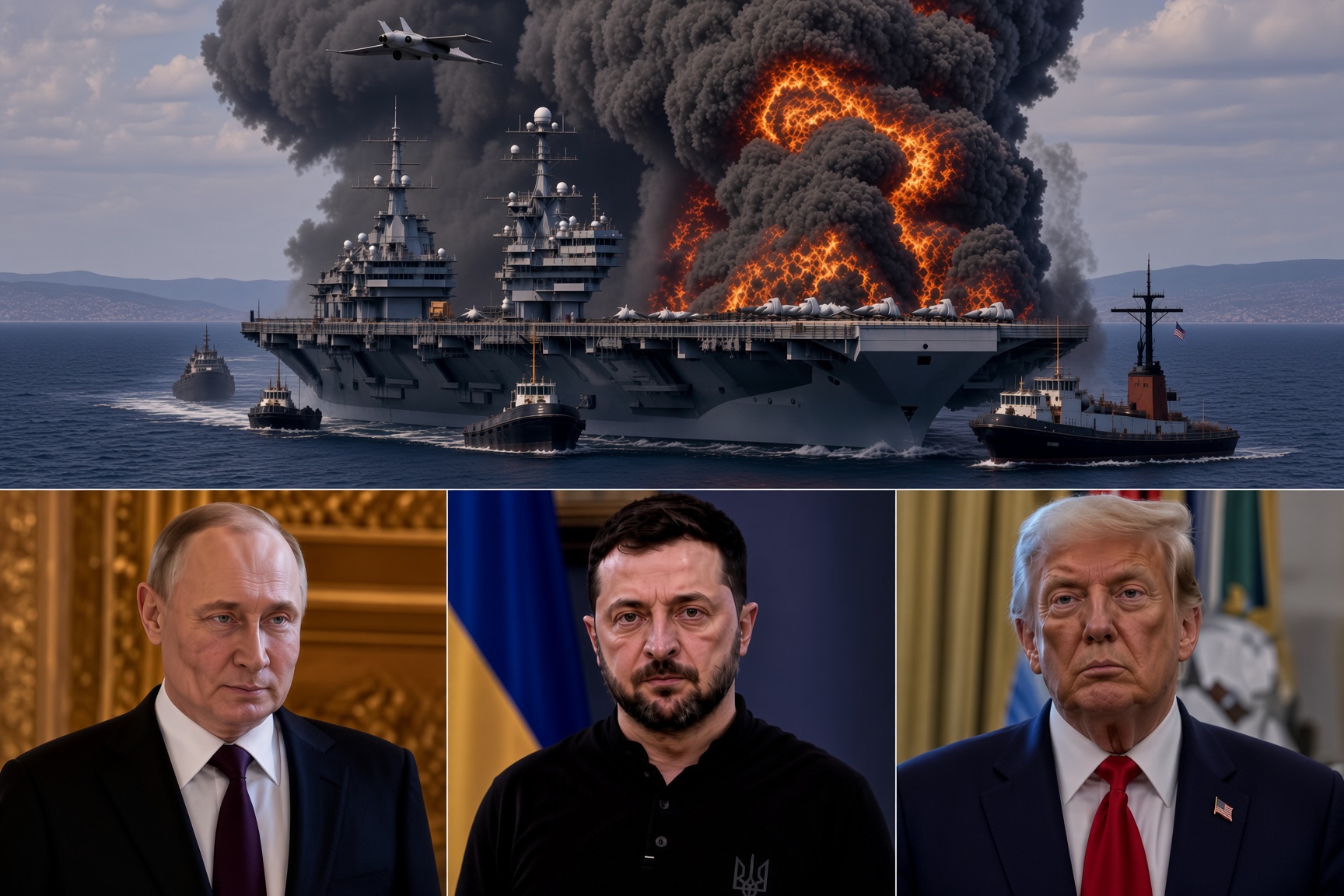
WASHINGTON — Unconfirmed accounts of a high-speed strike on a heavily defended military vessel have circulated widely, prompting concern among defense analysts and renewed debate over how well today’s layered ship defenses hold up against rapidly advancing weapons.
Officials have not independently verified the reports, and key facts remain unknown: the weapon involved, any damage, and whether there were casualties. Still, the claims have drawn intense attention from military observers and geopolitical specialists because the target was described as a high-value platform built to survive a wide range of threats.
Modern warships typically rely on overlapping defenses—radar and sensors, electronic warfare, interceptor missiles, and close-in systems—meant to detect and defeat incoming weapons before they reach the hull. Preliminary accounts suggest the reported attack moved too quickly or used methods that allegedly bypassed or overwhelmed those layers. If later confirmed, that would force planners to re-examine assumptions about detection time, interceptor performance, and the operational conditions in which ships actually fight.
The episode also illustrates how information moves during fast-breaking military events. Social media often outruns official channels. Unverified claims, recycled video, and manipulated imagery can spread globally in minutes, creating competing narratives before governments can establish a factual baseline. Security specialists have urged caution: mixing confirmed facts with speculation can distort public reaction, markets, and even official decisions at moments of tension.
Geopolitically, a verified strike on a well-protected asset would matter. Defense ministries could accelerate work on faster sensors, better electronic countermeasures, new interceptors, and tactics for high-speed or unconventional threats. It would not, however, prove that existing systems are obsolete. Analysts stress that one incident—if it happened—would still need to be judged against the specific weapon, the ship’s alert status, weather and geography, and whether the defenses were fully employed.
For now the priority is verification. Governments and independent researchers are expected to review satellite imagery, video, official statements, and other data. Until that work is done, the reported strike should be treated as unconfirmed. The episode already underscores two durable realities of contemporary conflict: weapons and sensors are evolving quickly, and the information environment around them is noisy, fast, and easy to exploit.
A confirmed case would become a useful study in how modern naval defense performs under pressure. Until then, restraint and evidence remain more useful than sweeping conclusions.