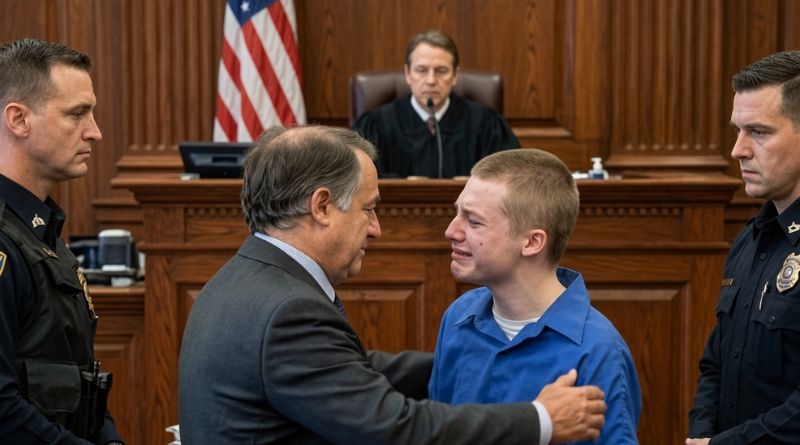
A courtroom sentence of 452 years for a teenager has ignited a fierce national argument over how the United States should punish the most serious crimes committed by minors. The case has drawn attention both for the gravity of the offenses and for a term so long that it amounts, in practice, to life without any realistic chance of release.
At sentencing, prosecutors described the defendant’s conduct as showing extreme disregard for human life. They argued the teenager remained a danger to the public and that the scale of harm to victims required a punishment that would keep the defendant incarcerated for life. Deterrence and retribution, they said, were not optional extras but core purposes of the sentence. “This punishment reflects the magnitude of the devastation caused and serves as a critical safeguard for the community,” prosecutors told the court.
Defense lawyers answered with developmental science. They stressed that the defendant was still a minor when the crimes occurred and cited research showing that adolescent brains are unfinished: impulse control is weaker, long-term thinking is limited, and the capacity for change is greater than in adults. A teenager, they argued, should not be defined forever by the worst hours of youth. Accountability was necessary, they said, but so was some path toward rehabilitation and, eventually, a return to society.
Victim impact statements cut through the legal debate. Family members described grief that does not fade, trauma that has reshaped daily life, and a sense that nothing short of a severe sentence could acknowledge what was taken from them. Those accounts explained, for many watching, why a sentence of this length felt like justice rather than excess.
Public reaction has split along familiar lines. Supporters call the ruling a clear stand for victims and community safety. Some crimes, they say, are so destructive that permanent removal from society is the only honest response. Critics—juvenile-justice advocates, some legal scholars, and others—ask whether a 452-year term for a person who was still a child when the offenses happened fits constitutional limits the Supreme Court has already placed on the harshest punishments for minors. They argue that such a sentence leaves almost no room for the rehabilitation that adolescent development research suggests is possible.
The ruling sits inside a larger American argument. The Supreme Court has restricted certain extreme sentences for juveniles, but states still decide how far to go when the crimes are among the worst. Legislatures, courts, and communities keep returning to the same questions: Does even the gravest offense committed in youth erase any later chance of a second life? Or does the duty to protect the public outweigh age when the harm cannot be undone?
Neuroscience has sharpened those questions without settling them. Teenagers are not miniature adults; they are also capable of acts that destroy other people’s lives. A sentence measured in centuries makes that tension impossible to ignore. Whatever happens next in this case, the debate it has fueled—about culpability, safety, and whether hope belongs in the most severe juvenile sentences—is unlikely to fade.