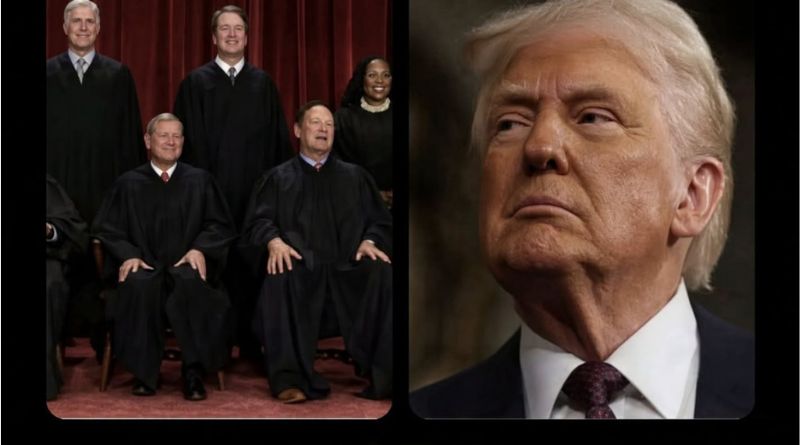
The Supreme Court ruled 6–3 in Cisco Systems, Inc. v. Doe (No. 24-856) that neither the Alien Tort Statute (ATS) nor the Torture Victim Protection Act (TVPA) lets private plaintiffs sue for aiding and abetting alleged violations of international law. Justice Amy Coney Barrett wrote the majority opinion, joined by Chief Justice John Roberts and Justices Clarence Thomas, Samuel Alito, Neil Gorsuch, and Brett Kavanaugh. The Court reversed the Ninth Circuit and remanded the case.
The dispute grew out of claims by unnamed Falun Gong practitioners that Cisco and certain executives aided Chinese government persecution by selling networking equipment used in surveillance. The plaintiffs sued under the 1789 ATS and the 1991 TVPA. The Ninth Circuit had allowed aiding-and-abetting theories to proceed. The Supreme Court disagreed. Cisco has denied that its technology was customized to enable repression. The Trump administration supported review and sided with Cisco; the Solicitor General participated at argument and urged the Court not to let judges invent foreign-policy litigation against American firms.
Barrett treated the ATS as a grant of jurisdiction, not a license to invent new private rights of action. “Today, we close the door that Sosa cracked and hold that courts may not create new causes of action for violations of international norms,” she wrote. The Court also held that the TVPA, which does contain an express cause of action, “does not provide for aiding-and-abetting liability.” Creating a cause of action, Barrett added, “is an extraordinary act that places great stress on the separation of powers.” That power belongs to Congress. Courts that invent liability risk “adverse foreign policy consequences” the Constitution assigns to the political branches.
The majority framed the case as a structural limit, not a comment on the gravity of the underlying allegations. ATS and TVPA suits often involve “heinous and inhumane acts,” Barrett acknowledged. Redress, if any, must come from Congress, the executive, or other actors—not from judicially implied claims. The decision continues a line of cases narrowing Sosa v. Alvarez-Machain (2004), which had left a narrow opening for some international-norm suits. After Cisco, that opening is treated as a “null set” for new judge-made theories.
Justice Ketanji Brown Jackson, joined by Justice Elena Kagan, concurred in part and dissented in part. She accepted a narrower ATS but argued that the TVPA’s text could reach some aiding-and-abetting conduct. Justice Sonia Sotomayor dissented more broadly, joined by Kagan and Jackson in key parts. She said the majority “jettisons two decades of settled precedent,” “forecloses future reliance on Sosa,” and “shuts the courthouse doors to almost any claimed violation of international law under the ATS.” On the TVPA she wrote: “Because the plain text of this statute includes individuals who aid and abet the victim’s torture, I would affirm the Ninth Circuit’s judgment on this score as well.”
Supporters of the ruling see a defense of textualism and of the line between courts and foreign policy. On that view, Congress and the executive create remedies when they want them; judges enforce enacted law. The decision reduces the risk that overseas claimants will use U.S. courts to second-guess commercial dealings with foreign governments, and it gives technology firms clearer rules when they sell lawful products abroad. Critics, including the dissenters and some human-rights advocates, say the Court has left victims of overseas abuse with almost no federal forum when the alleged wrongdoer is a company that supplied tools rather than the official who used them. They argue Congress must now write any broader remedy if one is to exist.
What the Court did not decide is whether the plaintiffs’ factual account of Cisco’s conduct is true. It decided who may create a cause of action and what the existing statutes say. Under Cisco, that answer is Congress—not the federal judiciary through implied aiding-and-abetting liability.