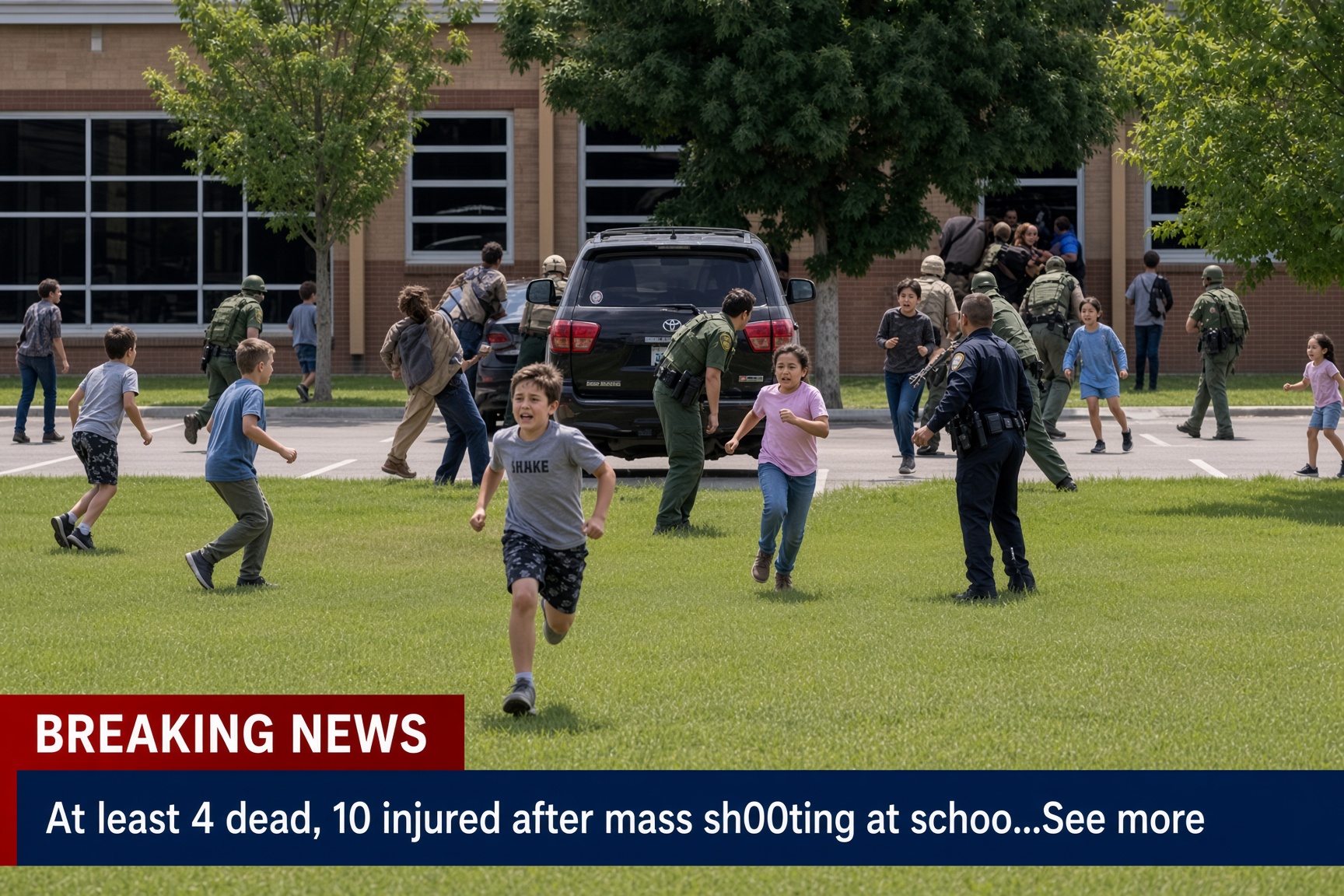
Stockton, CA — What began as a sunny late-November Saturday afternoon filled with laughter, balloons, cake, and the ordinary joy of a toddler’s birthday party became one of the most searing tragedies in this city’s recent history. On November 29, 2025, shortly before 6 p.m., gunfire erupted inside and outside the Monkey Space event hall at 1955 Lucile Avenue in unincorporated San Joaquin County, just outside Stockton city limits in the Sherwood Manor neighborhood. At least four people were killed and thirteen others injured. Three of the dead were children. The gathering—meant to be carefree—turned into chaos that left families, neighbors, and the wider community reeling.
Details remain incomplete more than ten months later. No arrests have been publicly announced for the shooters. The San Joaquin County Sheriff’s Office, leading the multi-agency investigation, has described the attack as targeted and has not ruled out multiple gunmen or gang connections. As information has emerged from law enforcement, witnesses, medical responders, and community leaders, a fuller picture has formed of how a child’s celebration became a site of profound loss and how Stockton is still moving through the aftermath.
How the Celebration Turned Into Tragedy
Roughly 80 to 150 people had gathered at the venue—formerly a children’s theater space near Thornton Plaza—for a two-year-old girl’s birthday party. The hall was decorated with balloons, streamers, and a cake. Children played; adults socialized. Patrice Williams, the birthday girl’s mother, later told reporters she initially mistook the first loud pops for balloons she had inflated earlier. Within moments, the rapid, sustained gunfire made the reality unmistakable.
The shooting reportedly began inside the hall just before the cake was to be cut. Authorities believe it continued outside. Parents scrambled to shield children. Some dropped to the floor; others ran for cover behind vehicles or into nearby homes. One father later described his son walking toward a local rapper present at the party when a masked gunman opened fire. Witnesses recalled adults dropping, children screaming, and the sudden transformation of a festive space into a scene of panic. Some guests applied pressure to wounds or used whatever was at hand as makeshift bandages before first responders arrived.
Responding deputies reached the area within minutes, though some initially went to a nearby Dairy Queen after receiving conflicting location information. The first officers arrived in roughly four to seven minutes. The scene they found included broken decorations, terrified children, distraught family members, and multiple victims needing immediate care. Hospitals in the region activated emergency protocols as patients arrived.
Confirmed Casualties and the Lives Lost
Four people were killed: eight-year-olds Maya Lupian and Journey Rose Reotutar Guerrero, fourteen-year-old Amari Peterson, and twenty-one-year-old Susano Archuleta. Thirteen others were injured, at least one critically. Victims included both children and adults.
Maya Lupian, a third-grader at Aspire APEX Academy, was described by family as outgoing, joyful, and the light in many lives. She loved drawing, singing, and dancing and had earned a purple belt in karate. Her sister later wrote that she deserved a childhood full of laughter, school days, karate, and dreams—not this. Journey Rose Reotutar Guerrero, also eight and a third-grader at Commodore Stockton Skills School, was remembered as curious, kind, creative, and gentle. She loved crafts, math games, gymnastics, and school; she dreamed of becoming a cheerleader and eventually a doctor. Her mother teaches in the district. Amari Peterson, a high-school freshman from Modesto who played football and basketball, was called by his father “my little golden child” and “the perfect gift from God.” Family and coaches described him as bright, talented, humble, and driven, already thinking about college. Susano Archuleta, the only adult killed, was remembered by relatives as a good kid who attended to support a friend. He was shot in the neck and reportedly died while trying to protect others, including by helping hide people.
Local hospitals followed family-notification and privacy protocols; full official victim lists and detailed conditions were released gradually through family accounts and subsequent reporting. A community activist, Jasmine Dellafosse, was among the injured.
Law Enforcement Investigation Underway
The San Joaquin County Sheriff’s Office, under Sheriff Patrick Withrow, has led the investigation, with assistance from the FBI, ATF, California Department of Justice, Stockton Police Department, the district attorney’s office, and federal prosecutors. Officials have stated that early indications suggested a targeted incident. Witnesses described shooters in dark clothing and face coverings. Investigators recovered more than fifty shell casings and determined that at least five firearms were involved. Guns were found on the roof of the venue; it was not immediately clear whether they were used in the attack or whether anyone at the party returned fire.
Withrow has emphasized that the priority is public safety, thorough evidence collection, and transparency once facts are confirmed. He has cautioned against speculation that could impede the investigation. Interviews with witnesses yielded limited descriptions, which officials attributed in part to the chaos and the instinct to survive. The party had been advertised on social media and ran from roughly 3 p.m. to 6 p.m. The venue itself operated under somewhat informal arrangements; county officials later noted permitting questions related to the business leasing the property.
In the weeks and months after the shooting, rewards grew significantly. FBI and ATF contributions, Stockton Crime Stoppers, local officials, and others pushed the total toward $130,000 for information leading to arrest and conviction. In January 2026, the sheriff’s office released surveillance images of two vehicles of interest—a white Honda Accord and a gray Volkswagen—which were later recovered and processed. By spring and into fall 2026, Withrow indicated the investigation was advancing, with digital evidence being compiled for the district attorney’s office and arrests anticipated, though none for the primary shooters had been publicly confirmed as of mid-October 2026. Two men connected to the party (including the child’s father, a known gang affiliate on parole, and an uncle) were arrested on parole-violation and related firearms charges; they were not identified as the shooters.
Neighbors reported a vehicle or vehicles leaving the area. Authorities have asked anyone with doorbell-camera, phone, or security footage to come forward.
Impact on Children, Families, and the Community
One of the most devastating elements was the presence of so many children at an event designed for them. Parents described scooping up kids and running, or covering them with their bodies. Trauma experts note that violence in a setting expected to be safe can disrupt a child’s sense of security, potentially leading to fear of loud noises, sleep problems, anxiety, mood changes, or behavioral regression. Schools in the area, including those attended by the victims, offered counseling. Some events were adjusted out of respect. District statements encouraged parents to talk honestly with children while providing reassurance.
In the hours and days afterward, Stockton residents gathered in solidarity. At community centers and near the scene, people brought water, snacks, blankets, and flowers. Clergy and community leaders offered support. Makeshift memorials appeared with balloons, candles, and bouquets. Nonprofit groups provided clothing, food, and mental-health resources. Vigils were held, including one tied to an annual victims-of-violence observance and another near the site. Stockton Mayor Christina Fugazi and other officials expressed grief, offered thoughts and prayers, and urged calm while supporting the investigation. One neighbor captured a common sentiment: the loss touches the whole community.
City leaders announced counseling for affected families, witnesses, responders, and students. Schools worked with mental-health professionals. Broader discussions in Stockton—long marked by elevated violent-crime rates relative to the state—have again touched on gang activity, community support systems, prevention, and the cumulative weight of such incidents. Some local leaders and the mayor described the attack in terms of group or gang violence; the sheriff has been more measured, noting known gang members were present but that motive remained under investigation.
What’s Next: Investigation, Accountability, and Healing
As of October 2026, key questions persist: the precise identities and number of shooters, the full motive, whether warning signs existed, and how the attack unfolded in detail. Forensic work, digital evidence, and witness accounts continue to be analyzed. The case was reported to be nearing handover to prosecutors, with the goal of charging suspects to the fullest extent once the evidence is complete.
Community efforts have included fundraisers for families, support groups, and even an attempted multi-gang truce organized by a Texas-based nonprofit. Survivors and family members have spoken publicly, including at the state capitol, about the need for resources for victims and violence prevention. Local organizations continue to host vigils and provide practical help.
On a day that should have produced ordinary family memories, the opposite occurred. The response from neighbors, first responders, volunteers, and leaders has shown resilience amid the shock and grief. Stockton, like many communities that have faced similar violence, now navigates the long path from loss toward recovery—supporting survivors, assisting families, pursuing accountability, and trying to reduce the conditions that make such events possible. Official updates will continue as the investigation advances. The focus remains on the victims, the injured, and the work of understanding what happened and why.