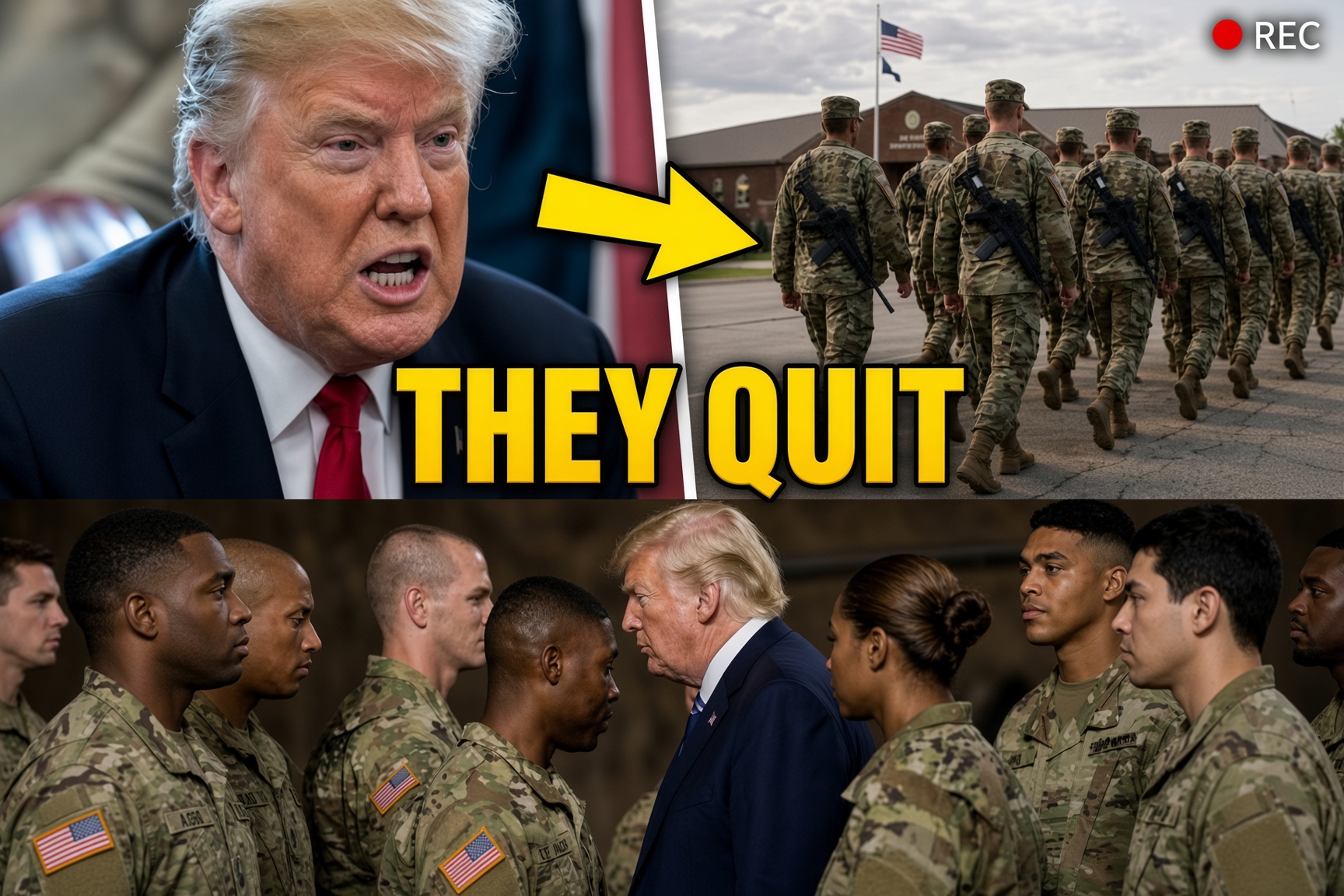
While official confirmation remains pending, reports that some U.S. service members may be refusing duty orders have drawn attention to deepening internal tensions within the American defense establishment. The speculation arises amid escalating public statements from Donald Trump concerning possible strikes on civilian infrastructure in Iran, including power facilities and bridges.
Such targets mark a sharp departure from more limited military objectives and have alarmed legal scholars and humanitarian organizations. Experts warn that large-scale attacks on systems essential to civilian life could violate international humanitarian law and established wartime conventions protecting non-combatants. Strategically, the approach carries substantial risks. Historical precedents suggest that systematically degrading a nation’s infrastructure rarely produces the decisive military outcomes sought; instead, it frequently fuels nationalist resistance, strengthens domestic support for the targeted government, and narrows the space for later diplomatic engagement. Analysts fear that a campaign intended to demonstrate resolve could ultimately forge a more unified and resilient adversary.
The political reaction in Washington has been swift. Senator Chris Van Hollen and other lawmakers have labeled the posture “reckless,” arguing that it lacks a coherent strategic framework or clear objectives. Concerns are growing that executive decision-making is outpacing congressional oversight. The constitutional role of the legislative branch in authorizing military action has historically served as a critical check, yet the rapid pace of the present crisis threatens to sidestep traditional debate and funding constraints, raising the prospect of escalation without clear legislative authorization.
Internationally, the implications are equally serious. Observers note that Tehran has shown little willingness to yield under external pressure. Threats of this nature tend to consolidate hardline positions within Iranian leadership circles, reducing the likelihood that military coercion alone will produce de-escalation. Compounding the difficulty is the absence of a defined exit strategy. Without a structured endgame, the risk of a protracted conflict that consumes resources and lives increases markedly for all parties.
In this environment, diplomats are focused on preserving channels of communication. Reports indicate that back-channel contacts continue in an effort to identify off-ramps. Because perceptions can shape events as powerfully as concrete actions, a single miscalculation holds the potential to alter the regional security landscape. As events unfold, the central question is whether restraint and dialogue can still prevail or whether the region faces a new and more unstable phase of confrontation.