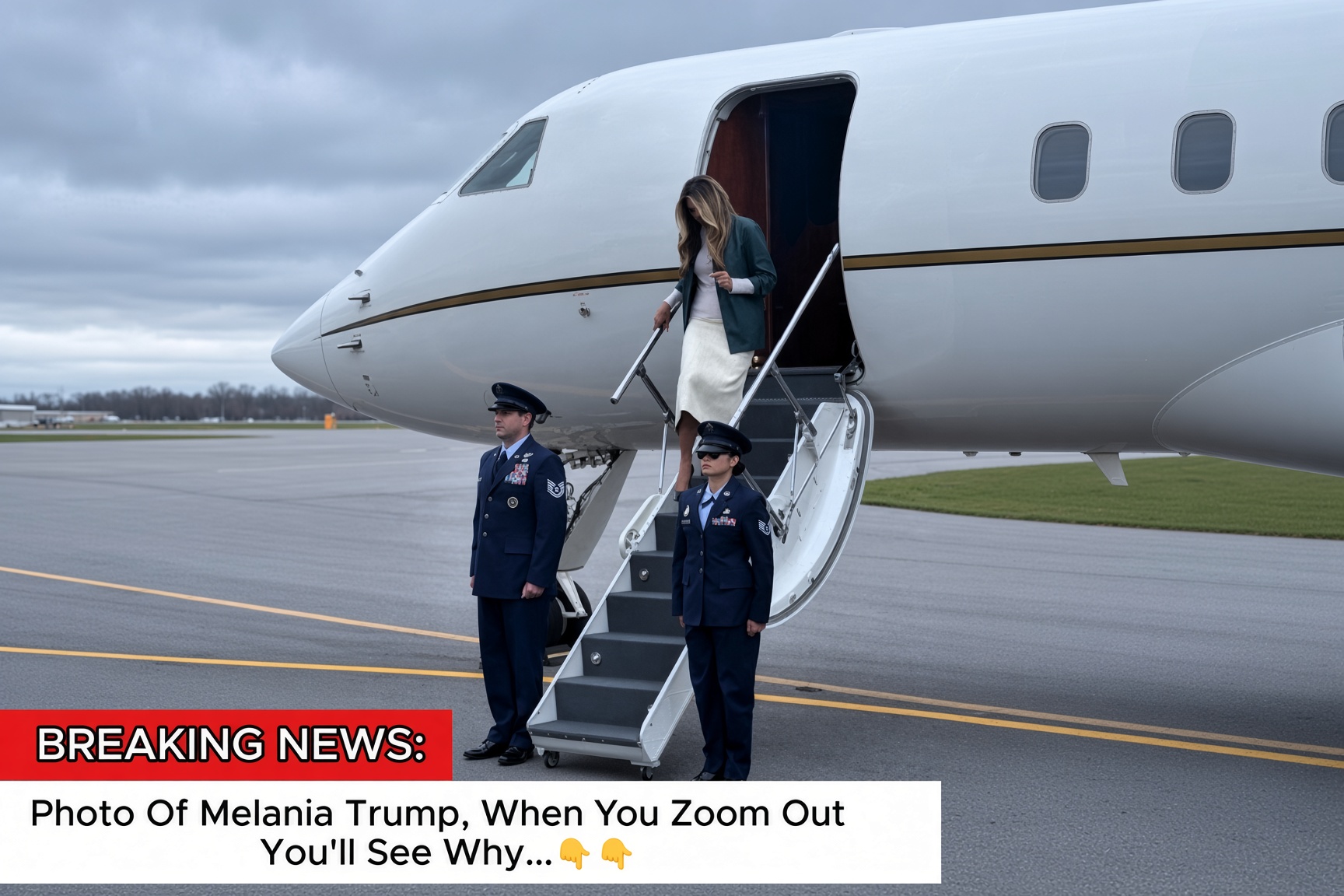
President Donald Trump and First Lady Melania Trump experienced an unplanned diversion during their trip by Marine One in the United Kingdom after the helicopter developed a hydraulics issue. The flight, which was expected to last about 20 minutes from the landing zone at Prime Minister Keir Starmer’s country residence, Chequers, to Stansted Airport, instead took nearly 40 minutes. Press Secretary Karoline Leavitt said the pilots landed at a local airfield “out of an abundance of caution” before the aircraft reached the airport. The president and first lady then transferred safely to a support helicopter to complete the journey.
The diversion occurred toward the end of an unusual second state visit to the United Kingdom. King Charles III and Queen Camilla had earlier welcomed the Trumps at Windsor Castle. The program then shifted to Chequers for a full day of discussions with Starmer that covered both political and commercial matters. Those private meetings are understood to have addressed the war in Ukraine, the conflict in Gaza, environmental policy, and free speech, among other topics. Later, the two leaders joined business executives for a reception.
Starmer described the broader outcome of the visit as a “tech-prosperity deal” and highlighted a £250 billion mutual investment package between the United States and the United Kingdom. He called the relationship the most “natural partnership in the world.” Trump said the agreements would generate “billions of dollars of opportunities” and give the United States better access to the United Kingdom’s aerospace supply chain. He framed the package as the next step in science and technology cooperation that would involve government, academic institutions, and private companies in fields including artificial intelligence, quantum computing, fusion energy, 6G communications, and civil nuclear power.
“This new accord is already helping spur a massive wave of private sector deals worth over $350 billion alone, headlined by a $136 billion from Blackstone,” Trump said. He pointed to a long-discussed partnership between American firm X Energy and British company Centrica to deploy modular nuclear reactors across the United Kingdom. That project is expected to generate more than $50 billion in economic value, create up to 2,500 jobs, and supply power for 1.5 million homes. Trump noted that the reactors build on decades of British scientific contribution, referencing Alan Turing’s pioneering work in computing, and argued that the United States and the United Kingdom could together dominate the future of artificial intelligence—provided they secure the large amounts of electricity the technology requires.
He also stressed that the two governments would pursue deregulation alongside innovation. “We’re going to have a lot of deregulation and a tremendous amount of innovation just happening,” he said, adding that both sides hoped the approach would succeed. Starmer’s government presented the overall package as aligning the two countries through a shared emphasis on technological development and private-sector investment.
The visit concluded with the Trumps’ return to the United States. The president arrived back at the White House on Friday after the multi-day trip that had combined ceremonial events at Windsor with substantive talks at Chequers. The hydraulics incident on Marine One did not alter the remainder of the schedule, and officials described the transfer to the support helicopter as routine once the precautionary landing had been made.
Taken together, the state visit produced announcements of large-scale commercial commitments in energy, technology, and infrastructure while the leaders addressed ongoing international conflicts and regulatory questions. The Marine One diversion drew public attention but was presented by the White House as a cautious response to a mechanical concern that did not affect the safety of the president or first lady. The investment figures cited by both governments—ranging from the £250 billion mutual package to the $350 billion in private deals and the specific nuclear-reactor project—now form the public record of the economic results claimed from the meetings.