On the afternoon of August 3, 2016, what began as a routine arrival at one of the world’s busiest airports turned into a harrowing fight for survival. Emirates Flight EK521, a Boeing 777-300 operating from Thiruvananthapuram (Trivandrum), India, to Dubai, was carrying 282 passengers and 18 crew members when it suffered a catastrophic landing incident at Dubai International Airport. All 300 people on board survived, but the event claimed the life of a firefighter and left the aircraft a burned-out wreck on the runway.
Shortly before touchdown, passengers recalled a precautionary announcement from the cockpit concerning a possible landing gear issue. Many initially dismissed it as standard procedure. In reality, the flight was contending with challenging conditions. Wind shear—a sudden shift in wind speed or direction—was present in the area, along with high temperatures and thermals rising from the hot runway surface. The crew had initiated an approach that became a long landing, with the aircraft floating past the ideal touchdown zone.
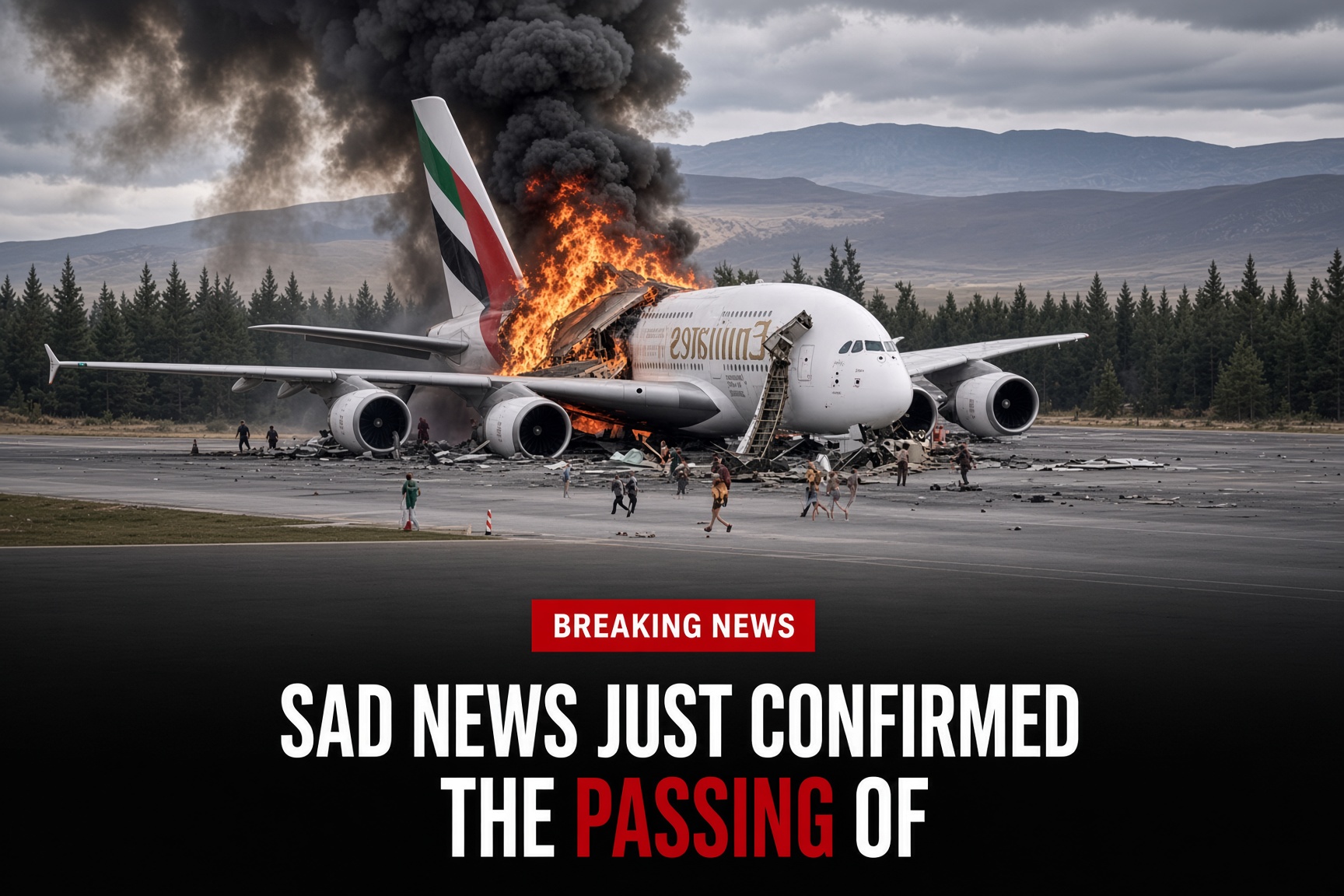
As the main landing gear made contact roughly 1,100 meters beyond the runway threshold at approximately 12:37–12:45 p.m. local time, the captain attempted a go-around. What the crew did not immediately realize was that the engines remained at idle thrust. Because the main gear had already touched down, the automatic takeoff/go-around (TO/GA) function was inhibited. Without the power needed to climb away, the aircraft settled back onto the runway with its landing gear only partially retracted. It skidded along the pavement, engines and fuselage scraping the surface, before coming to rest. Flames erupted almost immediately, fed by fuel from damaged systems, and thick black smoke rapidly filled the cabin.
Inside the aircraft, panic mixed with disciplined response. Emergency slides were deployed as smoke poured in and alarms sounded. Cabin crew directed passengers toward exits, urging them to leave belongings behind. Many survivors later described the chaotic scramble: the heat radiating from the fire, the acrid smoke, and the urgency of sliding down the chutes while clutching children or simply holding on. Some passengers delayed the process by retrieving carry-on bags, a detail later noted in investigations as increasing risk during the critical window. Despite the conditions, the evacuation of nearly everyone was completed in roughly six to seven minutes. The captain and a senior cabin crew member remained aboard briefly to confirm the cabin was clear before escaping themselves.
Within minutes of the aircraft stopping, the burning jet was fully engulfed. Roughly nine to ten minutes after it came to rest, the center fuel tank exploded. The blast tore away a section of the upper wing skin and fatally injured a firefighter from the airport’s civil defense team who was actively fighting the blaze. Identified as Jasim Issa Mohammed Hassan (also referred to as Jassim al-Balooshi or similar variants in reports), a resident of Ras Al Khaimah, he died in the line of duty while others were still being secured or the fire was being contained. Several other firefighters and responders sustained injuries, including heat-related effects.
Of those on board, dozens suffered injuries—final figures placed the total around 32 occupants, including both passengers and crew, with a smaller number treated as serious (notably smoke inhalation for a senior flight attendant). Early reports indicated about ten passengers hospitalized, none with life-threatening conditions. The majority of passengers were Indian nationals, with others from the UK, UAE, US, and elsewhere. For many survivors, the physical injuries healed faster than the psychological impact of those minutes when survival felt uncertain.
Emirates Airlines confirmed the accident and expressed relief that no passengers or crew had died, while extending condolences for the firefighter. Dubai International Airport suspended operations for several hours, diverting flights and causing widespread delays and cancellations as emergency teams worked to control the fire and secure the site. Images and videos of the burning aircraft quickly spread worldwide, prompting immediate discussion of aviation safety and emergency preparedness.
Investigators from the UAE’s General Civil Aviation Authority (GCAA) examined flight data recorders, cockpit voice recordings, weather information, maintenance records, and crew training. The final report, released in 2020, identified the primary causes as the flight crew’s failure to effectively monitor primary instruments and engine thrust during the attempted go-around, combined with reliance on automation and insufficient training for go-arounds initiated so close to the runway. Wind shear and related environmental factors contributed to the long landing and the decision to go around. Air traffic control was also noted for not fully conveying earlier wind-shear reports from preceding flights. The aircraft itself, a 2003-built Boeing 777 that had accumulated tens of thousands of flight hours, was destroyed—the airline’s only hull loss of this kind.
Passenger accounts captured the human dimension. One survivor described clutching a child while descending an emergency slide, praying for a safe landing on the tarmac. Others recalled the overwhelming relief of standing outside and watching the plane burn, realizing they had escaped what could easily have become a mass-casualty disaster. Flight attendants’ clear instructions and the overall professionalism of the cabin crew were widely credited with keeping panic from spiraling into greater harm.
The incident underscored both the strengths and vulnerabilities of modern aviation. Commercial flying remains statistically one of the safest forms of transport, with aircraft engineered for redundancy, fire suppression, and rapid evacuation. Yet the sequence of events—from wind effects and a low-energy go-around to the rapid onset of fire—showed how quickly conditions can deteriorate. Training for low-altitude go-arounds, better awareness of automation limitations, and stricter passenger compliance during evacuations emerged as practical lessons. The GCAA’s findings prompted recommendations for enhanced pilot training at Emirates and system improvements from Boeing.
The firefighter who died is remembered as a hero whose sacrifice occurred while protecting others. His loss stood in contrast to the extraordinary outcome for those on the aircraft: every passenger and crew member walked away. In the hours and days that followed, survivors expressed profound gratitude, and aviation authorities focused on applying the lessons so that similar chains of events could be interrupted earlier.
What happened on that August afternoon in Dubai remains a stark reminder of the narrow margins in flight, the value of rigorous training, and the courage of both cabin crews under pressure and first responders who run toward danger. The survival of 300 people from a burning aircraft on the runway was no accident of chance alone—it reflected preparation, rapid decision-making, and human resilience in the face of disaster.