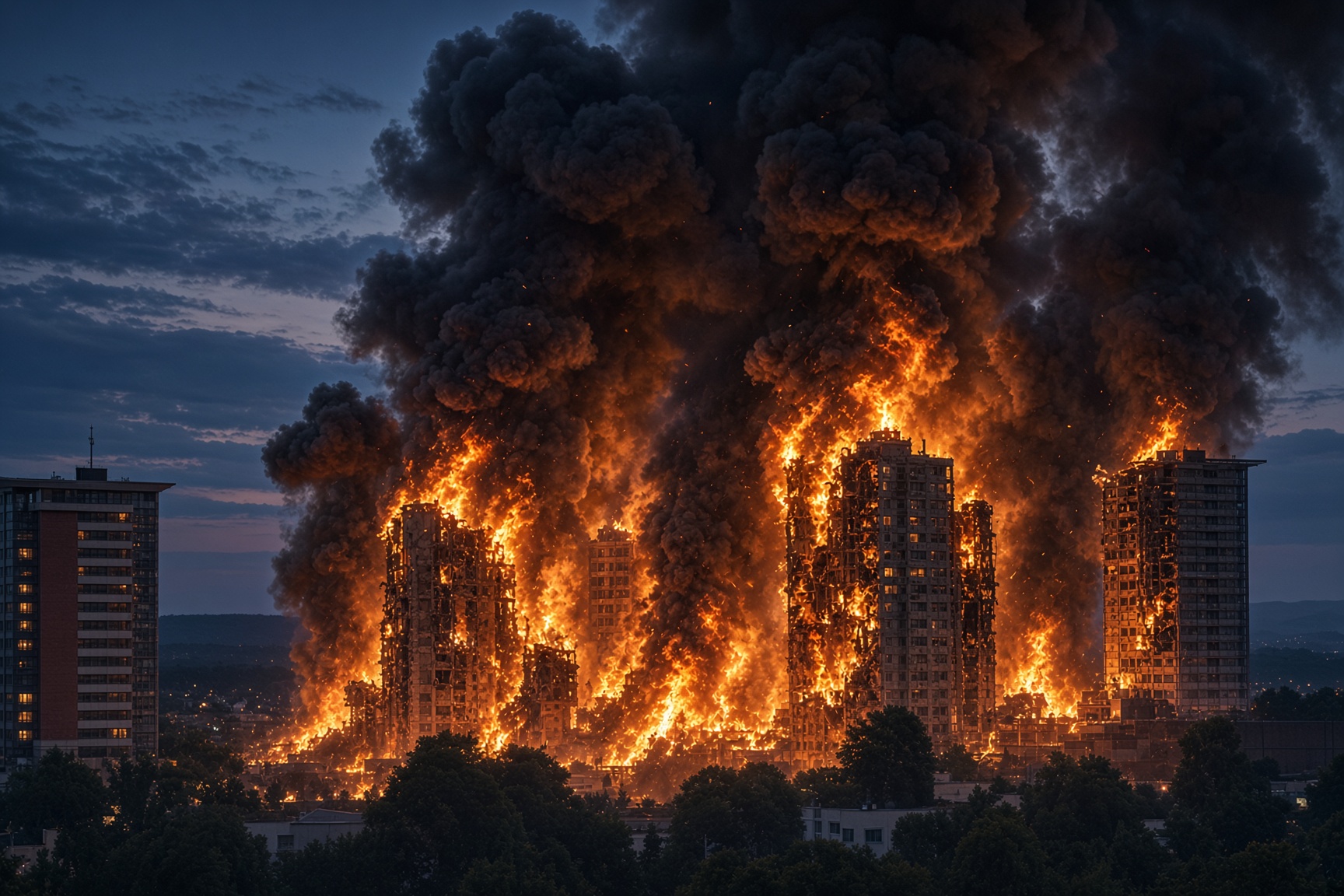
A recently released video has drawn significant interest across gaming and military simulation communities for its meticulously crafted depiction of a large-scale fictional conflict. Produced within the widely used military simulation platform Arma 3, the video presents an imaginative scenario of a modern battle between two major global powers. Although the visuals, equipment, and tactical sequences convey a high degree of realism, the entire production is fictional. It is intended for entertainment and as a tool for strategic education rather than any reflection of actual events. A clear disclaimer reinforces this distinction, ensuring viewers understand the content exists solely within the realm of simulation.
From its opening moments, the video establishes a dramatic and immersive atmosphere. Viewers are introduced to a carefully constructed battlefield in which modern military units operate with coordinated purpose. The creators have invested considerable effort in delivering a realistic experience through the inclusion of advanced equipment such as main battle tanks, attack and transport helicopters, fighter jets, and specialized special operations forces. Each element is rendered with careful attention to detail, lending a sense of authenticity while remaining firmly grounded in the simulation environment. The result is an engaging introduction that quickly draws audiences into the hypothetical scenario.
The central theme revolves around a hypothetical confrontation that unfolds across diverse terrains. Urban districts, open landscapes, and elevated regions all feature prominently, supplying varied settings for tactical operations. These environments are not merely visual backdrops; they actively shape the strategies employed by the simulated forces. The inclusion of multiple terrain types underscores the complexity of modern warfare, where geography can decisively influence movement, visibility, logistics, and outcomes. Units must adapt their approaches as conditions change, illustrating the adaptive demands of contemporary operations.
One of the most prominent features of the simulation is its treatment of armored warfare. Tanks are shown maneuvering across the battlefield, engaging targets, and providing mobile fire support to ground troops. The coordination between armored units and infantry highlights the necessity of combined arms integration. Positioning, timing, and continuous communication emerge as essential factors in maximizing the effectiveness of these powerful vehicles. The sequences demonstrate how armor can create openings for infantry advances while infantry, in turn, protects vehicles from close threats, reflecting established principles of mutual support.
Aerial operations receive substantial focus as well. Fighter jets execute precise maneuvers, conduct strikes against designated targets, and deliver supporting fires to forces on the ground. These sequences emphasize the strategic value of air superiority in modern military planning. Control of the air domain grants greater freedom of movement, improved reconnaissance, and enhanced protection for surface units, allowing ground elements to operate with reduced risk. The video captures these dynamics through carefully choreographed visual sequences that convey both the speed and precision associated with modern air power.
Helicopters occupy a versatile role throughout the depicted scenarios. Attack helicopters provide close air support, engaging fortified positions and mobile threats with accuracy, while transport helicopters rapidly insert or extract troops across the battlefield. This dual capability illustrates the flexibility of rotary-wing aircraft in contemporary operations. The ability to reposition forces quickly and respond to evolving conditions is presented as a decisive advantage, and the simulation effectively demonstrates how such mobility can influence the tempo of engagements.
Special operations forces form another central element of the production. These units are portrayed conducting high-risk missions that demand precision, stealth, and tight coordination. Their tasks frequently involve striking critical objectives, gathering intelligence, or supporting larger conventional operations. The inclusion of these specialized elements adds narrative depth and underscores the importance of advanced training and tactical expertise in complex environments. Their actions are integrated into the broader battle rather than treated as isolated spectacles, reinforcing the idea that elite units function most effectively when synchronized with conventional forces.
The video further explores the concept of combined operations, in which multiple branches and capabilities work together under a unified effort. Ground forces, air assets, and supporting elements are integrated into cohesive plans. This approach aligns with modern military doctrine that stresses coordination across domains. By showing how these components interact—how air strikes enable ground advances, how intelligence shapes targeting, and how logistics sustain momentum—the simulation offers viewers a clearer view of strategic planning in action. Success in the depicted scenarios depends on the seamless functioning of the entire system rather than the performance of any single unit.
Cinematic presentation is another notable strength. The creators employ advanced camera work, deliberate lighting, and layered sound design to produce an engaging and immersive experience. Explosions, vehicle movements, radio chatter, and environmental details are synchronized to heighten realism. This attention to visual and auditory storytelling helps bridge the gap between traditional gameplay footage and more polished cinematic production, broadening the video’s appeal beyond dedicated simulation enthusiasts. The result feels intentional and carefully edited rather than raw gameplay capture.
Despite the realistic appearance, the video consistently communicates its fictional character. The included disclaimer explicitly informs viewers that the content is not based on actual events. This clarification is important given the level of detail and authenticity on display, which could otherwise invite misinterpretation. By framing the scenarios as purely hypothetical, the creators place the work in the appropriate context and invite audiences to engage with it as an exercise in imagination and analysis rather than a documentary.
The educational dimension of the simulation is significant. While entertainment remains the primary goal, the video also supplies insights into military strategy and tactics. Viewers can observe decision-making processes, unit deployments, and the interplay of different capabilities during operations. Those interested in strategic thinking or military studies may find particular value in watching how choices cascade across the battlefield. The production does not claim to teach doctrine, yet it offers an accessible window into the complexities of coordination, timing, and adaptation.
The popularity of such simulations reflects broader interest in realistic gaming experiences. Platforms like Arma 3 give creators substantial freedom to design complex scenarios that approximate real-world conditions. This flexibility supports the development of content that is simultaneously engaging and informative. The video in question stands as a strong illustration of what skilled creators can achieve within that framework, combining technical proficiency with purposeful storytelling.
Community involvement contributes meaningfully to the success of these projects. Enthusiasts routinely share custom scenarios, offer feedback, and debate tactics. This collaborative environment encourages innovation and steadily raises the quality of available simulations. The present video adds to that ecosystem by supplying a detailed, well-produced example of modern military simulation that others can study or build upon.
Ethical considerations are addressed through the overall framing of the content. The creators avoid glorifying real-world conflict and instead concentrate on the technical and strategic aspects of the simulation. By presenting the video as a fictional exercise, they aim to foster understanding and curiosity rather than sensationalism. This stance is consistent with the wider goal of employing gaming environments as tools for education, exploration, and creative expression rather than as vehicles for real-world advocacy.
Technological progress has been essential in enabling simulations of this quality. Contemporary game engines can render complex environments, realistic vehicle physics, and convincing interactions between units. The resulting level of detail increases immersion and allows creators to construct scenarios that closely resemble plausible operational conditions. As computing power and development tools continue to advance, the potential for still more sophisticated simulations is expected to expand, offering even greater opportunities for both entertainment and analytical use.
Teamwork and coordination emerge as recurring themes. Every unit within the simulation fulfills a defined role, and overall success hinges on effective collaboration. Communication across elements ensures that actions remain synchronized and that opportunities are exploited promptly. This emphasis mirrors real-world principles of command and control and contributes to the authenticity of the depicted operations.
Narrative structure further strengthens the production. Rather than presenting disconnected combat scenes, the creators have shaped a cohesive storyline that guides viewers through the progression of the battle. The transition from initial deployment to sustained engagement creates a sense of continuity and purpose. Contextual framing around each major sequence helps maintain audience interest and clarifies the strategic intent behind the action.
The variety of scenarios adds additional depth. Urban fighting, open-field maneuvers, and operations on elevated terrain each present distinct challenges. By incorporating these different environments, the video demonstrates how tactics and formations must adjust to changing conditions. The resulting diversity keeps the content engaging while showcasing the flexibility of the underlying simulation platform.
Realism is reinforced by careful attention to equipment and procedures. Vehicles, weapons systems, and operational methods are portrayed in ways that echo their real-world counterparts. Although the overarching scenario remains fictional, these details support a believable and immersive experience. The balance between authentic representation and imaginative storytelling is a primary reason for the video’s appeal among both casual viewers and dedicated simulation enthusiasts.
Strategic thinking is consistently highlighted. Individual actions are shown as components of larger plans, and outcomes depend on sound decision-making under pressure. Audiences can observe how different choices affect the course of the engagement, gaining insight into the layered complexities of modern operations. This focus on strategy supplies an educational layer that complements the entertainment value.
As interest in military simulations continues to grow, productions of this kind are likely to remain popular. They deliver a distinctive combination of engaging visuals and conceptual insight, attracting a broad audience. By situating realistic operational concepts within an explicitly fictional framework, creators can examine complex topics in an accessible manner. The video ultimately demonstrates the capabilities of contemporary simulation technology. Through realistic visuals, strategic depth, and cinematic execution, it offers a compelling example of what dedicated creators can achieve in the genre.
For viewers, the central takeaway is to appreciate the content as a fictional exploration of strategy, coordination, and technology. The scenarios are not real, yet they can still prompt reflection on how complex operations might be organized and executed. Understanding the simulation’s purpose allows audiences to enjoy the production while developing a clearer appreciation for the art of planning and the importance of integration across domains.
In summary, this Arma 3 military simulation video stands out as a high-quality production that successfully merges entertainment with educational value. Its detailed portrayal of modern combat elements, combined with a clear commitment to fiction, keeps the work both engaging and responsibly framed. As a result, it serves as a strong example of how gaming platforms can be used to explore intricate ideas in a safe, creative, and thought-provoking way.