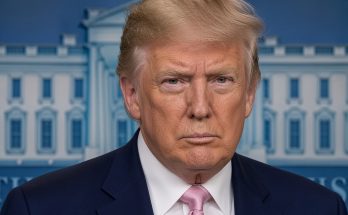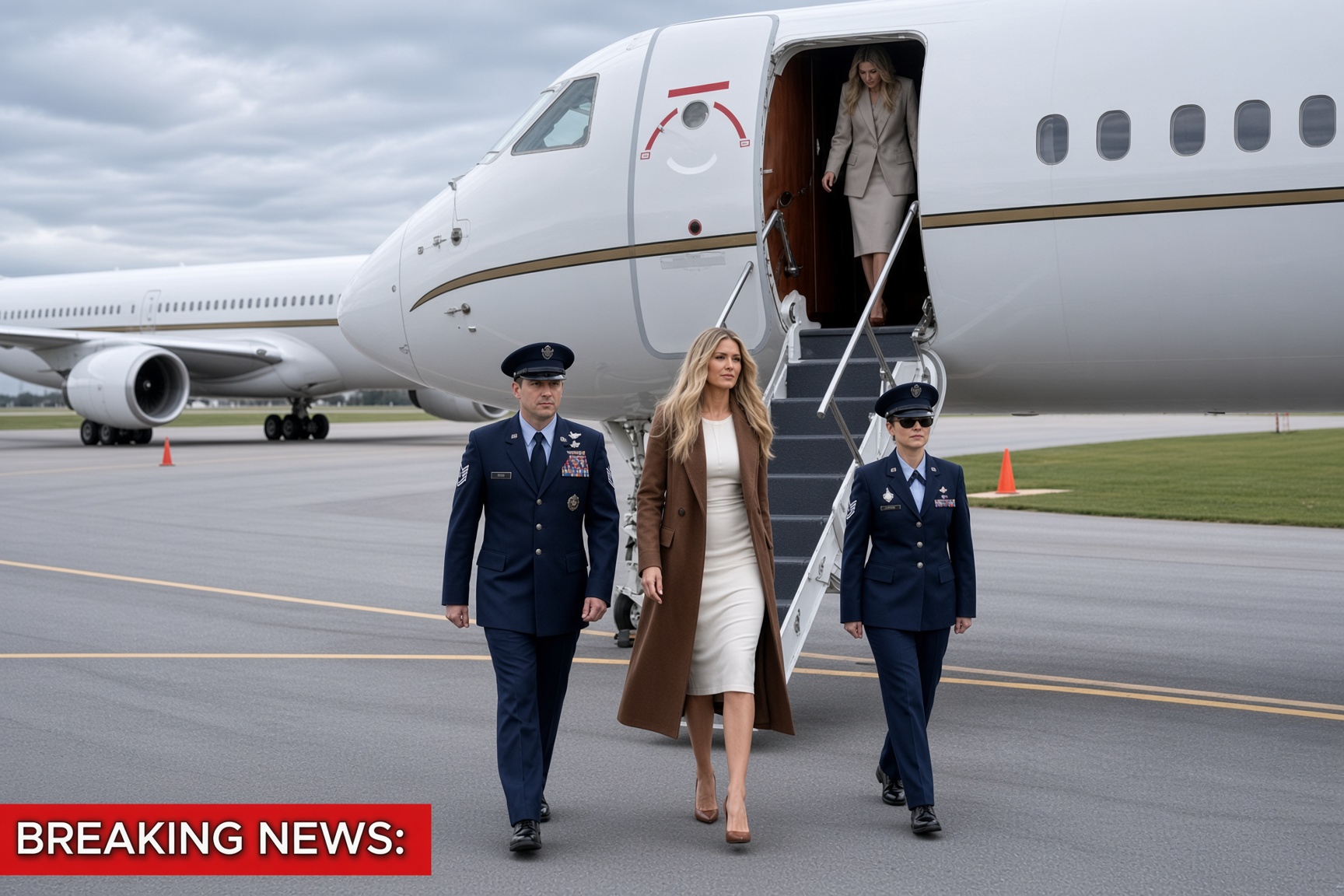
President Donald Trump and First Lady Melania Trump were forced to make an unscheduled landing while traveling aboard Marine One in the United Kingdom after pilots detected a hydraulics issue. White House Press Secretary Karoline Leavitt said the decision was made “out of an abundance of caution.” The presidential couple safely switched to a support helicopter at a local airfield before continuing on to London Stansted Airport. The short hop from the prime minister’s country residence at Chequers to Stansted had been expected to take about 20 minutes; the hydraulics problem stretched the journey to nearly 40 minutes. No injuries were reported, and officials described the landing as precautionary rather than an emergency.
The incident occurred near the end of Trump’s second state visit to the United Kingdom. King Charles III and Queen Camilla had formally welcomed the president and first lady earlier in the trip. Discussions throughout the visit centered on trade, technology, energy security, and large-scale investment between the two countries. British Prime Minister Keir Starmer highlighted a £250 billion package of investment flowing in both directions, calling the agreement an important step in deepening the economic partnership.
On the morning of the helicopter flight, Trump had spent time at Windsor Castle with King Charles III before traveling by Marine One to Chequers for working sessions with Starmer. After private talks, the two leaders joined business executives at a reception. Conversations focused on practical cooperation in technology, energy, and cross-border investment. Starmer described the resulting framework as a “tech-prosperity deal.” Trump said the arrangement would generate “billions of dollars of opportunities” and give the United States greater access to the United Kingdom’s aerospace supply chain.
Both leaders emphasized next-generation fields. Trump pointed to expanded collaboration in artificial intelligence, quantum computing, fusion energy, 6G communications, and civil nuclear power. He stressed that rising electricity demand from AI and related technologies requires substantial new generation capacity. “You need the energy. You have to have the energy,” he said. “That’s one thing I learned very quickly. They need a lot of electricity.”
One concrete outcome involves advanced nuclear technology. American firm X-Energy and British energy company Centrica announced plans to develop up to 12 advanced modular reactors at Hartlepool. The project forms part of a broader U.K. program aiming for a 6-gigawatt nuclear fleet. According to the British government, the reactors could supply enough electricity for up to 1.5 million homes and support as many as 2,500 jobs. Officials framed the nuclear agreement as part of a larger record package of commercial commitments produced by the state visit, including £150 billion in newly announced U.S. investment in the United Kingdom.
Trump also referenced the historical role of British computing pioneer Alan Turing, saying the science and technology partnership would help both countries “dominate the future of artificial intelligence” through joint government, academic, and private-sector work. The overall package covers sectors that include artificial intelligence, advanced manufacturing, clean energy, and nuclear power.
After the meetings at Chequers and the subsequent helicopter transfer, Trump and Melania returned to the United States. The White House confirmed that the couple arrived at London Stansted Airport and boarded Air Force One for the flight home, reaching the White House on Thursday, September 18, 2025.
The unscheduled landing drew brief attention because of the high-profile passengers, yet officials treated it as a routine safety precaution. The broader visit, by contrast, produced a dense set of announced investment and technology commitments that both governments presented as a tangible strengthening of the U.K.-U.S. economic relationship.