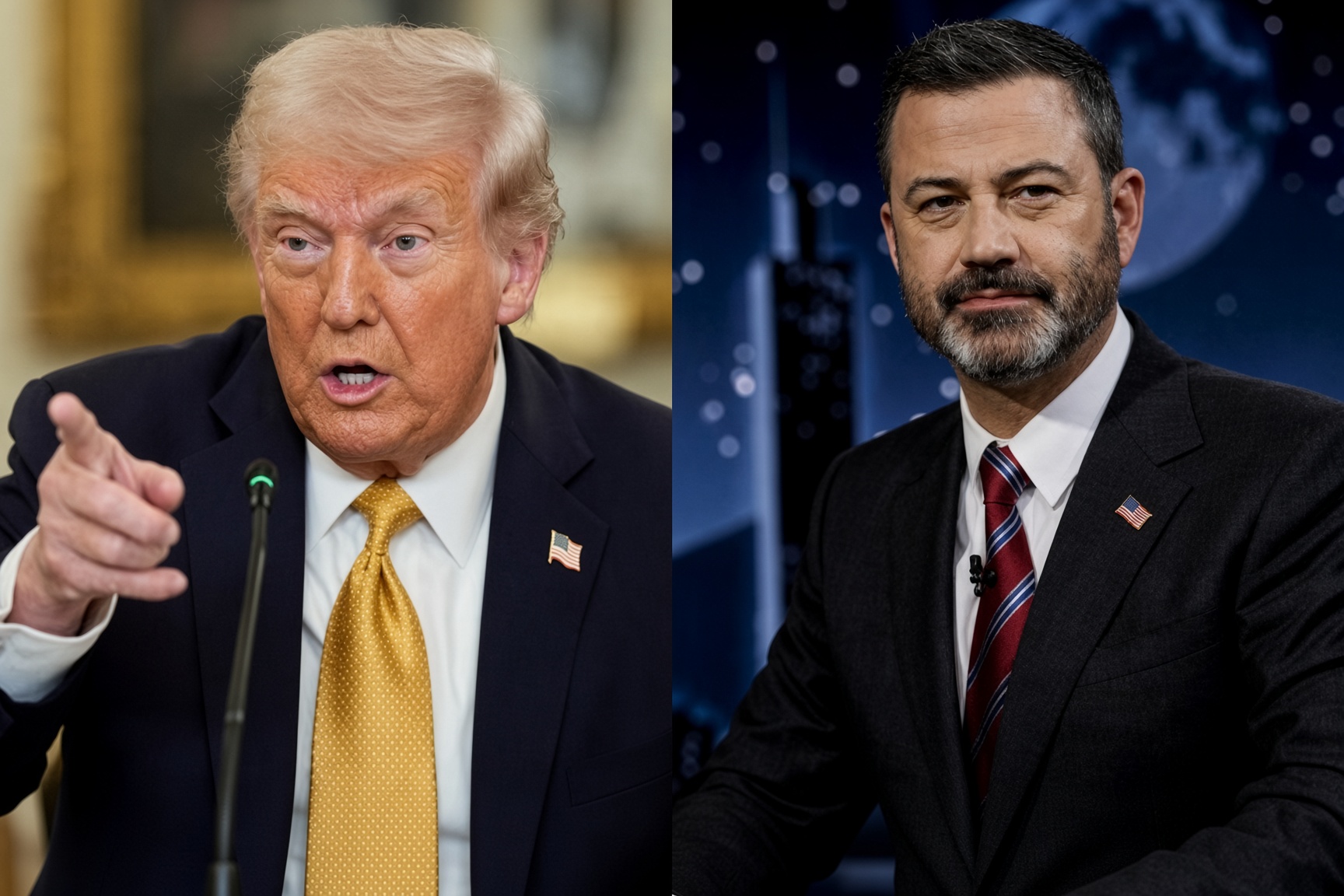
A sharp controversy has unfolded at the intersection of American politics and late-night entertainment, centered on former President Donald Trump, his wife Melania Trump, and host Jimmy Kimmel. The dispute began with comments aired on Jimmy Kimmel Live! that many viewers and critics described as moving beyond political satire into personal and degrading territory. Clips of the segment spread quickly on social media, fueling a national discussion about the ethical limits of comedy and the standards expected in public discourse.
In response, Donald Trump released a direct public statement condemning the remarks directed at Melania. He framed the issue as one of media accountability and basic human decency, arguing that public figures—regardless of political affiliation—should not face “unfair and degrading personal attacks.” The statement resonated with his supporters, who amplified the message online and called for higher standards from media figures. Trump positioned the episode as a clear line that should not be crossed, casting himself as a defender of traditional respect in public life.
Reactions among media analysts and cultural commentators have been divided. Some maintain that satire has long served as a provocative, boundary-pushing form essential to democratic debate, and that discomfort is often part of its function. Others contend that audience expectations have shifted, with growing insistence that even sharp political critique remain within bounds of professional decorum. Today’s viewers, empowered by social media, respond rapidly and vocally, placing new pressure on networks and hosts to weigh the tone of their content.
Melania Trump has stayed silent throughout the episode, a choice some observers interpret as deliberate to prevent further escalation. ABC and the Jimmy Kimmel Live! production team have not issued a formal apology or announced a clear timeline for the show’s return. The network’s measured stance suggests it is assessing the longer-term effects on its audience, advertisers, and brand. Industry watchers note that high-profile controversies of this kind frequently prompt adjustments in programming and content oversight to better match evolving public expectations.
The financial implications have been immediate. Advertisers have begun reevaluating their association with the program, raising the stakes for ABC and its parent companies. The episode illustrates how quickly public mobilization in the digital age can affect multi-billion-dollar media organizations. When audiences organize and voice concerns, corporate decisions can shift in response.
The situation remains fluid. Whether Jimmy Kimmel Live! returns in its previous form or undergoes changes, the incident is likely to influence broader conversations within the entertainment industry about risk, tone, and audience tolerance. It has renewed longstanding questions about the boundary between political humor and personal harassment, and about the responsibility of major networks in overseeing the content they broadcast.
At its core, the controversy reflects deeper cultural tensions over the limits of free expression and the protection of personal dignity. As the public continues to process the episode, the central issues persist: where satire ends and unacceptable personal attack begins, and what standards a national platform should uphold. The suspension of Jimmy Kimmel stands, for now, as a notable marker in the ongoing friction between Hollywood commentary and the political sphere, underscoring the delicate balance required in the modern media environment.