U.S.-Iran Peace Talks Stall as VP JD Vance Delays Islamabad Trip Amid Ceasefire Uncertainty
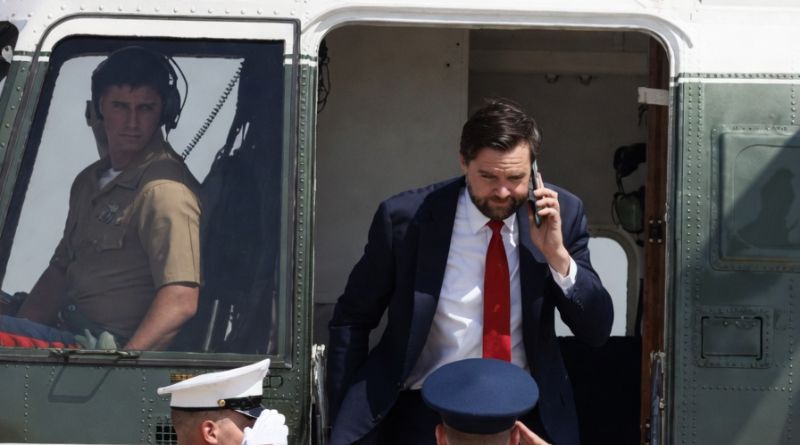
Vice President JD Vance was scheduled to board a plane and lead a high-level U.S. negotiating team to Islamabad, Pakistan, for crucial follow-up talks with Iran. However, the trip was abruptly delayed on Tuesday as uncertainty grew over Iran’s participation, with the vice president instead called back for policy meetings at the White House.
CNN’s Alayna Treene reported that while Vance will not depart as planned, it remains unclear whether the trip has been canceled entirely. “We don’t know if this trip is definitely off,” Treene told anchors Wolf Blitzer and Pamela Brown. “All we do know is that it is definitely delayed and that we should expect to see now the vice president at the White House for meetings today, not leaving this morning on that plane as we had previously reported.”
The development marks a setback in Pakistan-mediated efforts to broker a lasting end to hostilities between the U.S., Israel, and Iran. Earlier this month, Vance traveled to Islamabad alongside special envoy Steve Witkoff and senior adviser Jared Kushner for intensive negotiations. Those talks, which stretched over 21 hours, failed to produce a deal after Iran declined to provide the firm “affirmative commitment” sought by the U.S. that it would not pursue nuclear weapons.
“The bad news is that we have not reached an agreement,” Vance said at the time. “And I think that’s bad news for Iran, much more than it’s bad news for the United States of America.”
Compounding the pressure, the U.S. has enforced a naval blockade on Iranian ports. U.S. Central Command reported on Tuesday that American forces had instructed 28 ships to turn around or return to port. Officials noted that any vessels that might have entered Iranian ports would be unable to exit due to the restrictions in the Gulf of Oman.
A fragile two-week ceasefire, brokered by Pakistan and beginning around April 8, is nearing its end, though extensions have been discussed. As of Tuesday evening Pakistani time, Pakistani Information Minister Attaullah Tarar said a formal confirmation from the Iranian delegation for the Islamabad talks was still pending. Nevertheless, Tarar stressed that mediators remained in “constant touch” with Tehran and described the discussions as “critical” for regional stability.
In a further sign of tension, Iranian President Masoud Pezeshkian took to X to criticize the U.S. approach, writing that the level of understanding shown by those requesting Iran’s presence in Islamabad was “even lower than Trump’s level of understanding and comprehension.”
Meanwhile, U.S. Chargé d’Affaires Natalie Baker met with Pakistani Deputy Prime Minister Ishaq Dar to discuss ongoing diplomatic efforts. Dar reiterated Pakistan’s commitment to dialogue as the only path to peace, urging both sides to consider extending the ceasefire.
President Trump has signaled reluctance to prolong the truce indefinitely, telling CNBC, “I don’t want to do that. We don’t have that much time.” He emphasized that Iran could emerge stronger economically if it reaches a comprehensive deal but warned that time is limited for a permanent solution.
The impasse highlights deep mistrust between Washington and Tehran. The U.S. insists on robust safeguards to prevent Iran from developing nuclear weapons, while Iran has pushed back against what it views as overly demanding conditions, including full reopening of the Strait of Hormuz and removal of highly enriched uranium stockpiles.
Pakistan continues to play a central mediating role, with officials working behind the scenes to bring both parties back to the table. As of mid-May, Vance has publicly noted that indirect channels and discussions with regional partners show some progress, though President Trump recently rejected Iran’s latest proposal as unacceptable.
The situation remains highly fluid. With the ceasefire on uncertain ground and military options still on the table, diplomats on all sides are racing against the clock to prevent a return to open conflict. Whether Vance’s postponed trip to Islamabad will be rescheduled depends largely on Iran’s willingness to engage in the coming days.