The Trump administration is reportedly finalizing key details of a framework agreement aimed at resolving the ongoing conflict with Iran, marking a potential turning point in one of the Middle East’s most volatile flashpoints.
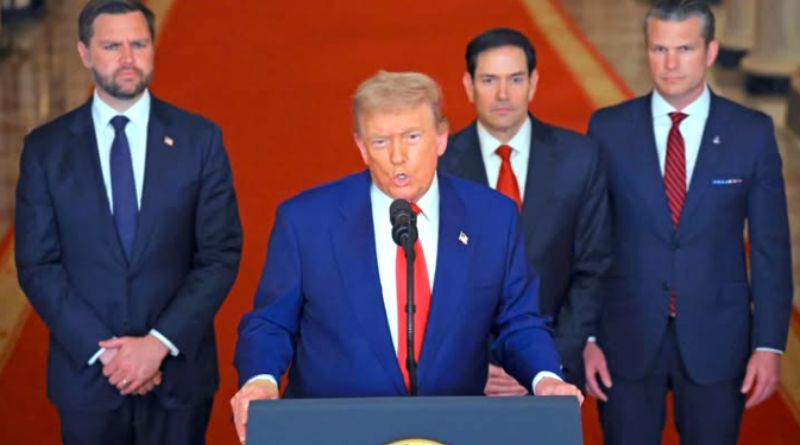
Senior officials, including President Donald Trump, Vice President JD Vance, and Secretary of State Marco Rubio, are driving the diplomatic effort. Speaking during a visit to India, Rubio underscored the urgency of restoring safe passage through the Strait of Hormuz, a critical chokepoint for global oil shipments.
“The straits have to be open, they’re going to be open,” Rubio declared. “What’s happening there is unlawful, it’s illegal, it’s unsustainable for the world, it’s unacceptable.”
Rubio confirmed that intensive negotiations are continuing in Qatar, where U.S. and Iranian teams are haggling over the precise wording of an initial framework document. “There’s a lot of talking back and forth about specific language in the initial document,” he said. “The president has made clear he wants a deal, but it has to be a good deal.”
The diplomatic momentum follows recent military activity. On Monday, U.S. Central Command conducted what it called “self-defense strikes” in southern Iran, targeting missile launch sites and Iranian vessels allegedly attempting to deploy naval mines. The operations centered near Bandar Abbas, a strategically vital Iranian naval base and port city on the Strait of Hormuz.
Captain Tim Hawkins, a CENTCOM spokesperson, said the strikes were limited and necessary to safeguard U.S. personnel while upholding restraint during the existing cease-fire. A senior U.S. military official added that American aircraft and naval vessels in the Gulf of Oman and Arabian Sea had encountered threats from Iranian surface-to-air missile systems.
Iranian officials acknowledged substantive progress in the Qatar talks but tempered expectations for a swift resolution. Foreign Ministry spokesman Esmaeil Baqaei stated, “We have reached conclusions on a large portion of the issues under discussion. But no one can claim that a final agreement is imminent.”
According to a senior Trump administration official, recent U.S. military actions have prompted greater flexibility from Tehran. Core elements of the proposed framework include Iran surrendering its stockpile of highly enriched uranium, guaranteeing the reopening of the Strait of Hormuz to unrestricted international shipping, and accepting long-term, verifiable restrictions on uranium enrichment activities.
In exchange, the United States would provide sanctions relief and ease certain maritime restrictions. Administration officials are insisting on a binding, enforceable agreement with robust verification and monitoring mechanisms — elements they view as more critical than any specific timeline. The proposed deal is designed to surpass the limitations of the 2015 Joint Comprehensive Plan of Action (JCPOA) negotiated under the Obama administration, which permitted limited enrichment under international oversight.
While broad principles on key issues appear to have been settled, negotiators continue refining technical details and language. Success could significantly reduce tensions in the Persian Gulf, stabilize global energy markets, and reshape U.S.-Iran relations after years of confrontation.
The developments come amid heightened regional scrutiny, with analysts watching closely to see whether the framework can translate into a durable, verifiable accord that prevents Iran from advancing toward nuclear weapons capability.