Trump Downplays Connections in Deaths, Disappearances of Scientists Tied to Nuclear and Space Research Amid Federal Probes
President Donald Trump has described potential links among the deaths and disappearances of multiple U.S. scientists and researchers involved in sensitive nuclear, aerospace, and space programs as “minimal,” even as the cases continue to spark public concern, congressional scrutiny, and ongoing federal investigations.
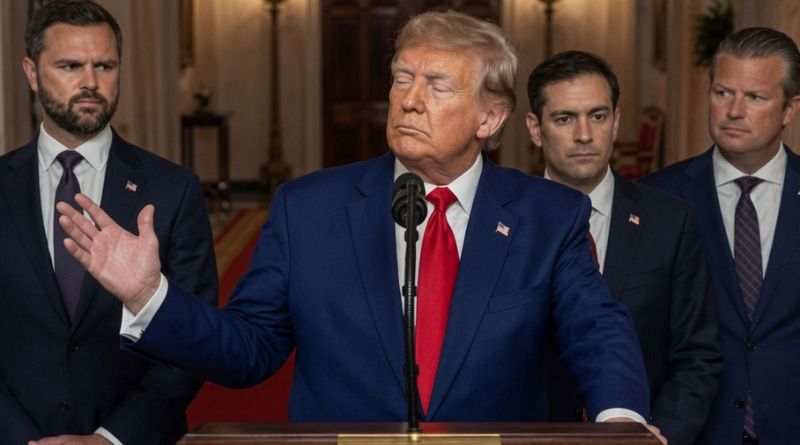
In recent remarks to reporters, Trump acknowledged the seriousness of the incidents while cautioning against jumping to conclusions about foul play. “There are thousands or even hundreds of thousands of scientists working for us, so 10 is a lot, but it’s still a very small number compared to that,” he said. “Some of them that we looked at are very sad cases, in some cases, some were sick, some left this earth self-inflicted. Some had other things. So far, we’re finding that there’s not much of a connection. We’ll let you know.”
The president’s comments come as lawmakers and government agencies intensify their review of at least 13 cases involving scientists and workers with ties to critical national security research. Earlier this month, Trump referred to the situations as “pretty serious stuff” and expressed hope that most were accidents, while noting that some of the individuals were “very important people.” White House Press Secretary Karoline Leavitt had previously stated that the administration would ensure the matters were thoroughly examined.
Federal agencies have responded to the growing attention. Both the FBI and NASA have launched investigations into the cluster of incidents. The cases have drawn significant public and media interest, fueled in part by the high-profile nature of the victims’ work in areas such as nuclear research, space exploration, and advanced aerospace technologies.
Congressional Push for Answers
On Capitol Hill, Rep. Eric Burlison (R-Mo.) has been vocal about the need for transparency. In a post on X, Burlison noted that the tally now stands at 13 American scientists tied to nuclear and space research who are either missing or deceased. “Every adversary on the planet celebrates each one we lose. We are weaker as a nation today because of these losses, and I’m working to get answers,” he wrote.
Burlison has focused particular attention on the case of Matthew Sullivan, a 39-year-old former U.S. Air Force intelligence officer who died on May 12, 2024. According to the New York Post, Sullivan’s death was ruled an accidental drug overdose in his Falls Church, Virginia home. The timing raised questions, as it occurred shortly after he agreed to testify before Congress regarding government activities related to UFOs. Sullivan was a Bronze Star recipient from Operation Enduring Freedom and had served with the National Air and Space Intelligence Center, the National Security Agency, and the Air Force Intelligence Agency.
The broader pattern of incidents began gaining widespread notice following the disappearance earlier this year of retired Air Force Maj. Gen. William Neil McCasland. McCasland previously led the Air Force Research Laboratory and maintained ties to the Los Alamos National Laboratory, a key site for top-secret nuclear research.
Since 2022, the list of affected individuals has grown to include both deaths and disappearances. Those reported missing between 2023 and 2026 are Monica Reza, 60; Melissa Casias, 53; Anthony Chavez, 79; and Steven Garcia, 48. All were considered suspicious cases. The deceased, spanning 2022 to 2026, include Michael David Hicks, 59; Frank Maiwald, 61; Nuno Loureiro, 47; Jason Thomas, 45; Amy Eskridge, 34; Carl Grillmair, 47; and Joshua LeBlanc, 29. Many worked in nuclear science, space exploration, or related fields, with several cases occurring under unclear or concerning circumstances.
Oversight Committee Requests Briefings
The House Oversight Committee has taken formal steps to investigate. On Monday, Chairman James Comer and Rep. Burlison sent letters to several high-level officials, including FBI Director Kash Patel, Energy Secretary Chris Wright, Defense Secretary Pete Hegseth, and NASA Administrator Jared Isaacman. The requests seek staff-level briefings by April 27 on at least 11 cases involving researchers connected to NASA as well as private space companies such as SpaceX and Blue Origin, according to Fortune magazine.
The committee’s actions reflect broader national security worries. The loss of expertise in these specialized fields could have implications for U.S. technological superiority, particularly as competition with adversaries intensifies in nuclear and space domains.
While Trump’s latest statements appear intended to calm speculation and rumors that have proliferated in recent weeks, officials have stopped short of confirming any coordinated threat or direct connections between the cases. Investigations by the FBI and NASA remain active, with lawmakers continuing to demand straight answers for the American public.
The developments highlight the vulnerabilities facing the nation’s scientific workforce in sensitive areas. As probes continue, both the administration and Congress have emphasized the importance of determining whether these tragedies represent isolated incidents or something more systemic. Further updates are expected as federal agencies and oversight bodies delve deeper into the circumstances surrounding each case.