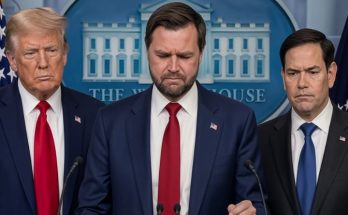
Secretary of State Marco Rubio restated Washington’s position that the Strait of Hormuz must be reopened “one way or the other,” speaking to reporters during a trip to India after U.S. forces carried out strikes in southern Iran. “The straits have to be open, they’re going to be open,” Rubio said. “What’s happening there is unlawful, it’s illegal, it’s unsustainable for the world, it’s unacceptable.”
He noted that talks were underway in Qatar and that progress remained possible. “There were some talks going on in Qatar today, so we’ll see if we can make progress,” Rubio said. Negotiators were still haggling over language in an initial document, he added, a process that “will take a few days.” President Donald Trump, Rubio said, wants either a good deal or no deal.
U.S. Central Command described Monday’s action as “self-defense strikes” intended “to protect our troops from threats posed by Iranian forces.” Capt. Tim Hawkins, a command spokesperson, said targets included missile launch sites and Iranian boats attempting to place mines. Hawkins declined to identify which ships came under fire, their locations, or the precise sites of the other strikes. “U.S. Central Command continues to defend our forces while using restraint during the ongoing cease-fire,” he said.
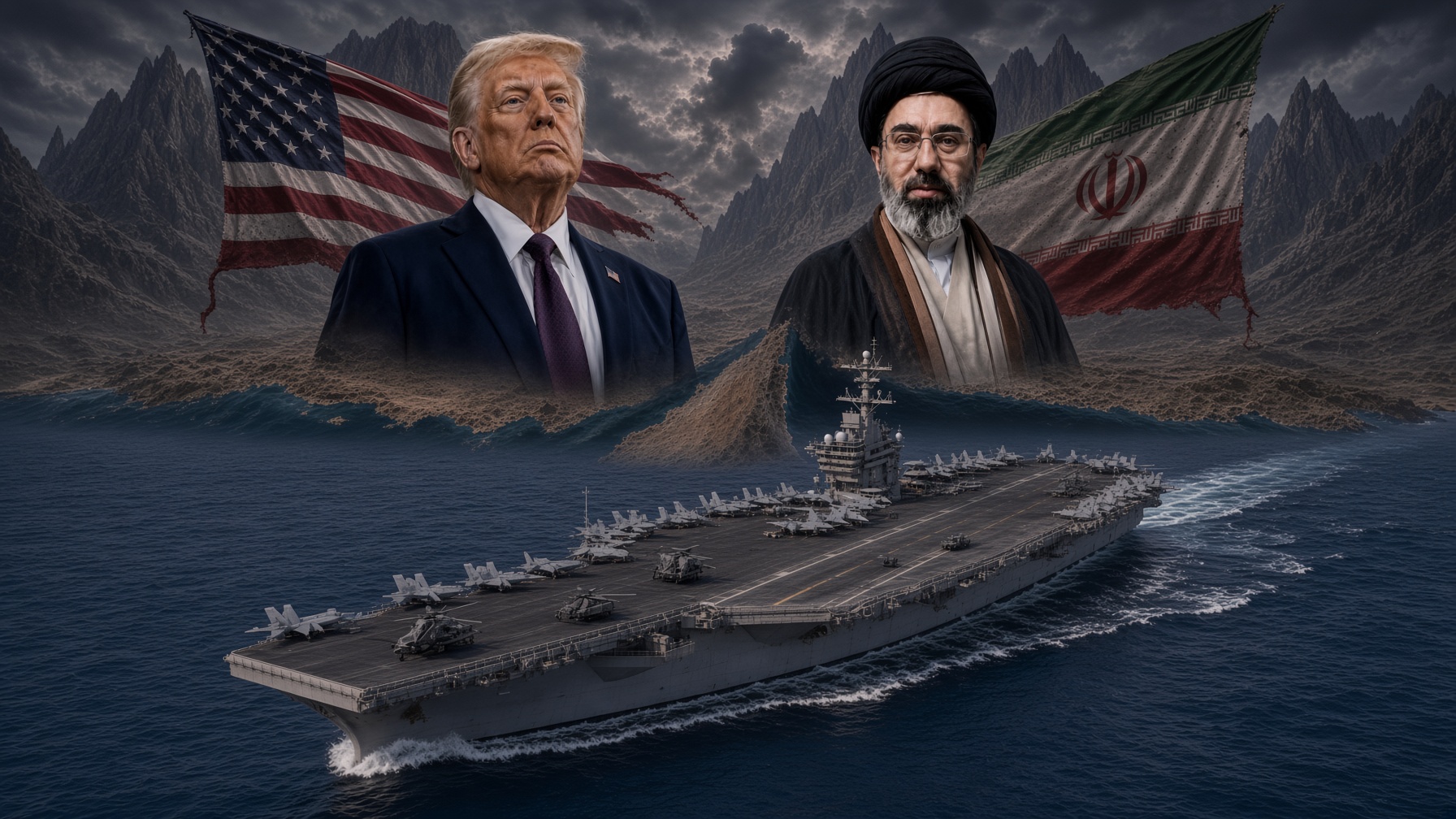
A senior U.S. military official said some of the dozens of American warplanes and nearly two dozen Navy warships—including two aircraft carriers and their escorts enforcing a blockade of vessels trying to enter or leave Iranian ports in or around the Gulf of Oman and Arabian Sea—had been threatened by Iranian surface-to-air missiles. The strikes occurred near the Iranian port and navy base at Bandar Abbas.
American and Iranian forces have clashed in other ways since a cease-fire took effect about six weeks ago. Monday’s strikes came as Iranian officials gathered in Qatar for negotiations aimed at ending the war.
Iran’s foreign ministry spokesman, Esmaeil Baqaei, said Tehran and Washington had reached understandings on many issues but that a final agreement was not imminent. “It is correct to say that we have reached a conclusion on a large portion of the issues under discussion,” he told a weekly briefing. “But to say that this means the signing of an agreement is imminent—no one can make such a claim.” He accused Washington of shifting its positions.
Trump said that if he concludes a deal with Iran it will be “a good and proper one.” He criticized the Obama administration’s record, accusing the former president of giving Iran “massive amounts of CASH, and a clear and open path to a Nuclear Weapon.”
A senior administration official said Sunday that Iran had agreed to a framework that would include eliminating highly enriched uranium. Work to finalize the text continues. In a completed deal, Iran would also have to reopen the Strait of Hormuz in return for the United States lifting its blockade of the waterway. If Iran agrees to reduce nuclear enrichment, Washington would also be prepared to ease sanctions.
The official said most parties agree on the basic ideas and that the Trump administration is pleased with the trajectory even as specifics are still being worked out. Iran appears more open to a deal than it was before the military operation, the official added. The administration wants a firm commitment not to enrich; whether that pledge lasts 20 or 30 years matters less than how it would be enforced. Officials believe any accord would go further than the 2015 nuclear deal, which allowed enrichment up to a specified level.
The combination of limited military action, a naval blockade, and parallel diplomacy in Qatar leaves the situation fluid. Rubio’s comments in India underscored that Washington views an open Strait of Hormuz as non-negotiable, while both sides publicly acknowledge that talks have produced partial agreement without yet producing a signed settlement. Whether the remaining gaps on language, verification, and timing can be closed in the coming days will determine whether the cease-fire holds and whether the waterway returns to normal commercial traffic.