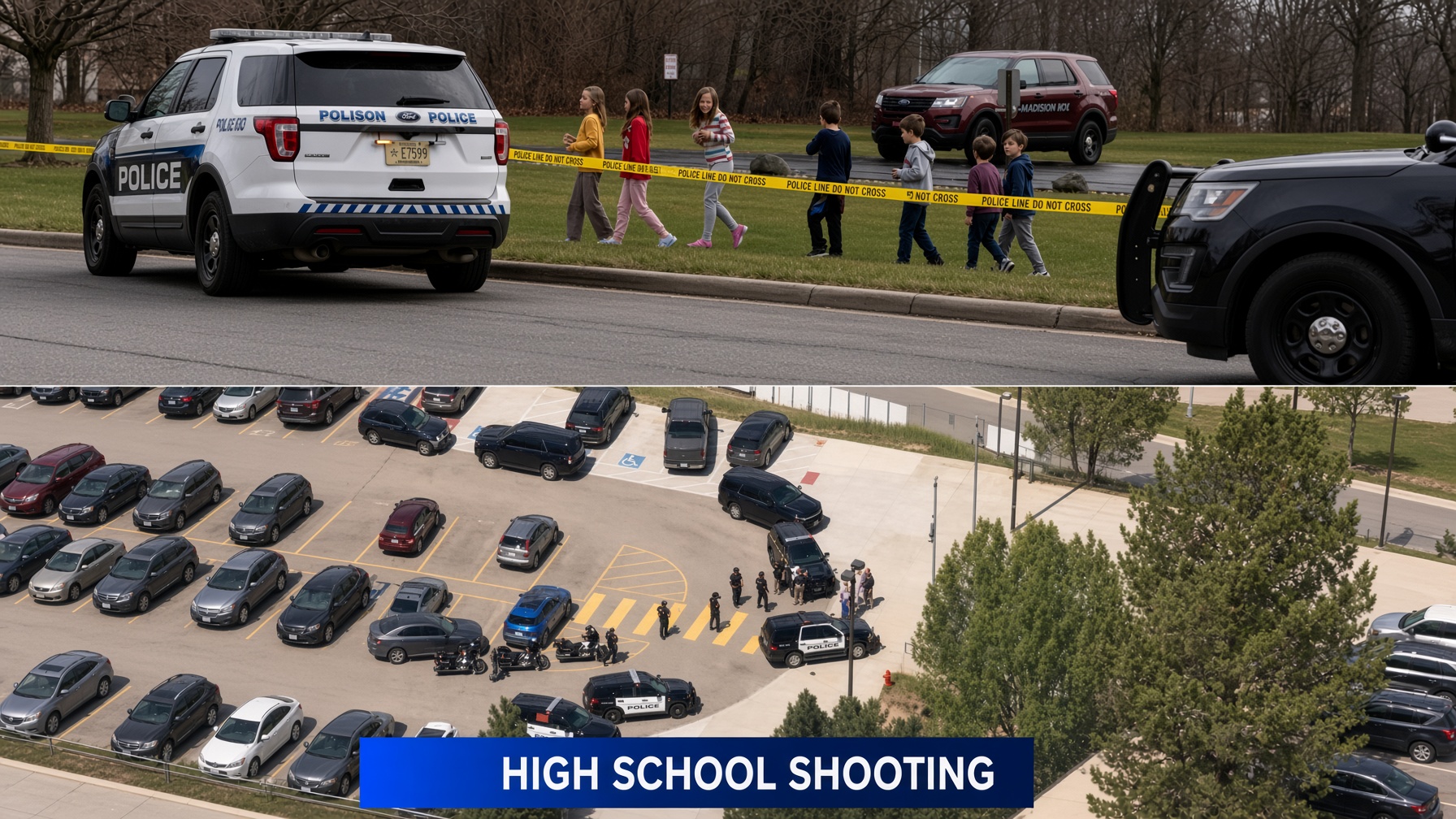
Four Dead, Including Three Children, After Gunfire Erupts at Stockton Birthday Party
On the evening of November 29, 2025, a 2-year-old’s birthday party at the Monkey Space banquet hall on Lucile Avenue, just outside Stockton city limits in unincorporated San Joaquin County, turned into one of the region’s most devastating mass shootings in years. Four people were killed and 13 others wounded when gunfire tore through a gathering of roughly 80 to 150 family members and friends. Three of the dead were children: 8-year-old Maya Lupian, 8-year-old Journey Rose Reotutar Guerrero, and 14-year-old Amari Peterson. The fourth victim was 21-year-old Susano Archuleta.
The party had been an ordinary celebration. Guests filled a former children’s theater space with balloons, a swan-shaped bounce house, and the usual clutter of wrapping paper and cake. Dinner was about to be served, and the birthday cake was close to being cut, when shots began inside the hall and continued outside. Witnesses later described an abrupt barrage—more than 50 rounds from at least five firearms, according to investigators. Some guests first mistook the noise for fireworks. Within seconds, parents were shielding children, people were diving behind cars and patio furniture, and others were fleeing over fences into neighboring lanes.
First responders arrived within minutes. What they found was a jarring collision of celebration and carnage: brightly colored decorations, half-eaten food, a melted ice cream cup labeled for the 2-year-old, and a blood-soaked toy unicorn lying near pools of blood. Bullet holes riddled doors and walls. Families searched for missing relatives in the dark. San Joaquin County Sheriff Patrick Withrow later called the scene one of the most emotionally punishing his department had faced. “These animals walked in and shot children at a children’s birthday party,” he said. “None of us should stand for that.”
Victims and aftermath
Maya Lupian was a third-grader at Aspire Apex Academy who loved to draw, sing, dance, and karate; she held a purple belt. Her family said they would have been marking her ninth birthday two weeks later. Journey Rose Reotutar Guerrero was also 8 and a third-grader. Amari Peterson, a freshman from Modesto, played football and basketball. His father, Patrick Peterson, said after the shooting that he did not want to question God, but that losing his son had left him “questioning everything about life.” Archuleta was shot in the neck; his mother later spoke at a community vigil. At least one of the wounded children was a 9-year-old girl who survived a head wound. Several others required trauma care; conditions of some survivors remained serious in the days after.
The San Joaquin County Sheriff’s Office led the investigation, with assistance from the FBI and the Bureau of Alcohol, Tobacco, Firearms and Explosives. Officials said the shooting appeared targeted and possibly gang-related. Multiple known gang members were among the guests. Investigators believed more than one shooter was involved and that the attack started inside and moved outside. Two men who attended the party were later jailed on parole violations unrelated to being identified as shooters. As of reports months afterward, no one had been charged with the killings themselves. A reward for information grew to $130,000. Detectives reviewed doorbell cameras, canvassed witnesses, and examined ballistic evidence, but a clear public identification of the gunmen had not been announced.
A city already familiar with violence
Stockton has long carried a heavy burden of violent crime. In 2024 the city recorded thousands of violent offenses at a rate far above the California average. Residents and officials said they were used to gang shootings—but not to children being gunned down at a toddler’s party. Councilmember Michele Padilla put it plainly: gang homicides happen, “but this hits differently. This is something no one will forget.” Some feared the event would harden an already harsh narrative about the city. A local official worried aloud that Stockton would become known as “the place where they shoot kids.”
The hall itself sat in a small commercial cluster near Thornton Plaza. After the shooting, relatives returned to retrieve belongings and confront the wreckage. Neighbors described a woman running down the street screaming for her baby. Makeshift memorials—candles, stuffed animals, handwritten notes—appeared at the perimeter of the police tape. Schools and churches organized support. Pediatric specialists were called in not only for physical wounds but for the psychological damage of watching a celebration collapse into gunfire. Clinicians warned that children who survive such scenes often carry a lasting loss of safety that outlasts visible injuries.
What remains unfinished
By early 2026 the case was still open. No arrests had been made for the shooting itself. Families lived with unanswered questions about motive: whether the party was chosen because of who was inside, or whether the violence simply followed rivalries into a room full of children. Later reporting noted that at least one party guest who survived November 29 was later killed in a separate shooting in Lodi, underscoring how tightly violence can loop through the same social networks.
Authorities continued to ask the public for even small details—an unfamiliar car, a fragment of conversation, a scrap of video. In cases built on silence and fear of retaliation, they said, every fragment matters. Community vigils at Weber Point and elsewhere mixed grief with a demand that the city not treat the deaths as another grim statistic.
The story of that Saturday night is not only the number of rounds or the count of casualties. It is also the parents who covered toddlers with their own bodies, the guests who tried CPR on the floor of a banquet hall, and the first officers who ran toward a scene they would later describe as almost unendurable. February 20, 2026, was not the date of the attack; November 29, 2025, was. The families of Maya, Journey, Amari, and Susano mark that evening as the day a birthday party ended and a much longer, unfinished search for accountability began.
Anyone with information has been asked to contact the San Joaquin County Sheriff’s Office. The investigation continues.