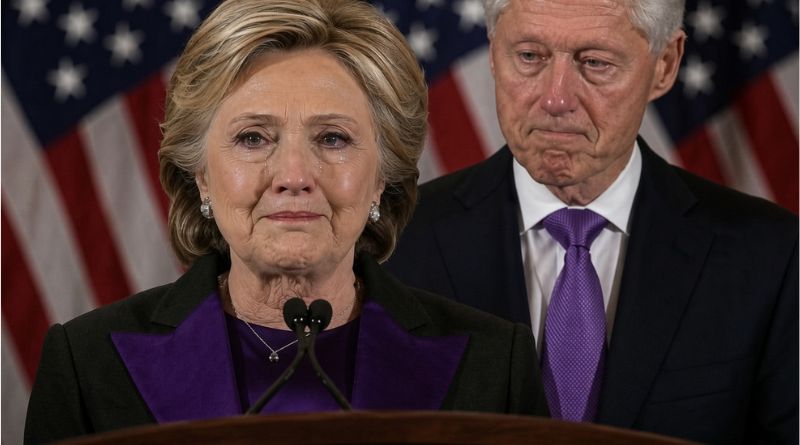
Gloria Steinem died at 92, and the tributes that followed came from politicians, activists, celebrities, and generations of women who had grown up with her work. Among the mourners was Hillary Clinton, who said she was “heartsick.” The word was not ceremonial. It described a personal loss as much as a public one.
Clinton and Steinem had known each other for decades. Their relationship was political, but it was also a friendship. Steinem became one of the most recognizable voices of the women’s movement in the 1960s and 1970s. Through journalism, organizing, and public speaking, she challenged the idea that women’s lives should be confined to a narrow set of roles. Clinton, who later became the first woman nominated for president by a major U.S. party, moved through a public world that Steinem and her peers had helped open. Their paths crossed often. Shared work on women’s rights made the connection natural.
After Steinem’s death, Clinton spoke about a final visit and about the person behind the public figure. That mattered because official statements after a famous death can flatten a life into a résumé. Clinton’s remarks were more intimate. She remembered Steinem as an architect of women’s equality and as an optimist by choice. Activism, Clinton said, had been rooted in a daily decision to believe that change was still possible even when setbacks arrived.
Steinem’s significance was never limited to one campaign or one decade. She helped move workplace discrimination, reproductive rights, and gender expectations from the margins of American politics into the center of it. She co-founded Ms. magazine, which became a durable platform for feminist writing. Her style was sometimes contested, and her positions were not universally accepted even among allies. Influence, though, is not the same as consensus. For millions of women, she represented a generation that refused to treat limited opportunity as inevitable.
Clinton’s career unfolded inside that altered landscape. She became a lawyer, first lady, U.S. senator, secretary of state, and a presidential nominee. The work was different from Steinem’s life on the road as an organizer and writer. The aims overlapped. Both were concerned with expanding what women could attempt. That is why Clinton’s tribute carried more than the usual language of respect. She was mourning someone whose movement had shaped the possibilities of her own generation.
The death of a figure present across so many adult years also marks the passage of time. Remembering Steinem meant looking back across decades of political and social change. Some of the battles of second-wave feminism produced lasting institutional results. Others remain unfinished. Steinem’s death is therefore both a private grief and a historical marker: the close of a chapter whose arguments have not ended.
Her influence will not vanish with her. Women who read her essays, heard her speak, or encountered her organizing have carried those ideas into politics, journalism, business, education, and public life. Clinton’s tribute pointed to that continuity. She wanted Steinem’s voice to stay in people’s heads, especially younger women’s, not as nostalgia but as a working example. Steinem, Clinton suggested, had not merely opened doors for herself. She had kept them open for people she would never meet.
Viral headlines can compress a moment like this into a single dramatic line. Behind the phrase is something simpler and more human: one woman grieving another who had been both friend and historical force. History is made in legislation, campaigns, and famous speeches. It is also made in friendships, conversations, and the stubborn work of people who insist that the future can look different from the past. For Clinton, Steinem was one of those people. For many others, her voice remains part of the history she helped write.