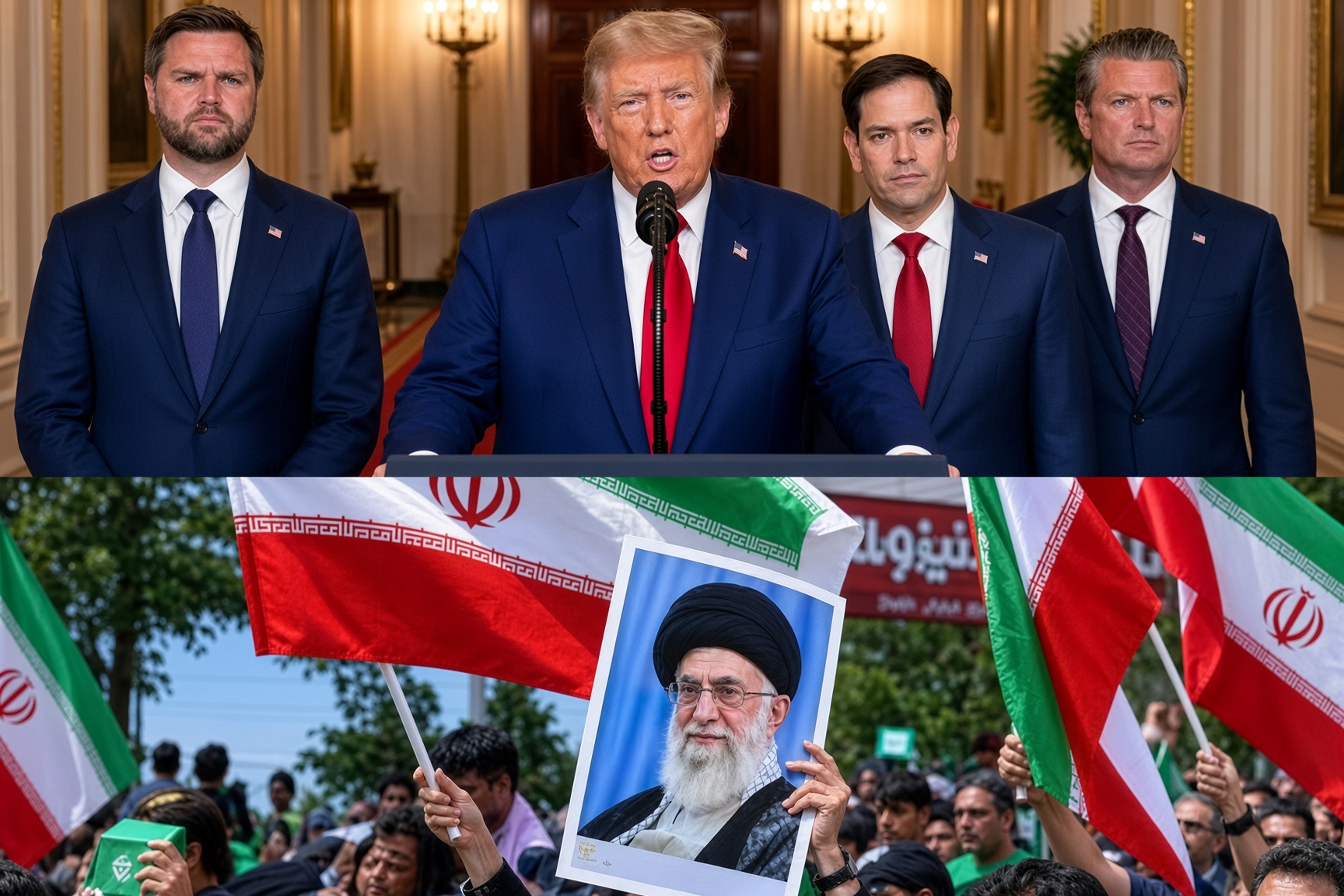
President Donald Trump, Vice President JD Vance, Secretary of State Marco Rubio, and other senior officials have been working through the last remaining pieces of a possible agreement to halt the conflict with Iran. The outline is familiar: reopen the Strait of Hormuz, ease the U.S. naval blockade of Iranian ports, and, if Tehran scales back uranium enrichment, loosen some sanctions. Officials say the basic ideas are widely understood. The argument is over the wording.
Rubio, traveling in India, was asked about recent U.S. strikes and repeated Washington’s core demand. The strait, he said, must be reopened “one way or the other.” “The straits have to be open, they’re going to be open,” he told reporters. Closing them, he added, is “unlawful,” “illegal,” “unsustainable for the world,” and “unacceptable.” He pointed to talks in Qatar and said both sides were still haggling over “specific language in the initial document.” That process, he predicted, would take a few days. Trump’s position, Rubio said, is simple: a good deal or no deal.
The diplomacy is running in parallel with force. A senior U.S. military official said some of the dozens of American warplanes and nearly two dozen Navy ships enforcing the blockade in the Gulf of Oman and the Arabian Sea—including two aircraft carriers and their escorts—had been threatened by Iranian surface-to-air missiles. Monday’s strikes were near the port and navy base at Bandar Abbas. American and Iranian forces have clashed in other ways since a cease-fire took hold about six weeks ago. The latest bombing came as Iranian officials gathered for negotiations meant to end the war.
Tehran struck a similar note of progress without a finish line. Foreign Ministry spokesman Esmaeil Baqaei said Iran and the United States had reached understandings on many subjects, but not a ready-to-sign pact. “It is correct to say that we have reached a conclusion on a large portion of the issues under discussion,” he said at his weekly briefing. “But to say that this means the signing of an agreement is imminent—no one can make such a claim.” He accused Washington of shifting its positions.
In the deal under discussion, Iran would reopen Hormuz in exchange for an end to the U.S. blockade of the waterway. Reduced enrichment could bring further sanctions relief. A U.S. source said most people now agree on the basic ideas and that the administration is pleased with the trajectory, even as the last details remain unfinished. Officials also said Iran appears more willing to bargain than it did before the military campaign.
The remaining work is not conceptual. It is textual: who opens what, when the blockade lifts, what enrichment limits mean in practice, and whether the first document is a cease-fire, a framework, or something less. Until that language is settled, both sides are talking as if a deal is possible—and acting as if the war is not over.