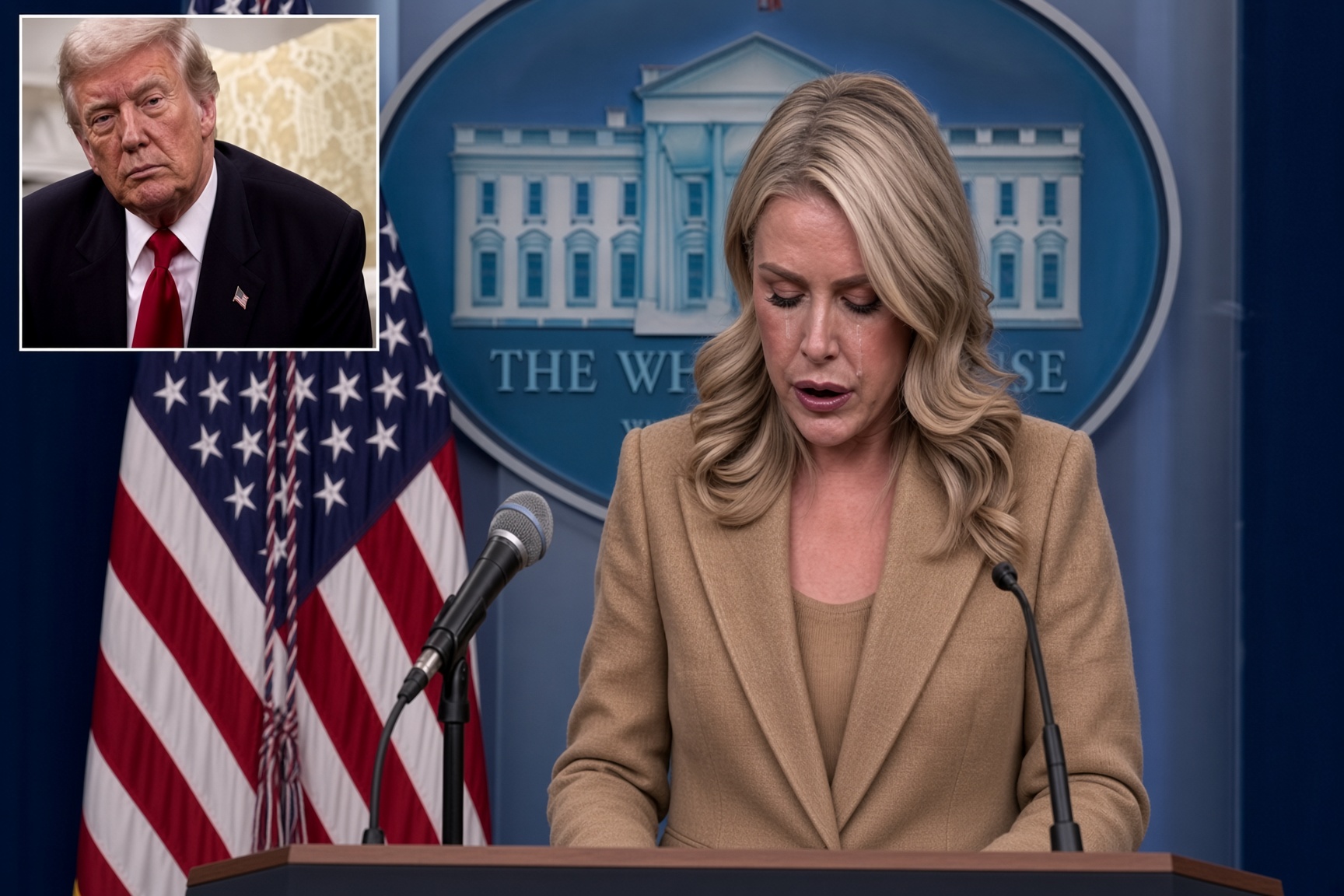
WASHINGTON — White House Press Secretary Karoline Leavitt defended the Trump administration’s overhaul of presidential press access during an onstage forum with Axios co-founder Mike Allen, arguing that reduced standing for traditional outlets such as the Associated Press is not a punishment but a modernization meant to open executive coverage to a wider field of journalists.
The exchange made plain a growing fight between the White House and the Washington press corps over who controls access to the president. At issue is a long-standing convention of presidential journalism: whether proximity to the commander in chief should remain anchored by legacy institutions, or be reassigned at the discretion of the executive branch to digital outlets, podcasters, and independent commentators.
The sharpest disagreement concerned the administration’s move to end the Associated Press’s customary permanent seat in the White House traveling press pool. Allen asked whether sidelining the 179-year-old cooperative risked the completeness of the historical record. He cited AP photojournalist Evan Vucci’s Pulitzer-winning photograph of Donald Trump raising his fist after surviving the July 2024 assassination attempt in Butler, Pennsylvania.
Leavitt rejected the idea that the change amounted to a restriction on the press. “I don’t view them as restrictions,” she said, arguing that rotating legacy wire services out of fixed positions was necessary to make room for other outlets. “Why should a single outlet have the privilege of being in that 13-person press pool every single day?”
She pointed to the hundreds of reporters who hold hard credentials and the thousands more accredited across the country, and said the current 13-member pool structure favors wire services at the expense of digital-first organizations. She named publications such as Axios as the kind of outlet that could benefit from a wider rotation. “The media landscape has transformed completely, and the West Wing press structure should reflect that reality,” she said, casting the change as the removal of inherited privileges rather than retaliation for critical coverage.
Allen then raised objections from the White House Correspondents’ Association, the century-old organization that independently manages pool rotations, seating charts, and travel logistics. The association has long held that the government should not decide which journalists are assigned to scrutinize it.
Leavitt challenged that role directly. She argued that an unelected board of media figures should not have exclusive authority to decide which reporters board Air Force One or enter the Oval Office for high-stakes diplomatic and legislative meetings. In her account, the executive branch has the authority to assemble a broader mix of journalists and to distribute prime access beyond a small group of legacy organizations.
She dismissed claims that the restructuring is an ideological purge designed to produce friendlier coverage. Mainstream news organizations that have been sharply critical of Trump, she said, continue to hold daily credentials and to attend televised briefings. “It’s not about ideology,” Leavitt said, describing the shift as an operational reset that matches the president’s preference for nontraditional channels, including podcasts and digital creators.
The discussion also turned to numbers. Allen cited an Axios analysis of presidential availability finding that, at a comparable point in his term, Joe Biden had done 164 combined press conferences and interviews, against 468 for Trump. Media analysts have noted that such tallies often mix impromptu hallway encounters and friendly radio appearances with formal, long-form press conferences. Leavitt treated the gap as evidence of an unusually accessible administration that favors direct engagement over set-piece briefings.
The dispute points to a lasting change in how presidential access is allocated. Press-freedom advocates argue that a government-curated pool invites patronage: administrations can reward sympathetic outlets and limit the most aggressive watchdogs. They say independent management by the correspondents’ association exists precisely so that the officials under scrutiny do not choose their scrutinizers. A permanent wire-service seat, in that view, is not a monopoly privilege but a practical way to guarantee that a broadly distributed record — text, photo, and video — reaches newsrooms that cannot staff the White House every day.
The White House describes the same moves as a confrontation with an outdated press structure. Officials say fixed seats for a handful of legacy organizations no longer match an audience that gets news from a much wider set of sources, and that rotating those seats does not bar critical reporting from the building. Traditional bureaus, meanwhile, are left defending protocols that once seemed settled: who rides on the plane, who stands in the pool, and who decides.
Whatever the framing, the practical result is the same. Access to the highest levels of the executive branch is increasingly set by a White House-managed order rather than by arrangements the press corps negotiated for itself. The Butler photograph remains a reminder of what a wire photographer in the pool can capture. The administration’s answer is that no single outlet should be guaranteed that place every day.