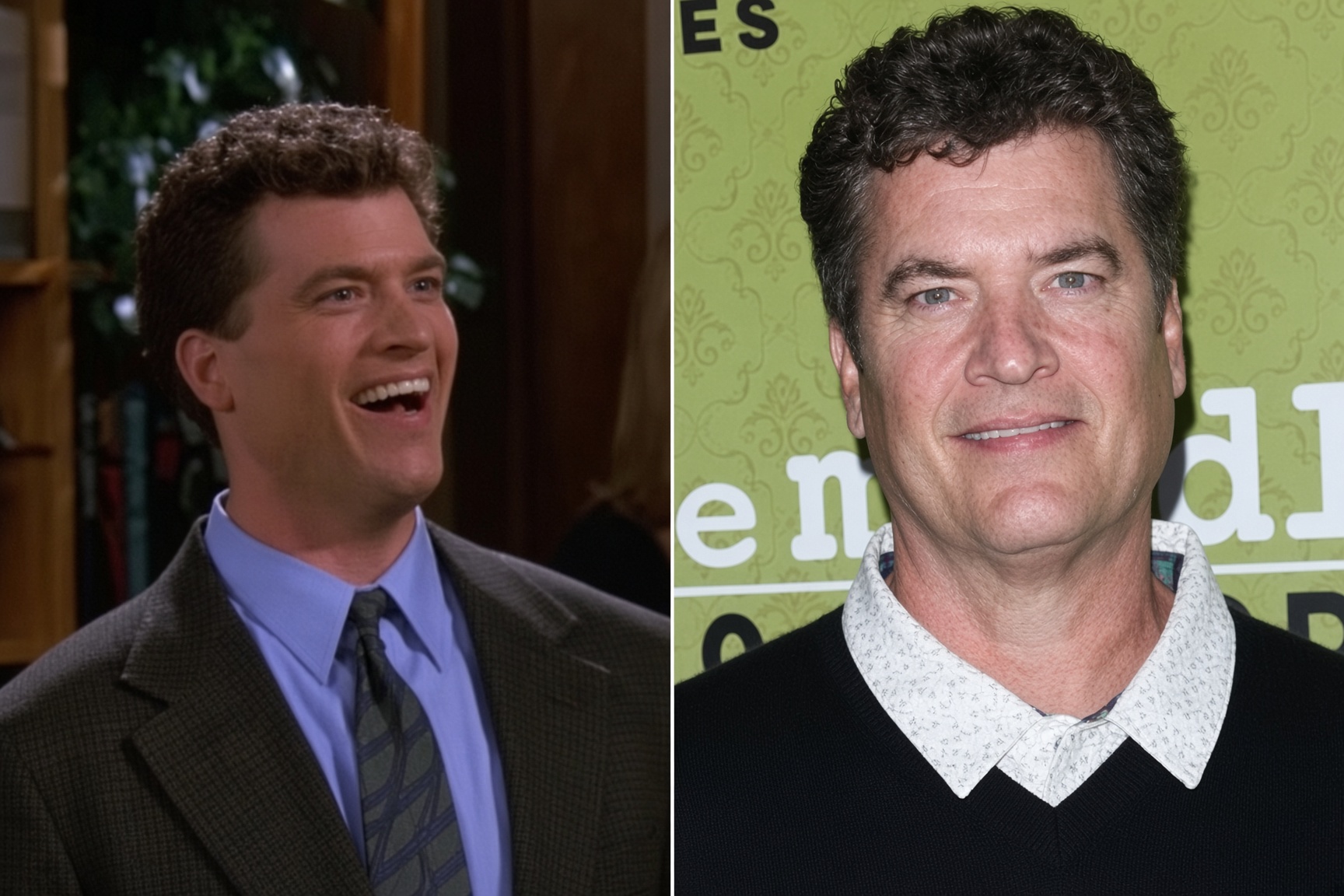
Pat Finn, the reliable character actor known for The Middle, Seinfeld, and Friends, dies at 60.
In an industry that often prizes celebrity flash over steady craft, Pat Finn occupied a different place. He was the familiar face who made sitcom worlds feel lived-in, the supporting player whose timing and understatement gave scenes their weight. Finn died on December 22, 2025, at his home in Los Angeles at age 60, after a multi-year battle with bladder cancer that was first diagnosed in 2022, briefly went into remission, and later returned and metastasized.
His family described a life “filled with laughter, love, family, and friends.” Colleagues echoed that portrait. Manager Andrea Pett-Joseph called him “the kindest, most joyful person in any room.” Actor Richard Kind remembered a man who was “always positive, helping you be funnier and better… a great dad, a great guy.” Finn’s reputation off-camera matched the consistency he brought on set: private, devoted to his wife of more than three decades, Donna Crowley Finn, and their three children—Cassidy, Caitlin, and Ryan—and unfailingly supportive of those around him.
Born Patrick Cassidy Finn on July 31, 1965, in Evanston, Illinois, he grew up in nearby Wilmette, attended Loyola Academy, and graduated from Marquette University in 1987, where he played rugby alongside future Saturday Night Live star Chris Farley. After college he joined Chicago’s Second City and iO improv scenes before moving into television. Early credits included a main role as Dan Coleman on the short-lived The George Wendt Show and recurring work on Murphy Brown. Over the next three decades he became a reliable presence across comedy: guest turns on Seinfeld (as Joe Mayo), Friends (as Dr. Roger), That ’70s Show, Curb Your Enthusiasm, The King of Queens, and others, plus film appearances in titles such as Dude, Where’s My Car?, It’s Complicated, and I Love You, Beth Cooper. His most sustained television role was as Bill Norwood, the Hecks’ friendly neighbor on ABC’s The Middle, appearing across the show’s long run.
Finn’s strength was never volume. He could disappear into a part, making a supporting character feel essential rather than incidental, whether delivering precise comic timing or grounding a quieter moment. Peers described a man who simply showed up, did the work, and elevated the material around him—an approach that earned lasting professional respect even without leading-man fame. In his final days he remained a lifelong Chicago Bears fan; family members noted that one of the clearest reactions he showed was when the team scored.
His death at 60 is a reminder of the fragility behind the familiar faces that populate so many evenings. Finn’s body of work, and the memory of his quiet integrity and generosity on set, leaves a warmer, more enduring impression than any spotlight could. He is survived by his wife, children, and extended family.