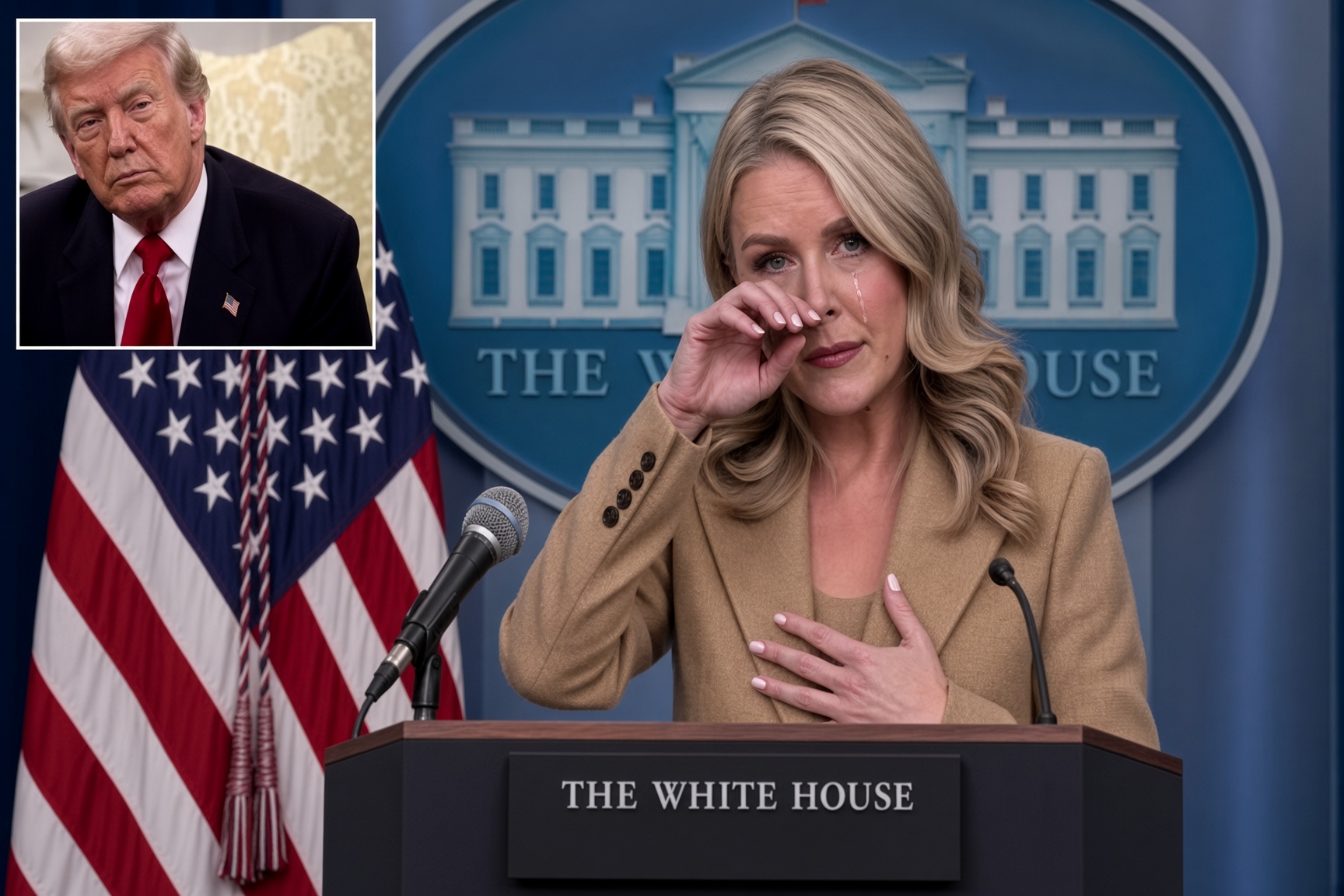
WASHINGTON — White House Press Secretary Karoline Leavitt offered a pointed defense of the Trump administration’s changes to presidential press access during an on-stage conversation with Axios co-founder Mike Allen, framing the dismantling of long-standing press pool arrangements as a necessary modernization rather than an effort to limit scrutiny.
The exchange highlighted a deepening dispute between the executive branch and traditional news organizations over control of who travels with the president on Air Force One, enters the Oval Office, and fills the small protective pool that follows the commander-in-chief at all times. At the center of the disagreement is the administration’s decision to remove the Associated Press from its permanent, guaranteed position in the rotating pool.
The conflict raises enduring questions about First Amendment expectations, government transparency, and whether conventions developed in an earlier media environment can hold as digital platforms, independent creators, and partisan outlets compete with wire services for White House credentials.
The Role of the Wire Services
Allen pressed Leavitt on whether reducing the AP’s historic standing risks weakening the continuous, independent record of the presidency. To illustrate the value of reliable proximity, he pointed to AP photographer Evan Vucci’s widely recognized image of Donald Trump raising his fist in front of an American flag moments after surviving the July 2024 assassination attempt in Butler, Pennsylvania. That photograph, taken by a wire photographer operating under the traditional traveling-pool system, quickly became one of the defining visual documents of recent political history.
Leavitt rejected the notion that ending the wire service’s automatic seat constituted censorship or deliberate exclusion. She asked why a single legacy organization should hold an unchallengeable, permanent claim to a slot that, in her view, belongs to the broader press corps. Media habits have shifted, she argued, and access rules should reflect the rise of digital newsrooms rather than preserve arrangements designed for an earlier era.
Under the longstanding pool system, a compact group of print, wire, radio, and television journalists travels with the president into restricted spaces. They produce rapid notes, quotes, and images that are shared with hundreds of news organizations unable to maintain full-time travel operations of their own. Supporters of the administration’s approach contend that opening those seats creates room for newer publications. Critics, including media historians and press-freedom advocates, maintain that wire services supply nonpartisan, real-time observation that remains especially important during fast-moving events and crises.
Who Controls the Pool
The conversation turned to the White House Correspondents’ Association, the independent, journalist-led body that for decades has managed pool rotations, seat assignments, and access lists without direct government involvement. Allen questioned the wisdom of departing from the principle that politicians should not choose the reporters tasked with holding them accountable. The WHCA and press-freedom organizations have argued that government control over pool composition creates the risk of retaliatory access decisions, allowing an administration to favor friendly coverage and limit aggressive questioning.
Leavitt contested the association’s claim to exclusive authority. She maintained that the executive branch must retain the ability to manage security clearances, physical constraints, and entry into its own facilities. A private press group, she said, should not serve as the sole gatekeeper to the executive branch, particularly when nontraditional creators and digital outlets reach large audiences. Legal specialists focused on press freedom have warned that giving any administration unilateral discretion over pool assignments introduces an institutional risk, potentially turning a watchdog mechanism into a tool for encouraging more compliant coverage.
Measuring Access
Leavitt also rejected claims that the changes were driven by ideology or aimed at punishing particular news organizations. She noted that legacy broadcast networks and major newspapers continue to attend briefings in the James S. Brady Press Briefing Room. She described the administration’s overall media engagement as expansive, citing direct communication across a range of formats. Allen referenced comparative figures indicating that Trump had conducted 468 combined press conferences and interviews at a comparable point in his term, against 164 for former President Joe Biden.
Media analysts have cautioned that raw counts of appearances do not automatically measure the depth of accountability. Brief exchanges shouted over helicopter engines or appearances on sympathetic programs differ substantially from formal, solo press conferences that allow sequential follow-up questions from the institutional press corps. The distinction matters, they argue, because the quality and independence of the questioning, not merely the number of encounters, shape the public record.
The contest over White House pool seats has become a defining institutional dispute for contemporary political journalism. As the administration rewrites access rules, the outcome will help determine whether presidential accountability continues to rest on independent, institutional press arrangements or shifts toward greater discretionary control by the executive branch.