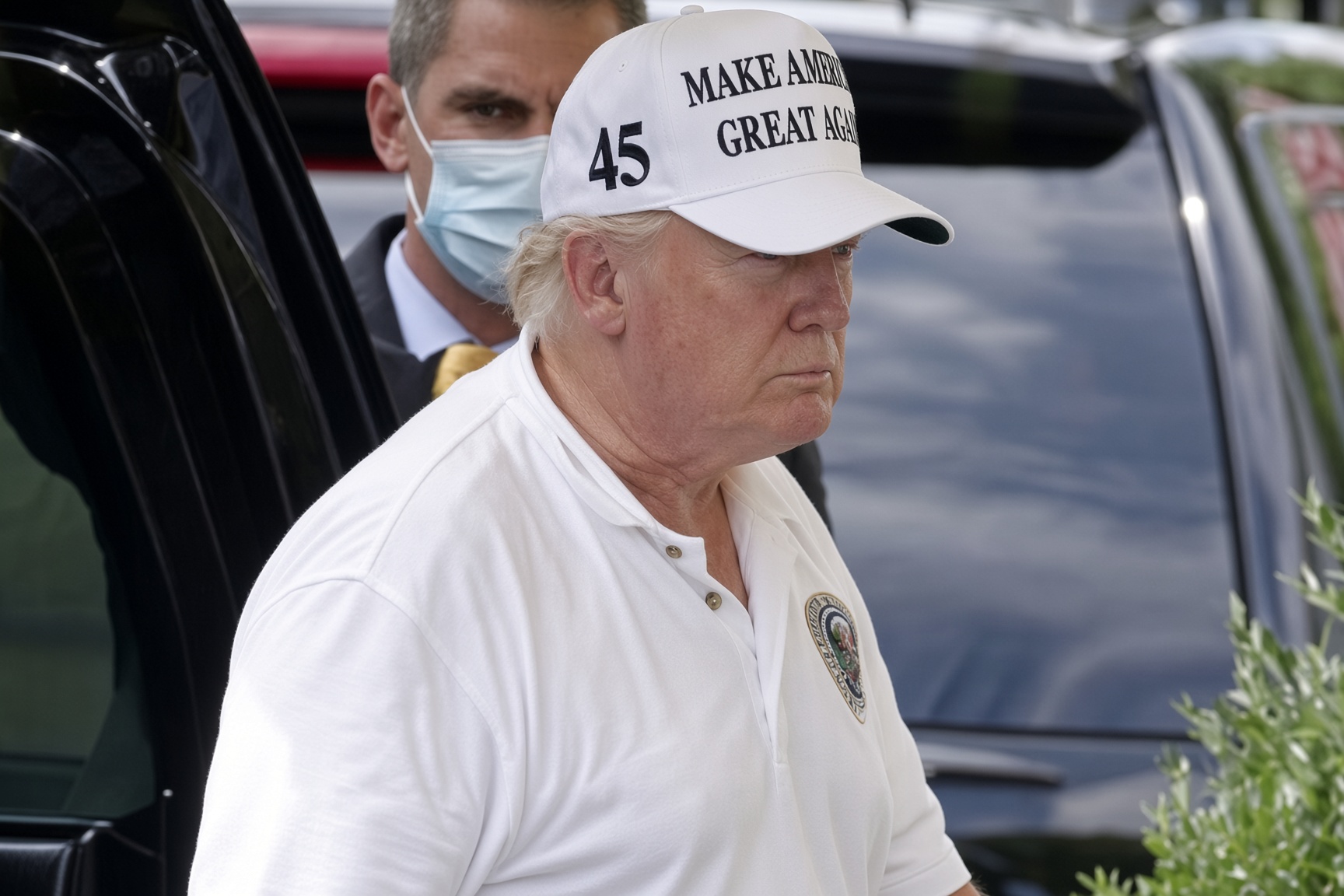
A reported late-night sighting of Donald Trump recently triggered a surge of online speculation after accounts claimed he was seen walking alone shortly after midnight. According to circulating social-media descriptions, he wore a baseball cap and moved without the usual security detail, cameras, or public notice. Attention soon fixed on a small object in his hand that some said briefly caught the light under nearby streetlamps. With few details independently confirmed, observers quickly supplied their own readings.
Some insisted the object must have been important; others treated the sighting itself as evidence of something larger. Yet almost no verifiable information surfaced. What stood out was the speed with which speculation displaced established facts. Whether the walk was noteworthy or entirely ordinary became secondary to the reaction it produced.
Public figures often occupy a space between documented reality and public projection. Ordinary actions—walking at night, carrying something, keeping a low profile—can turn into subjects of intense scrutiny when the available record is thin. In this case the midnight sighting became less a report of what was observed and more an illustration of how people respond to incomplete information. Gaps in the record invited the insertion of fears, hopes, expectations, and political assumptions. Discussion shifted from the limited evidence to the premises of those examining it.
The episode also shows how readily curiosity becomes speculation. A quiet walk turns into content; a grainy image becomes the basis for a national conversation. Not every unanswered question signals a hidden mystery. Sometimes the uncertainty is simply uncertainty, and the more enduring story is the one assembled around it.