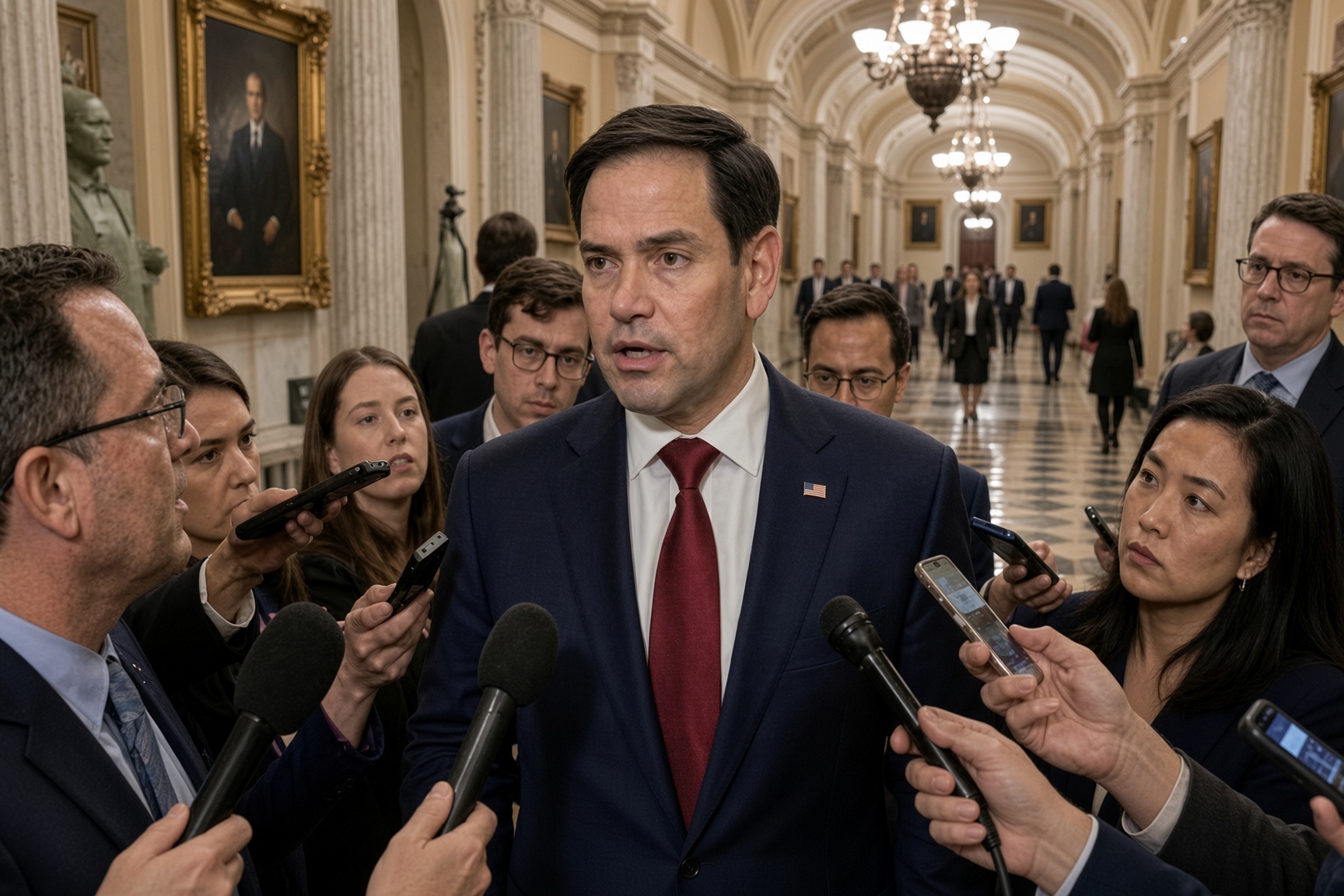
The United States, Denmark, and Greenland have finalized a major new security agreement that substantially expands the American military footprint on the Arctic island while formally preserving Danish sovereignty and Greenlanders’ right to self-determination.
Secretary of State Marco Rubio outlined the deal during a Tuesday appearance on Fox News, framing it as a modernization of long-standing arrangements driven by national security needs. “Remember the whole thing about Greenland was about national security. President Trump was clear about that from the very beginning,” Rubio said. He emphasized priorities including missile defense, protection of the Arctic, and defense of key waterways. “We had an existing agreement, but it was not—it needed to be modernized, it needed to be updated. We have a new agreement now that’s actually great for Greenland and Denmark, as well, because it provides for their security.”
Rubio stressed the agreement’s permanence. “First of all, it’s permanent, it’s forever. Like, there’s no expiration to this deal. It allows us to build as many military bases as are necessary for missile defense, for so forth.” He also highlighted a joint investment-screening process with Denmark designed to prevent adversaries, particularly Chinese firms, from gaining control of ports, land, or critical infrastructure—tactics the United States has observed elsewhere. “You’re not gonna wake up one day and realize, ‘Okay, yeah, the Chinese military’s not there, but their companies own all the ports, their companies own all the land, and so they’re there.’”
The three governments were scheduled to formally sign the agreement Tuesday on the sidelines of the United Nations General Assembly in New York. President Donald Trump first announced the deal the previous Friday, describing it as a permanent arrangement that grants the United States broad authority to protect Greenland and American interests in the Arctic. “At my direction, we worked with representatives of Denmark and Greenland to guarantee that the United States will FOREVER have the complete ability to do what is necessary in Greenland in order to secure and defend the security of Greenland, and the United States of America,” Trump wrote. He indicated Washington would begin developing a substantially larger military presence on the island.
Trump was expected to meet Danish Prime Minister Mette Frederiksen and Greenland Prime Minister Jens-Frederik Nielsen in New York to execute the agreement. A White House official told ABC News that “the three leaders will formalize their new agreement that will secure and defend the security of Greenland and the United States.”
The deal culminates months of negotiations that intensified after Trump renewed his push for greater American influence over Greenland early in his second term. He repeatedly cited the island’s geographic position, mineral resources, and proximity to potential Russian and Chinese activity in the Arctic. At times he discussed acquiring the territory outright and declined to rule out stronger measures. Denmark and Greenland consistently rejected any transfer of sovereignty.
The final agreement falls well short of making Greenland part of the United States. Instead, it expands American military access while recognizing the sovereignty and territorial integrity of the Kingdom of Denmark and the Greenlandic people’s right to self-determination. Frederiksen said the arrangement strengthens NATO security while protecting those principles. The agreement “recognizes the sovereignty and territorial integrity of the Kingdom and the Greenlandic people’s right to self-determination,” she stated. Nielsen welcomed the outcome, saying it would enhance the security of Greenland, Denmark, the United States, and the broader Western alliance.
Under the terms described by U.S. officials, the United States receives permanent military access, basing, and overflight rights. Non-NATO countries would be barred from establishing military bases on Greenland, and sensitive investments by American adversaries would face restrictions. Reuters reported that the agreement calls for two additional American military sites: one at Narsarsuaq, a former air base in southern Greenland, and another at Mestersvig in the east. These would supplement the existing U.S. presence at Pituffik Space Base in northwestern Greenland.
The United States has maintained military rights on the island for decades. The 1951 Defense of Greenland agreement between Washington and Copenhagen already granted extensive authority to operate installations. During the Cold War the United States maintained several facilities before substantially reducing its presence. The new pact modernizes and expands that framework without an expiration date, giving the United States lasting latitude to address missile defense and Arctic security needs while embedding safeguards against adversarial economic and military influence.
In short, the agreement aims to lock in a stronger U.S. role in the strategically vital Arctic region, addressing long-standing American security concerns while formally upholding Danish sovereignty and Greenlandic self-determination.