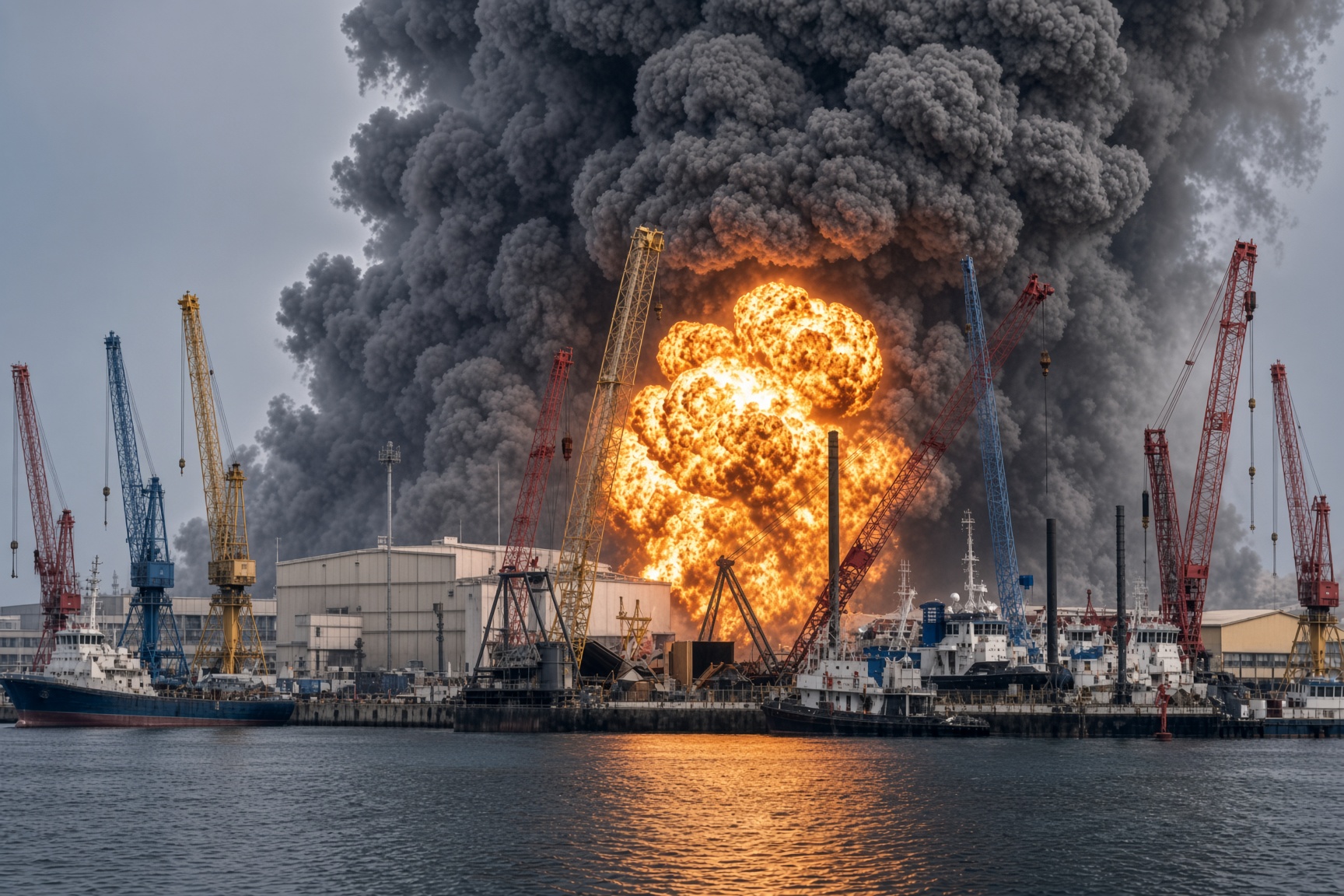
The Persian Gulf is again approaching open conflict. Iran has fired successive waves of missiles and drones at locations hosting U.S. forces and facilities of regional partners. Gulf governments have activated air defenses and issued emergency alerts to populations already bracing for more strikes.
What began as a narrower exchange has widened. Iran’s repeated attacks on American positions and allied territory show how quickly fighting can spread across the waterway. The United States maintains substantial forces in Bahrain, Qatar, Kuwait, and the United Arab Emirates, making those sites likely targets whenever Tehran chooses to escalate. Multiple rounds of Iranian strikes on U.S. bases and related assets have been reported by Reuters and other outlets.
In the UAE, explosions and reports of incoming threats have put security forces on high alert. Emirati air defenses have previously intercepted Iranian missiles and drones, while Iranian forces have claimed strikes on facilities linked to U.S. operations. Al Dhafra Air Base remains especially important because of its role in American regional missions. Earlier Iranian attacks have hit American-associated infrastructure in the Emirates, showing that even major Gulf sites can come under direct pressure. Specific claims of damage from any single barrage should be treated cautiously until authorities finish assessments and independent evidence appears.
Bahrain is among the most strategically vital U.S. locations in the Gulf. It hosts Naval Support Activity Bahrain, headquarters of the U.S. Navy’s Fifth Fleet, and serves as a central node in Washington’s regional network. Iranian forces have repeatedly claimed attacks on U.S.-linked sites in the kingdom, including areas near Sheikh Isa, while Bahraini authorities have reported intercepting incoming threats during earlier barrages. Reuters and other outlets have documented these repeated attacks on American positions across the Gulf.
Qatar has faced similar risks. Al Udeid Air Base is one of the most important U.S. installations in the region, and Iranian forces have repeatedly targeted or threatened American assets there. Satellite imagery has shown damage to portions of U.S. infrastructure at Al Udeid from earlier strikes. Kuwait has also been directly exposed. Iranian missiles and drones have previously struck locations supporting U.S. forces, with Kuwaiti air defenses engaging the incoming threats.
The pattern is clear. American military infrastructure across the Gulf is increasingly exposed to Iranian missile and drone attacks, while U.S. allies must defend their territory against strikes tied to a conflict they did not start. Then there is the Strait of Hormuz. The narrow waterway remains one of the world’s most important energy chokepoints. Continued fighting around the Gulf threatens commercial shipping, energy exports, and already fragile global markets. Reuters has reported that the conflict has severely disrupted shipping through the region, and the Strait remains central to the confrontation between Washington and Tehran. Every additional missile launch, drone attack, or naval incident raises the chance of another shock to global energy supplies.
The battlefield message is increasingly plain: the conflict is not staying inside Iran. Tehran has shown both the willingness and the ability to strike U.S.-linked targets across the Gulf, while Washington continues to keep substantial military forces throughout the region. The result is a volatile standoff in which one further attack could trigger another cycle of retaliation.
For American forces and their allies, the immediate priorities are defense, interception, and damage assessment. For the rest of the world, the larger question is whether the next launch becomes the spark for an even wider regional war. The Persian Gulf is already under severe pressure. One more major escalation could push the entire region into territory that is difficult for any party to control.