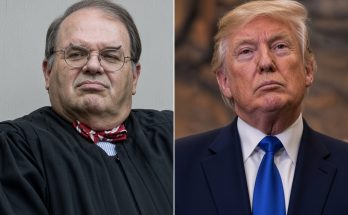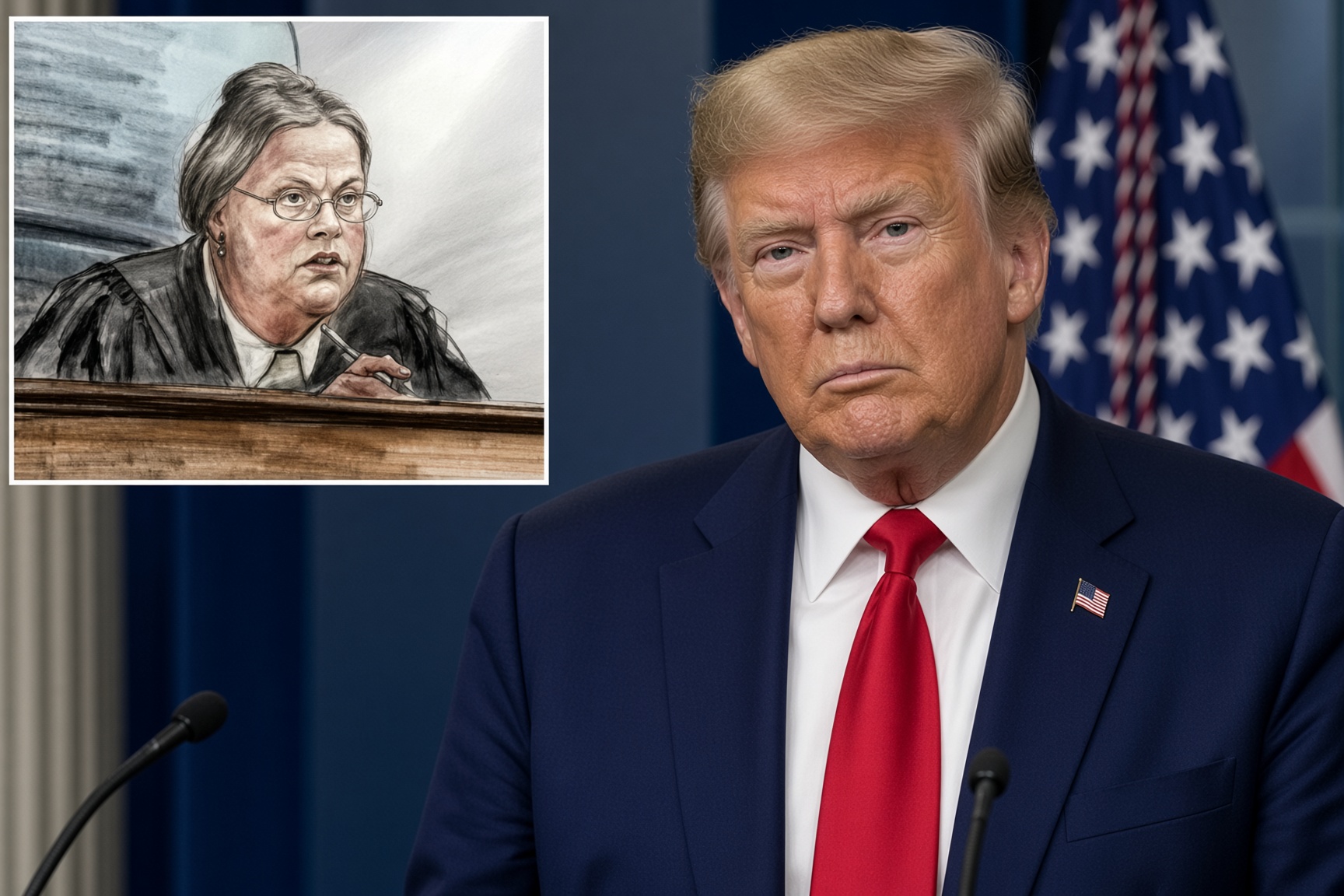
A federal judge in Virginia has temporarily blocked the Trump administration from advancing a roughly $1.8 billion compensation fund intended for people the Justice Department says were wrongfully targeted by federal agencies. U.S. District Judge Leonie Brinkema issued a brief order barring the administration from taking any steps “pursuant to the creation or operation of the Anti-Weaponization Fund,” including transferring money into the fund, reviewing claims, or disbursing payments. She set a June 12 hearing to consider whether a longer injunction is warranted.
The fund, announced by the Department of Justice earlier in the week, forms part of a broader settlement in which President Trump dropped a $10 billion lawsuit against the Internal Revenue Service. That suit stemmed from the 2019–2020 unauthorized leak of his tax returns by an IRS contractor. Critics immediately questioned both the fund’s legal basis and its potential beneficiaries. Congress has not appropriated the $1.8 billion, and attorneys representing some January 6 defendants have publicly indicated they may seek payments on behalf of their clients.
A wide coalition of individuals and organizations has challenged the fund in court, arguing that many potential claimants would be ineligible under the program’s stated criteria and that the mechanism itself exceeds executive authority. The temporary order freezes activity while those arguments are litigated.
In the House, the dispute spilled into the Rules Committee. Representative Jim McGovern, a Massachusetts Democrat, offered an amendment that would have barred the use of federal funds to compensate anyone charged or convicted in connection with the January 6, 2021, Capitol attack. The measure, styled the No Rewards for January 6 Rioters Act, would also have required the attorney general to disclose any payments already made from the Anti-Weaponization Fund. McGovern described the arrangement as a “secret slush fund” created by a “corrupt settlement agreement” between the president and his own administration, and said it “should be an outrage to every American, no matter your politics.”
The Republican majority rejected the amendment, preventing floor debate. McGovern later wrote on social media that Republicans had “voted AGAINST my amendment to stop Trump’s $1.8 billion slush fund from bailing out the convicted felons who assaulted cops on January 6th” and had blocked even discussion of the issue. “Beyond shameful,” he added.
The exchange highlighted the sharply divergent views the two parties bring to the question of January 6 accountability and the proper use of federal compensation mechanisms. Democrats have long portrayed the fund as an improper political favor; Republicans have framed it as a necessary corrective for what they describe as prior weaponization of federal agencies against political opponents.
Separately, the House on Wednesday delivered a broad bipartisan result on housing. The amended 21st Century ROAD to Housing Act passed 396–13 and now heads to the Senate. Supporters say the legislation would expand pathways to homeownership, reduce costs, and curb large institutional investors from purchasing single-family homes. Speaker Mike Johnson called rising housing costs and inadequate supply issues that “impact nearly every American family,” positioning the bill as a practical response to the affordability pressures facing millions of households. House leaders presented the vote as a potential cost-of-living achievement heading into the midterm elections.
The two developments—one a judicial pause on an executive compensation initiative tied to a presidential lawsuit settlement, the other a large-margin housing package—illustrate the range of legal, fiscal, and legislative contests currently moving through Washington. The June 12 hearing will determine whether the Anti-Weaponization Fund remains frozen while the broader challenge proceeds; the housing measure, meanwhile, awaits Senate action. Both will continue to draw scrutiny over questions of congressional prerogative, executive power, and the allocation of public funds.