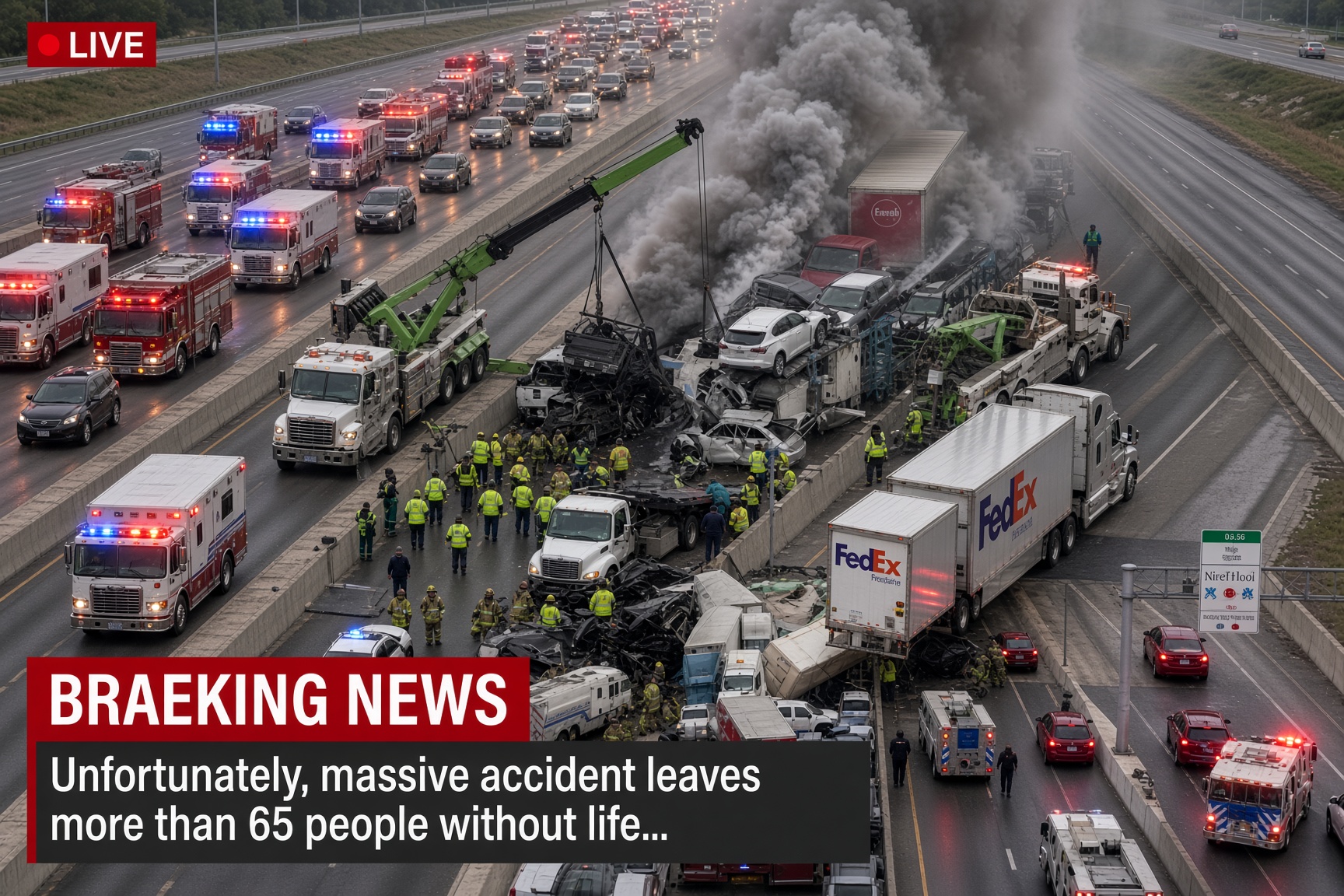
Reports circulating online of a major disaster that may have killed more than 65 people are generating attention, yet authorities have not confirmed the incident’s location, cause, or casualty figures. The absence of verified details from government agencies, emergency services, or other reliable sources means the reported death toll must be treated as preliminary and unverified.
Without those essential facts, it remains impossible to determine what happened, where it occurred, or whether an official investigation is even underway. Early accounts describe a serious emergency that may have caused numerous fatalities and triggered a response, but they do not identify the type of disaster, the sequence of events, or any confirmed list of victims. These gaps prevent a clear assessment of the situation and leave open the possibility that the claims are incomplete, exaggerated, or inaccurate.
Limited Information and the Challenges of Early Reporting
In the hours after a large-scale emergency, reliable information is often scarce. Rescue teams prioritize locating and assisting survivors, securing the scene, and addressing any ongoing hazards. Officials may still be working to establish basic facts about the nature of the event before they can release comprehensive updates. Communication difficulties, damaged infrastructure, or restricted access to the area can further delay confirmation.
Investigators, when activated, typically begin by reconstructing a timeline, gathering physical evidence, interviewing witnesses, and reviewing any available recordings or technical data. The specific steps depend heavily on the type of incident. A transportation accident, for example, might involve examination of vehicle systems, maintenance records, weather conditions, and communications logs. An industrial incident could require review of equipment integrity, safety protocols, and regulatory compliance. Natural disasters or other events would call for different expertise and agencies.
None of these procedures can be described in relation to the current reports, because no confirmed location or incident type has been identified. Until those foundational details are established by credible sources, speculation about causes or responsibility is premature.
Why Casualty Numbers Remain Uncertain
Fatality counts released during the early stages of an emergency frequently change. Authorities must distinguish between confirmed deaths, injuries, and people who are simply missing. Hospitals and emergency medical services need time to reconcile patient records. Search efforts may continue for hours or days, especially if the affected area is large or difficult to reach. Initial figures can therefore rise or fall as new information arrives.
For families waiting for news, the uncertainty is particularly difficult. Unconfirmed reports can heighten anxiety when no connection to a specific location or event has been verified. That is one reason official casualty totals are usually released only after careful verification, and why they should be clearly distinguished from estimates or claims circulating online.
In this case, the figure of more than 65 deaths has not been independently confirmed. No final or reliable count can be inferred from the information currently available.
Risks of Rapid Circulation on Social Media
Dramatic disaster reports can spread quickly through social media, messaging apps, and online accounts. While these platforms sometimes help disseminate urgent warnings, they also accelerate the distribution of unverified or misleading material. Posts may be shared repeatedly before their original source or accuracy has been checked.
Images and videos require special caution. Visual material presented as documentation of a recent event may actually show an earlier incident, a different location, or an unrelated situation. Photographs and footage alone do not establish the date, place, or scale of casualties.
Members of the public are advised to rely on statements from relevant emergency services, local government agencies, police, or other authorities with direct knowledge of any incident. Established news organizations can provide additional context when they independently verify information through identifiable sources. Reposting unconfirmed names, casualty lists, or theories about causes can mislead audiences and add to the distress of families who may not even be affected.
What Confirmation Would Require
The central unanswered questions are straightforward: Did a major incident occur? If so, where and when? What type of disaster was it? How many people were killed or injured? Have authorities opened a formal investigation?
Answering those questions would require clear statements from officials who can be identified and whose information can be corroborated. Once a location and incident type are established, appropriate agencies can be contacted for updates on rescue efforts, casualty verification, and any investigative findings. Only then can verified details replace preliminary claims.
If a disaster involving dozens of fatalities is later confirmed, official updates would be expected to clarify the circumstances, release accurate casualty figures, and describe the work of emergency responders and investigators. Until such confirmation arrives, the reports remain unconfirmed.
Continuing Caution Is Warranted
The priority remains obtaining verifiable information from credible sources before drawing conclusions about the scale or consequences of any alleged disaster. Early reporting should distinguish clearly between confirmed facts and preliminary claims. As more reliable information becomes available, further coverage can address the specific circumstances with greater precision.
For now, the claim that more than 65 people died cannot be treated as an established fact. No specific cause, location, or official finding can responsibly be reported on the basis of the details currently in circulation.