WASHINGTON — Senior officials in the Trump administration are pursuing parallel tracks of high-pressure diplomacy and military interdiction as they seek a broad settlement to end the ongoing confrontation with Iran. While Qatari mediators host indirect talks in Doha, the United States continues to enforce a substantial naval blockade across the Persian Gulf and adjacent waters, creating a volatile backdrop for the negotiations.
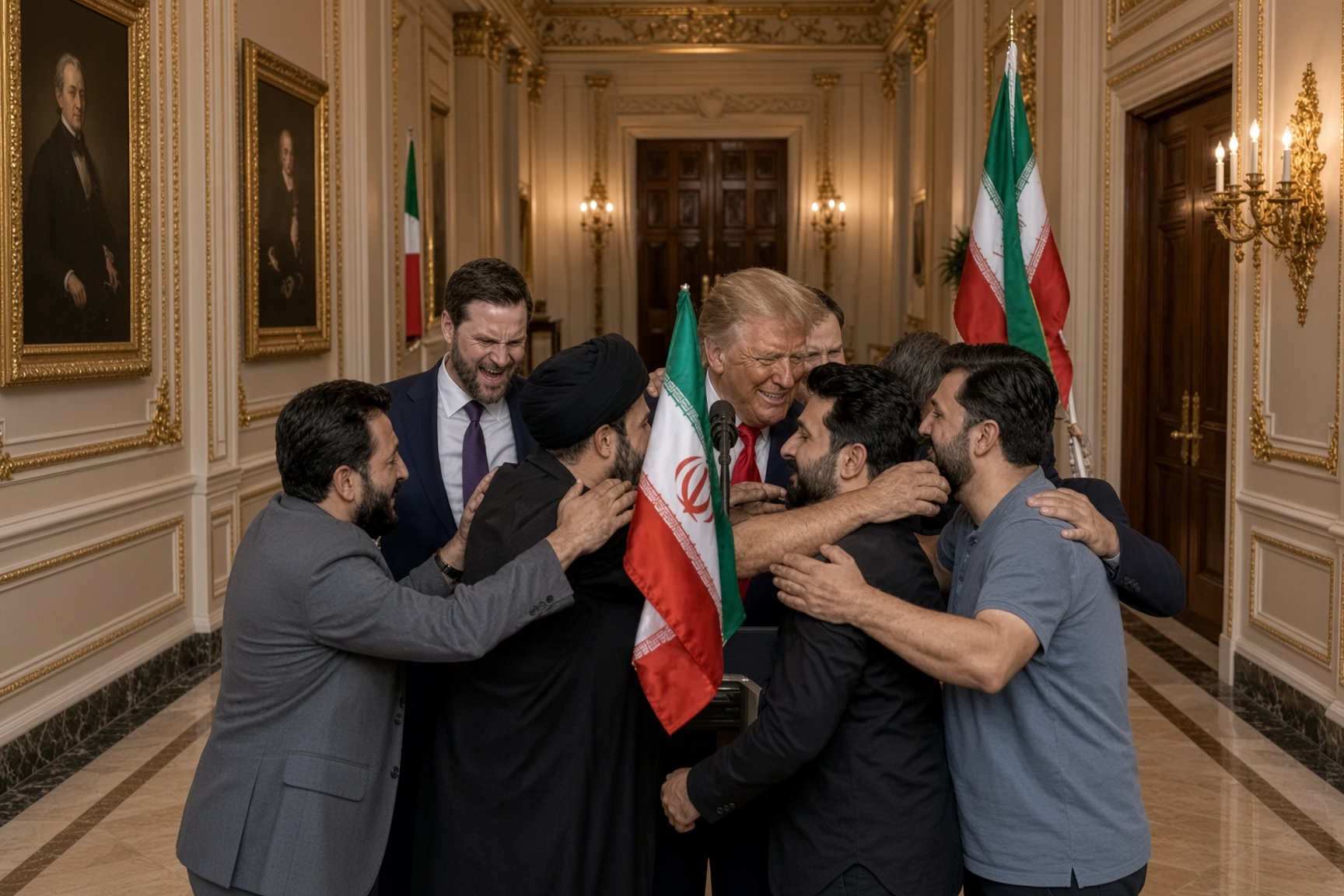
President Donald Trump, Vice President JD Vance, and Secretary of State Marco Rubio have been refining the outlines of an agreement intended to limit Iran’s nuclear program and restore unrestricted commercial shipping through the Strait of Hormuz. The dual approach—diplomatic engagement alongside a robust naval presence—reflects the administration’s assessment that sustained military pressure is necessary to produce concessions that earlier rounds of talks failed to secure.
Speaking to reporters while on an official visit to India, Rubio delivered a firm public message about the shipping corridor. “The straits have to be open, they’re going to be open,” he said. “What’s happening there is unlawful, it’s illegal, it’s unsustainable for the world, it’s unacceptable.” He confirmed that discussions continued in Qatar that day, noting that the sides are exchanging language on specific provisions of a draft document. Rubio indicated that completing the text will likely take several more days. He added that the president has made clear he will accept only a satisfactory agreement: “He’s either going to make a good deal or no deal.”
Military operations remain active even as the talks proceed. A senior U.S. defense official said nearly two dozen American warships, led by two aircraft carrier strike groups and supported by dozens of combat aircraft, are maintaining a maritime interdiction blockade. The operation is designed to restrict traffic into and out of Iranian ports in the Gulf of Oman and the Arabian Sea.
The situation turned kinetic earlier in the week when Iranian surface-to-air missile units engaged American strike aircraft and naval vessels operating near the edge of the blockade area. U.S. forces responded with precision strikes that destroyed the launching sites and damaged associated radar installations. The exchange was the most recent violation of a roughly six-week pause in large-scale aerial operations that both sides had accepted to create space for negotiations. Although the wider bombing campaign has been suspended, intermittent clashes in international airspace and coastal waters continue to risk derailing the diplomatic effort before any agreement can be finalized.
Iranian officials have offered a cautious reading of the talks. Foreign Ministry spokesman Esmaeil Baqaei told reporters in Tehran that the two sides have resolved a substantial share of the technical issues under discussion. At the same time, he warned against assuming that a signing is near. “It is correct to say that we have reached a conclusion on a large portion of the issues under discussion,” Baqaei said. “But to say that this means the signing of an agreement is imminent—no one can make such a claim.” Iranian negotiators are pressing for rapid sanctions relief and formal security assurances before they will accept deeper limits on their nuclear and industrial activities. Tehran has also complained that Washington has altered its requirements on verification measures and the release of frozen assets late in the process.
According to people familiar with the discussions, the emerging framework rests on reciprocal steps in three main areas. On the maritime side, Iran would remove defensive mines, pull back fast-attack missile boats, and commit to unimpeded commercial passage through the Strait of Hormuz; in exchange, the U.S. Navy would lift its interdiction blockade and allow normal commercial access to Iranian ports. On the nuclear side, Tehran would substantially reduce its stockpiles of enriched uranium, keep enrichment well below weapons-grade levels, and open key facilities to rigorous international inspections. In return for verified compliance, the United States would suspend secondary energy sanctions, release frozen foreign-currency reserves, and permit limited Iranian crude-oil sales.
Administration officials involved in the internal deliberations say the White House is generally encouraged by the trajectory of the talks. They note that Iranian positions appear more flexible than they were before the recent large-scale coalition military operations began. Even so, the margin for error remains narrow. Two U.S. carrier air wings continue to operate within range of Iranian coastal missile batteries while negotiators in Doha work through the remaining textual disagreements. The next several days are expected to decide whether the administration can convert the current pressure into a durable agreement or whether the confrontation returns to open hostilities across the Persian Gulf.