WASHINGTON — A divided three-judge panel of the U.S. Court of Appeals for the D.C. Circuit ruled 2-1 on Monday that key parts of the Trump administration’s policy restricting transgender military service are unlawful. The majority held that the rules appear driven by a desire to harm a politically disfavored group rather than by legitimate concerns about military readiness.
The decision blocks the Pentagon from discharging transgender service members who are already serving. It leaves in place, at least for now, the near-total ban on new transgender recruits while the broader case continues. The ruling focuses on Executive Order 14183, issued by President Donald Trump in January 2025, and the implementing guidance issued by Secretary of War Pete Hegseth, widely referred to as the Hegseth Policy.
Under those rules, anyone with a history or diagnosis of gender dysphoria, or who identifies as transgender, is generally ineligible for military service unless granted a rare waiver. The policy treats transgender identity itself as a disqualifying factor in most cases.
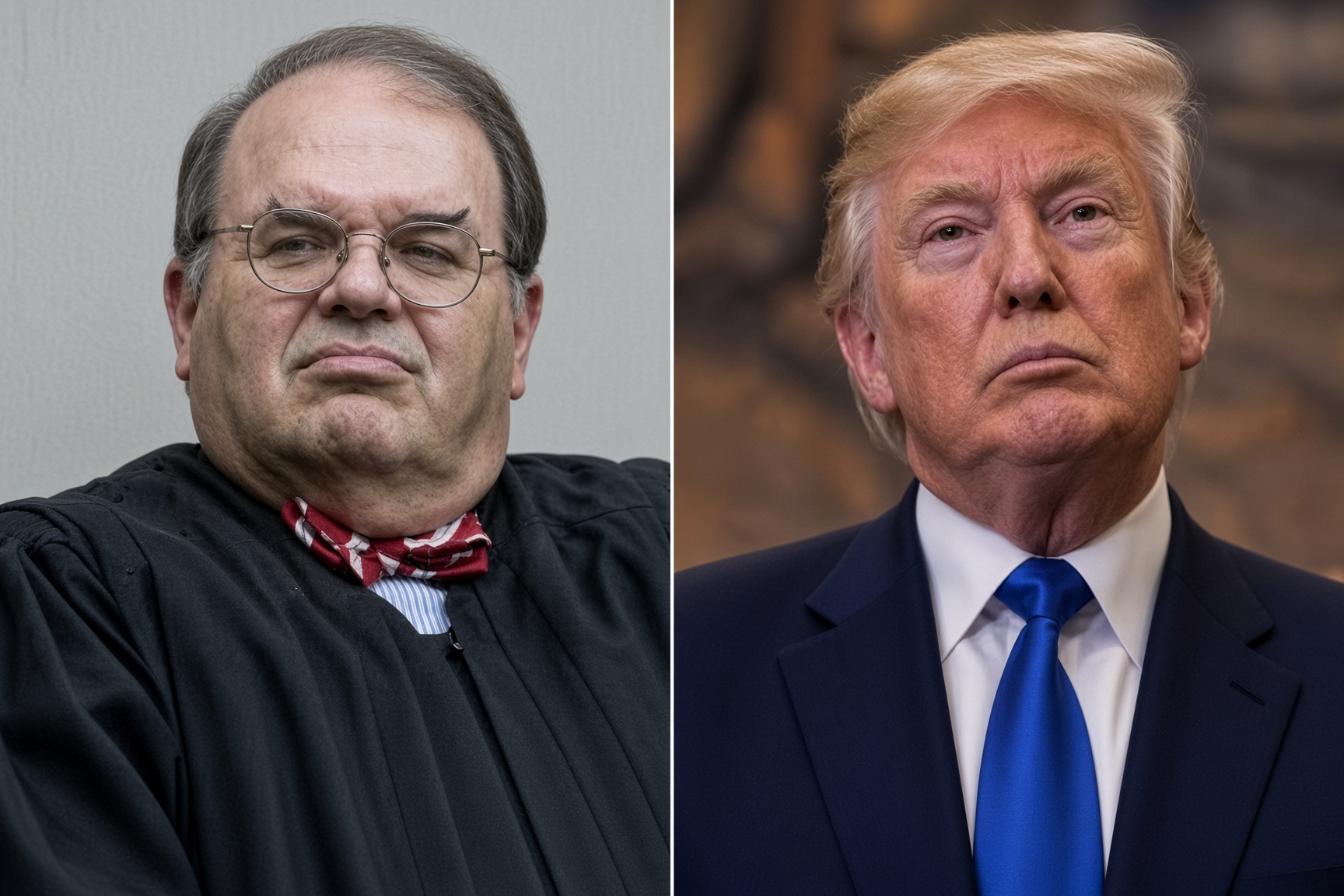
Writing for the majority, Circuit Judge Robert L. Wilkins concluded that the policy violates the equal-protection guarantees of the Fifth Amendment. He wrote that the administration’s approach went well beyond any demonstrated need related to military effectiveness and instead appeared “arbitrary and based on animus.” The majority opinion states that the purpose of the Hegseth Policy is to target applicants and service members who express what the administration views as a “false gender identity,” and that some of the disqualifications lack any reasonable justification.
The case, known as Talbott v. United States, was brought by currently serving transgender troops and prospective recruits. Plaintiffs argued that the policy arbitrarily ends their careers and closes opportunities based on identity rather than individual fitness or performance. The D.C. Circuit majority agreed that the government had not shown a rational, evidence-based reason for sweeping restrictions on people already in uniform. The court noted that transgender service members had served openly for years under earlier policies and that the administration had not demonstrated concrete harm to unit cohesion, readiness, or deployability.
The majority highlighted the speed with which the new rules were implemented and the focus on discharges as evidence of political motivation rather than careful military judgment. By characterizing transgender identity as inherently false, the court said, the policy sought to exclude a specific group without showing how that exclusion would strengthen the armed forces.
The Department of War has defended the rules as necessary to uphold medical standards, unit cohesion, and the ability to deploy forces. Government lawyers argued that courts should defer to the executive branch and military leaders on questions of who is fit to serve. They emphasized that military service is a privilege, not a right, and that the government must be free to set rigorous standards. Officials compared the restrictions to long-standing disqualifications for other chronic medical conditions, such as certain forms of diabetes or heart disease.
Secretary Hegseth, who has been a strong public supporter of the policy, has argued that it is needed to restore a singular focus on combat readiness and to reverse what he has called “woke” influences in the military. After the ruling, he signaled on social media that the administration would continue to contest the decision and would likely seek further review.
In dissent, the third judge on the panel maintained that the majority had overstepped by second-guessing the specialized judgment of military commanders and the president on matters of national defense. The dissent stressed that courts traditionally give the highest degree of deference to the executive and the Pentagon in these areas, especially amid ongoing global tensions. From that perspective, concerns about medical costs, potential deployment limitations, and the practical challenges of integrating transgender troops are legitimate policy questions, even if they are politically charged. The dissenting opinion warned that the majority’s approach creates a troubling precedent of judicial interference in military affairs.
The dissent also noted that military entrance and retention standards are already strict and that large numbers of Americans are disqualified each year for a wide range of physical, psychological, and medical reasons. Treating transgender service as categorically different, the dissent suggested, undermines the military’s authority to define its own fitness requirements.
Immediate practical effects of the ruling are limited. Current transgender service members are protected from discharge under the decision, but the recruitment ban remains in effect for most new applicants. Advocacy organizations, including GLAD Law and the National Center for Lesbian Rights, welcomed the majority’s finding that the policy is discriminatory. At the same time, they acknowledged that the litigation is unfinished. Plaintiffs continue to seek class-action certification that would extend the protections more broadly and ultimately challenge the enlistment restrictions as well.
The case appears headed toward further review. The administration is expected either to request a rehearing by the full D.C. Circuit or to appeal directly to the Supreme Court. For the moment, thousands of transgender troops already serving have obtained a temporary shield against separation, while the larger question of future access to military service remains unresolved and politically contested.
The ruling underscores the sharp divide over how far courts may go in reviewing military personnel policies that rest on both medical judgments and broader claims about readiness and cohesion. Both sides frame the issue in terms of fairness and effectiveness, yet they reach opposite conclusions about what evidence is required and how much deference the Constitution demands. Further proceedings will determine whether the majority’s view of animus or the dissent’s emphasis on executive and military judgment ultimately prevails.