U.S. Signals Cautious Progress in Back-Channel Talks with Iran
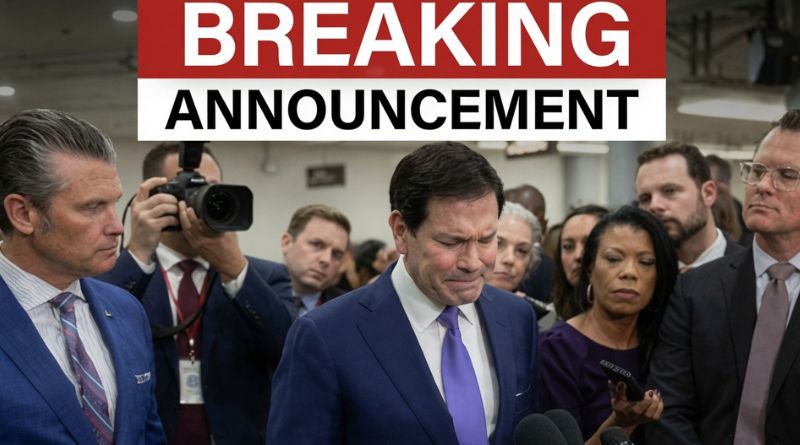
WASHINGTON — Secretary of State Marco Rubio said Friday that indirect negotiations aimed at easing tensions in the U.S.-Israel-Iran conflict have shown modest signs of progress, though he cautioned against over-optimism.
Speaking in measured terms, Rubio acknowledged “a little bit of movement” in the back-channel discussions but stressed that the advances remain limited and uncertain. “I don’t want to exaggerate it, but there’s been a little bit of movement, and that’s good,” he said. “I’m not popping champagne yet.”
Rubio emphasized that the United States is deliberately avoiding inflated expectations, warning that the window for diplomacy could close if meaningful concessions are not made.
Pakistan has emerged as a key mediator in the talks. Security sources indicate that Pakistan’s Army Chief, Field Marshal Syed Asim Munir, is expected to visit Tehran soon for discussions with Iranian officials, as Islamabad seeks to maintain open lines of communication between Washington and Tehran.
A significant obstacle remains Iran’s reported proposal for a “tolling system” in the Strait of Hormuz. Rubio rejected the idea outright, describing it as unacceptable and a potential barrier to any diplomatic breakthrough.
The Strait of Hormuz, which carries approximately one-fifth of global oil shipments, is vital to international energy security. Any disruption to shipping through the narrow waterway could trigger sharp spikes in energy prices and broader economic instability.