The Trump administration is intensifying diplomatic efforts to secure a comprehensive agreement to end the ongoing conflict with Iran, with senior officials expressing cautious optimism following recent negotiations in Qatar even as limited military clashes persist under a fragile ceasefire.
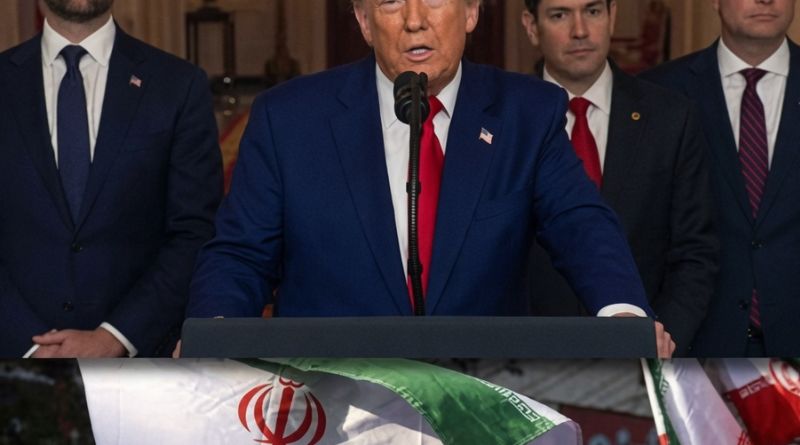
President Donald Trump, Vice President JD Vance, Secretary of State Marco Rubio, and other top officials have been directly involved in shaping the final contours of a potential deal. Central demands include the full reopening of the Strait of Hormuz, a critical chokepoint for global oil shipments that has been heavily contested during the fighting.
“The straits have to be open, they’re going to be open,” Trump said during a recent trip to India. “What’s happening there is unlawful, it’s illegal, it’s unsustainable for the world, it’s unacceptable.”
Rubio, speaking on the administration’s behalf, confirmed that talks advanced in Qatar on Monday. “There were some talks going on in Qatar today, so we’ll see if we can make progress,” he said. The secretary emphasized the president’s firm stance: the United States is seeking either “a good deal or no deal.”
The diplomatic push comes against a backdrop of continued military friction. On Monday, U.S. Central Command conducted what it described as “self-defense strikes” in southern Iran, targeting missile launch sites and Iranian vessels attempting to deploy mines. The actions were intended to protect American forces from threats posed by Iranian units, according to Capt. Tim Hawkins, a CENTCOM spokesperson.
“U.S. Central Command continues to defend our forces while using restraint during the ongoing ceasefire,” Hawkins said. He declined to provide specifics on which U.S. ships came under threat, their locations, or the precise sites of the American strikes. The operations occurred near the strategic Iranian port and naval base at Bandar Abbas.
Tensions remain high in the region. Dozens of American warplanes and nearly two dozen Navy warships, including two aircraft carrier strike groups, have been enforcing a blockade around Iranian ports in the Gulf of Oman and Arabian Sea. Iranian surface-to-air missiles have threatened U.S. assets on multiple occasions since the ceasefire took effect roughly six weeks ago.
Despite these incidents, both sides appear motivated to find a diplomatic off-ramp. Iranian officials in Qatar reported meaningful progress on several key issues. Foreign Ministry spokesman Esmaeil Baqaei told reporters in Tehran that Tehran and Washington have reached understandings on “a large portion of the issues under discussion.”
“However, to say that this means the signing of an agreement is imminent—no one can make such a claim,” Baqaei cautioned, accusing the U.S. side of shifting positions at times during the talks.
A senior Trump administration official, speaking on condition of anonymity, said Sunday that Iran has agreed in principle to eliminate its stockpile of highly enriched uranium. Additional work remains to finalize verification mechanisms and broader terms. In exchange for verifiable limits on its nuclear program, the U.S. would lift its naval blockade and provide limited sanctions relief, including allowing Iran greater access to oil exports.
A core element of the emerging framework involves Iran reopening the Strait of Hormuz fully to international shipping. In return, Washington would ease its enforcement actions in the waterway. Administration officials believe Iran is showing more flexibility now than before recent U.S. military operations, partly due to economic pressure and the realities of sustained conflict.
Trump has repeatedly criticized the 2015 nuclear agreement reached under the Obama administration, which he has described as flawed for allowing Iran a pathway to eventual nuclear weapons capability while providing “massive amounts of CASH.” The president has insisted any new deal must be stronger, with robust enforcement mechanisms that go well beyond the previous framework. Officials noted that the duration of enrichment limits—whether 20 or 30 years—is less important than ironclad verification and consequences for violations.
“The source said that most people agree on the basic ideas, and the Trump administration is pleased with how things are going, even though they are still working on finishing up the specifics,” according to one official involved in the process.
The potential agreement would represent a significant foreign policy achievement for the Trump administration, which has prioritized confronting Iran’s nuclear ambitions and regional proxy activities since returning to power. However, challenges remain, including ensuring long-term compliance and managing reactions from regional actors, including Israel.
As negotiations continue in Doha, global markets are closely watching developments. Any breakthrough could ease pressure on energy prices and restore stability to vital shipping lanes. Both Washington and Tehran have signaled a desire to avoid further escalation, though the recent self-defense strikes underscore the delicate balance between diplomacy and deterrence.
Progress remains incremental. While substantial headway has been made on nuclear restrictions and maritime issues, final details on sanctions relief timelines, enforcement protocols, and regional security guarantees are still under discussion. Administration officials continue to brief key allies and congressional leaders as the process moves forward.
For now, the ceasefire holds, but the clock is ticking. Success in Qatar could pave the way for a formal agreement that reshapes security dynamics in the Middle East for years to come.