The Trump administration is intensifying diplomatic efforts to secure a comprehensive agreement to end the ongoing conflict with Iran, even as fresh U.S. military strikes underscore the fragile nature of the current cease-fire.
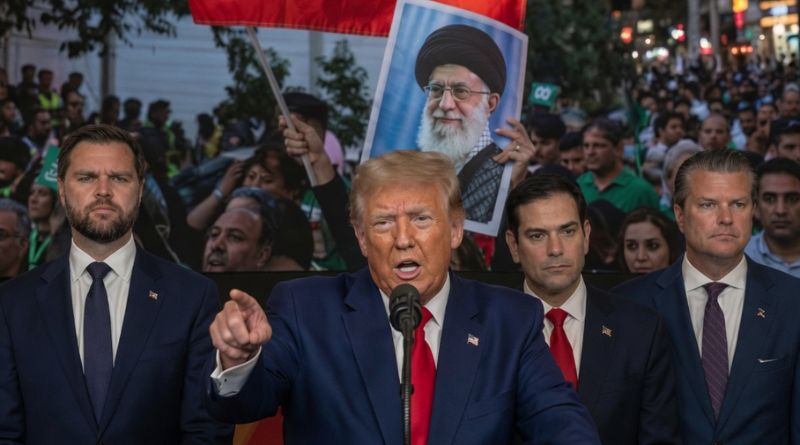
Senior officials, including President Donald Trump, Vice President JD Vance, Secretary of State Marco Rubio, and other key members of the administration, have been closely involved in hammering out the final details of the potential deal. The negotiations gained momentum with talks held in Qatar, where Iranian officials gathered this week.
In remarks during a trip to India, Secretary Rubio reiterated the U.S. position that the Strait of Hormuz — a vital chokepoint for global oil shipments — must be reopened without delay. “The straits have to be open, they’re going to be open,” Rubio declared. He described Iran’s actions in the waterway as “unlawful, illegal, and unsustainable for the world,” adding that the situation is “unacceptable.”
Rubio acknowledged active diplomacy, noting, “There were some talks going on in Qatar today, so we’ll see if we can make progress.” He indicated that discussions center on precise language in the draft document. “I think it’s a lot of talking back and forth going on about specific language in the initial document, so it’ll take a few days,” Rubio said. Echoing the president’s stance, he added that Trump is determined to achieve either “a good deal or no deal.”
The diplomatic push follows U.S. Central Command’s “self-defense strikes” in southern Iran on Monday. According to Capt. Tim Hawkins, a CENTCOM spokesperson, the operations targeted missile launch sites and Iranian boats attempting to place mines. The strikes occurred near the Iranian port and navy base at Bandar Abbas.
“U.S. Central Command continues to defend our forces while using restraint during the ongoing cease-fire,” Hawkins stated. He declined to provide specifics on which ships came under fire or the exact locations of additional U.S. actions. A senior U.S. military official revealed that dozens of American warplanes and nearly two dozen Navy warships — including two aircraft carriers and their escorts — were enforcing a blockade against vessels trying to enter or leave Iranian ports in the Gulf of Oman and Arabian Sea. Some of these assets faced threats from Iranian surface-to-air missiles.
Clashes between American and Iranian forces have occurred sporadically since a cease-fire took effect roughly six weeks ago, highlighting the volatility of the situation despite ongoing negotiations.
Iranian officials struck a somewhat more optimistic but cautious tone. Foreign Ministry spokesman Esmaeil Baqaei said Monday that Tehran and Washington have reached understandings on “a large portion of the issues under discussion.” However, he cautioned against expectations of an imminent signing. “To say that this means the signing of an agreement is imminent — no one can make such a claim,” Baqaei stated, while accusing Washington of shifting positions during the talks.
A top administration official, speaking on Sunday, disclosed that Iran has agreed in principle to eliminate its stockpile of highly enriched uranium as part of the emerging deal. In return for Iran reopening the Strait of Hormuz and significantly curtailing its nuclear enrichment activities, the United States would lift its naval blockade and ease certain economic sanctions.
The official described broad agreement on the core framework and expressed satisfaction with the trajectory of the talks. Iran appears more willing to negotiate following recent U.S. military operations, the source noted. Enforcement mechanisms remain a critical focus. “It doesn’t matter if the promise is for 20 or 30 years; what matters is how it will be enforced,” the official emphasized.
President Trump has been vocal about his expectations for any final agreement. He insisted that any deal with Iran must be “good and proper,” drawing sharp contrasts with the Obama administration’s 2015 nuclear agreement. Trump has repeatedly criticized that deal for providing Iran with “massive amounts of CASH, and a clear and open path to a Nuclear Weapon.”
Administration insiders believe the emerging framework would surpass the 2015 accord by imposing stricter limits on enrichment and stronger verification measures. Work continues on finalizing specific language and implementation details.
The Strait of Hormuz, through which approximately one-fifth of global oil passes, has been a flashpoint in the conflict. Its closure has disrupted international shipping and energy markets, adding urgency to the U.S. demands for reopening.
As negotiations proceed, the Trump administration maintains a dual-track approach: robust military posture to protect U.S. forces and interests, paired with determined diplomacy aimed at a durable resolution. Whether these efforts yield a breakthrough in the coming days remains to be seen, but officials on both sides appear engaged in serious discussions.
The potential deal carries significant implications for regional stability, global energy security, and the broader U.S. strategy in the Middle East. Observers note that success could mark a major foreign policy achievement for the Trump administration, while failure risks renewed escalation.