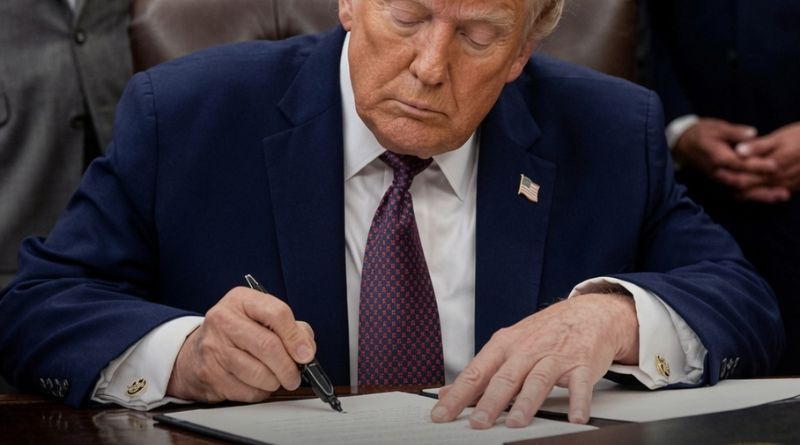
President Donald Trump announced Thursday that the United States’ military engagement with Iran had effectively concluded, canceling further planned strikes after high-level negotiations yielded a framework agreement aimed at permanently eliminating Iran’s nuclear weapons capability.
In a statement issued via Truth Social, Trump said discussions with Iranian leadership had reached the highest levels and secured approval for a deal that addresses the core U.S. demand. “They have agreed never to have a nuclear weapon, something that we insisted on; that was the whole purpose. That was 95 percent of it,” he added.
Trump indicated that the agreement is nearing formalization, with interested parties expected to convene in Switzerland for final talks. Reports suggest the deal could be signed as early as Sunday, just ahead of the G7 summit hosted in the European nation. The U.S. Navy’s blockade of the strategically vital Strait of Hormuz will remain in full effect until the transaction is completed, the president emphasized. The narrow waterway carries roughly 25% of the world’s seaborne oil shipments and about 20% of global liquefied natural gas exports, making it a critical energy chokepoint.
The president revealed he had held direct conversations with Israeli Prime Minister Benjamin Netanyahu and other regional leaders regarding the developing negotiations. According to Trump, the discussions focused on the framework of a possible understanding with Iran and ensuring broad regional buy-in. Netanyahu’s office later confirmed the call, noting that while Israel is not a direct participant in the talks, the prime minister welcomed Trump’s commitment to imposing significant restrictions on Iran’s nuclear program and addressing the regime’s destabilizing activities.
Trump’s Truth Social post detailed extensive support for the framework, stating it had been approved by all involved parties, including the United States, Israel, Saudi Arabia, the United Arab Emirates, Qatar, Turkey, Pakistan, Bahrain, Kuwait, Jordan, Egypt, and others.
The announcement marks a rapid de-escalation following days of heightened tensions. Earlier Thursday, U.S. Central Command reported additional self-defense strikes against multiple targets in Iran beginning at 5:15 p.m. Eastern Time. Trump had personally warned Fox News correspondent Trey Yingst about impending operations in a call from the Situation Room, later posting on Truth Social that Iran’s military was “a complete and total mess” and that much of its naval and air capabilities “doesn’t even exist anymore.” He warned Iranian leaders they would “pay the price” for prolonging negotiations.
Financial markets responded with optimism Friday to the prospect of a diplomatic breakthrough. European stocks rallied sharply, with the pan-European Stoxx 600 climbing 1.8% in morning trading and major indexes posting gains of around 2%. Energy prices eased as well, reflecting reduced fears of supply disruptions: U.S. crude oil futures for July delivery fell 1.61%, while August Brent crude futures dropped 1.75%, according to CNBC.
The developments come amid a complex regional backdrop. While the agreement centers on Iran’s nuclear ambitions, broader issues—including the regime’s support for proxy groups and ballistic missile programs—are expected to feature in final talks. Analysts note that the combination of military pressure and multilateral diplomacy appears to have accelerated progress toward a resolution.
As details continue to emerge, the potential signing in Switzerland could represent a significant foreign policy achievement for the Trump administration. Officials have not yet released the full text of the draft memorandum of understanding, which was reportedly referenced by Iranian state media. Israeli officials have remained cautious in public comments pending further review of the agreement’s specifics.