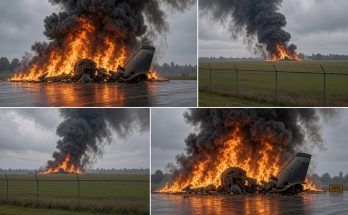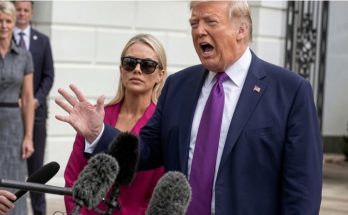
President Donald Trump declared on Truth Social that “Iran must now agree to end this war,” following U.S. military strikes on key Iranian nuclear facilities in what marks a dramatic escalation in the ongoing Middle East conflict. The operation, which targeted the Fordow, Natanz, and Isfahan sites, has drawn swift and varied responses from world leaders, with many expressing alarm over potential wider instability while others voiced support for curbing Iran’s nuclear ambitions.
The strikes represent the first direct U.S. attack on Iranian territory in this phase of hostilities and come amid heightened tensions between Israel and Iran. Trump, in a subsequent national address, described the facilities as “completely and totally obliterated” and warned of further action if Iran does not pursue peace. U.S. officials emphasized the operation’s precision and focus on nuclear infrastructure rather than regime change or civilian targets.
Iranian officials responded defiantly. Foreign Minister Abbas Araghchi stated that the attacks on “Iran’s peaceful nuclear installations” constituted a “grave violation of the UN Charter, international law, and the NPT.” In a post on X, he declared that the events were “outrageous and will have everlasting consequences,” adding that Iran “reserves all options” to defend its sovereignty, interests, and people in accordance with self-defense provisions under the UN Charter.
Israeli Prime Minister Benjamin Netanyahu welcomed the U.S. action. Speaking shortly after the strikes, he said Trump’s “bold decision will change history.” Netanyahu invoked the shared mantra of “peace through strength,” stating, “First comes strength, then comes peace. And tonight, Donald Trump and the United States acted with a lot of strength.”
Major powers offered contrasting views. China strongly condemned the strikes, particularly those on facilities under International Atomic Energy Agency (IAEA) supervision. The Chinese Foreign Ministry described the move as a serious violation of the UN Charter that exacerbates tensions in the Middle East. It called on all parties, especially Israel, to immediately cease attacks and return to dialogue and negotiations.
United Nations Secretary-General Antonio Guterres issued a stark warning, describing the U.S. strikes as a “dangerous escalation in an already volatile region” that poses a “serious threat to global peace and security.” He highlighted the growing risk of the conflict spiraling out of control with “catastrophic consequences for civilians, the region, and the world.” Guterres reiterated that “there is no military solution” and that “the only path forward is diplomacy. The only hope is peace.”
European leaders emphasized de-escalation. The EU’s chief diplomat, Kaja Kallas, urged “all sides to step back, return to the negotiating table and prevent further escalation,” while underscoring that Iran must not be allowed to develop a nuclear weapon. EU foreign ministers were scheduled to discuss the situation on Monday. In the UK, Prime Minister Keir Starmer noted that the Middle East situation “remains volatile” and that stability is a priority. He called on Tehran to resume negotiations for a diplomatic solution. The UK, France, and Germany have been engaged in recent efforts to de-escalate tensions through engagement with Iran.
Iran’s Araghchi pushed back against European calls, stating in response to Britain and the EU High Representative that it is Iran which must “return” to the table. “But how can Iran return to something it never left, let alone blew up?” he asked.
In the Middle East, reactions reflected a complex web of alliances and rivalries. Saudi Arabia, a key U.S. partner that restored ties with Iran in 2023 after a seven-year rift, said it was following developments in “sisterly” Iran with “great concern.” Yemen’s Iran-backed Houthi militants denounced the U.S. “blatant aggression,” while Lebanon’s presidency—where Hezbollah, another Iranian ally, operates—expressed fears of escalated tensions threatening multiple regions and urged restraint.
Russia weighed in through Dmitry Medvedev, former president and senior security official, who questioned Trump’s prospects for a Nobel Peace Prize. Medvedev remarked that the U.S. leader, who entered as a “peacemaker president,” had “started a new war for the United States,” according to a translated Telegram post.
Latin American nations largely condemned the action. Venezuela’s government issued a strong statement rejecting the “U.S. military aggression” against Iranian nuclear sites at Fordow, Natanz, and Isfahan, carried out at Israel’s request. It demanded an immediate cessation of hostilities. Cuban President Miguel Díaz-Canel condemned the bombing on X as a “dangerous escalation” that violates the UN Charter and international law, plunging humanity into a crisis with “irreversible consequences.”
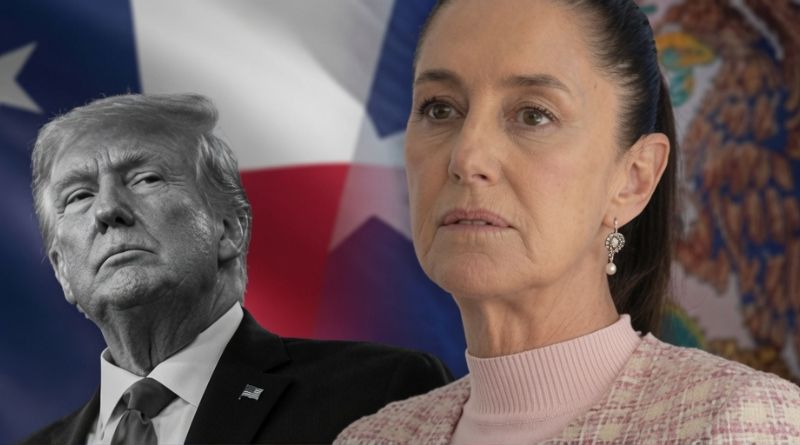
Mexico’s Foreign Ministry called for “diplomatic dialogue for peace” among parties in the Middle East conflict. Citing its pacifist foreign policy principles, Mexico reiterated the need to de-escalate tensions and restore peaceful coexistence as the highest priority.
Asian responses varied. Japan’s Prime Minister Shigeru Ishiba told reporters it was “paramount to calm the situation down soon.” He added that “Iran’s nuclear development must be blocked,” while stopping short of fully endorsing the U.S. action and noting that his government would thoroughly discuss the developments. South Korea convened its National Security Council, with advisor Wi Sung-lac directing ministries to minimize the impact of the events in the Middle East.
Australia acknowledged the threat posed by Iran’s nuclear and ballistic missile programs but called for de-escalation, dialogue, and diplomacy. A government spokesperson noted the U.S. President’s statement that “now is the time for peace” amid a “highly volatile” security situation.
Religious and moral voices also entered the fray. Pope Leo, during his weekly prayer with pilgrims, stressed that the international community must strive to avoid war that risks opening an “irreparable abyss.” “Every member of the international community has a moral responsibility: to stop the tragedy of war before it becomes an irreparable abyss,” he said. “No armed victory can compensate for the pain of mothers, the fear of children, the stolen future. Let diplomacy silence the weapons, let nations chart their future with peace efforts, not with violence and bloody conflicts.”
Broader Context and Implications
The U.S. strikes, involving B-2 bombers, Tomahawk missiles, and over 125 aircraft in what officials described as a highly successful precision operation, have thrust the international community into a period of intense diplomatic maneuvering. Analysts note that while the immediate targets were nuclear-related, the ripple effects could reshape alliances, energy markets, and global non-proliferation efforts.
Iran has long maintained that its nuclear program is peaceful, a claim challenged by Western nations and Israel, who point to enrichment levels and past IAEA concerns as evidence of weapons ambitions. The strikes come after years of tensions, including the collapse of the 2015 Joint Comprehensive Plan of Action (JCPOA) and subsequent proxy conflicts across the region.
Supporters of the U.S. action argue it was necessary to prevent a nuclear-armed Iran and deter further aggression. Critics, however, warn that military strikes risk unifying hardliners in Tehran, spurring retaliation through proxies like Hezbollah or the Houthis, and disrupting global oil supplies via the Strait of Hormuz.
As of now, no major retaliatory strikes from Iran have been confirmed, though Araghchi’s statement reserving “all options” leaves room for asymmetric responses. Markets reacted with volatility, with oil prices spiking on fears of supply disruptions, while stock exchanges in Europe and Asia showed caution.
The United Nations Security Council is expected to convene emergency sessions, where divisions between permanent members—particularly the U.S., UK, and France on one side, and China and Russia on the other—are likely to complicate unified action.
European diplomats are quietly working behind the scenes to revive some form of negotiations, potentially building on recent rapprochement efforts. Meanwhile, Gulf states are balancing their security partnerships with the U.S. against fears of a wider war on their doorstep.
For the Trump administration, the strikes represent a fulfillment of long-standing promises to confront Iran decisively. Trump has framed the operation as part of a broader strategy of “peace through strength,” echoing themes from his first term. However, sustaining international support and managing escalation risks will test U.S. diplomacy in the coming days and weeks.
As reactions continue to filter in from capitals around the globe, the focus shifts to whether this show of force leads to a negotiated settlement or further confrontation. With civilians in the region already bearing the brunt of prior conflicts, the stakes for de-escalation could not be higher.