White House Press Secretary Karoline Leavitt Defends Media Access Reforms, Cites Greater Transparency Under Trump
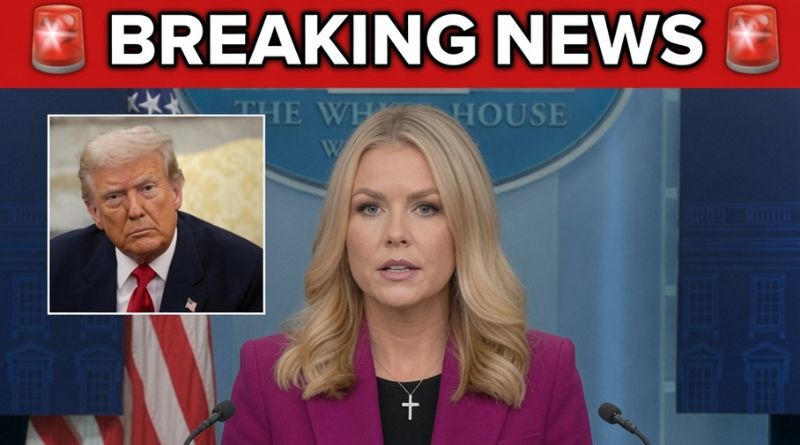
White House Press Secretary Karoline Leavitt on Tuesday pushed back against criticism of the Trump administration’s changes to White House press procedures, arguing that the adjustments have expanded access for a broader range of journalists and enhanced overall transparency compared to the limited media engagement of the previous administration.
Speaking at a media event hosted by Axios co-founder Mike Allen, Leavitt highlighted President Donald Trump’s high level of accessibility just one year into his second term, drawing a sharp contrast with former President Joe Biden’s record. She noted that many in the media had paid insufficient attention to Biden’s relative seclusion from the press throughout his four years in office.
The exchange came amid questions about recent modifications to the White House press pool system, particularly the role of major wire services. Allen referenced the iconic “fight, fight, fight” photograph taken by Associated Press chief photographer Evan Vucci following the assassination attempt on Trump in Butler, Pennsylvania, and asked whether new restrictions risked “history being lost.”
Leavitt responded by emphasizing the scale of the modern media landscape. “There are thousands of outlets who have White House press credentials. There are hundreds that actually show up every day and cover the beat,” she said. “Why should a single outlet have the privilege of being in that 13-person press pool every single day?”
She described the administration’s reforms as creating “more transparency, more accessibility, and greater access for a broad variety of outlets and a diversity of journalists,” which she called “a good thing” that has already shown positive results.
Allen pressed Leavitt on a statement from the White House Correspondents’ Association, which warned that the government should not control the independent media that covers it. Leavitt rejected the notion that the changes represented government overreach.
“Well, I think that a small group of journalists who comprise the board of the White House Correspondents Association should not dictate who gets to go into the Oval Office and who gets to ride on Air Force One,” she replied. “There should be equal access for all outlets.”
Leavitt stressed that the administration has not barred any outlets, including those critical of the president, often referred to as “fake news leftist outlets.” Instead, officials have redistributed opportunities to include more voices. “No one has been restricted. We’ve just given more spots to more outlets and more voices,” she said.
The Press Secretary framed the policy as a reflection of the current digital media environment and Trump’s own nontraditional approach to communication during his campaign. “The president ran a nontraditional media campaign, which propelled him back to the highest office in the land. And we felt it was our responsibility to continue that in our coverage at the White House,” Leavitt concluded. “It’s not about ideology. It’s just about increasing the wide variety of outlets that have access.”
The comments also revived discussion of Biden’s media record. In July, Axios published a report titled “Biden’s media evasion,” which found that the Democrat had conducted fewer press conferences and interviews than any of the last seven presidents at the same point in their terms. At that stage, Biden had held 164 such sessions, compared with 468 for Trump during his first term, 248 for George W. Bush, and 262 for Ronald Reagan.
Leavitt argued that the current administration’s daily interactions with journalists ensure the public remains informed about its activities, in contrast to what she described as Biden’s tendency to largely avoid the media spotlight.
The debate underscores ongoing tensions between the executive branch and the press corps over access, credentials, and the structure of presidential coverage in an era of fragmented media. Supporters of the changes view them as a necessary democratization of the briefing room, while critics worry they could undermine established norms of independent coverage.