King Charles III’s four-day state visit to the United States, hosted by President Donald Trump to commemorate America’s 250th anniversary of independence, provided a backdrop for both high-level diplomacy and intense scrutiny of the president’s personal and political standing.
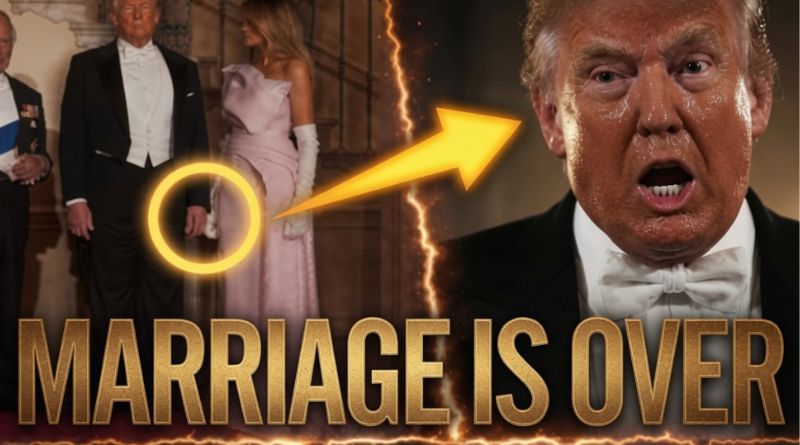
The visit, which included a formal White House welcome, a rare address by the monarch to a joint session of Congress, and a glittering state dinner, unfolded amid ongoing debates over U.S. foreign policy and observations of the Trump marriage. Public attention quickly turned to interactions between President Trump and First Lady Melania Trump, with some commentators interpreting moments of visible distance — such as a brief hand-pull during photo opportunities with the royal couple — as signs of underlying strain in their relationship.
Trump has publicly criticized late-night comedians, including Jimmy Kimmel, for jokes he says undermine the dignity of the First Lady. Yet observers noted irony in these defenses, pointing to Melania Trump’s own apparent public reticence and what some described as a “frigid stare” during the state dinner. In his toast, Trump referenced his parents’ long marriage as a point of humor but delivered remarks that largely centered on himself, drawing further commentary on his personal style.
On the diplomatic front, King Charles III positioned himself as a steady voice for transatlantic unity. In his address to Congress — only the second by a British monarch — the King championed NATO, recalled the alliance’s Article 5 response after the Sept. 11 attacks, and called for “unyielding resolve” in support of Ukraine against Russian aggression. These themes stood in contrast to elements of Trump’s “America First” doctrine, which has emphasized skepticism toward certain multilateral commitments and prioritized bilateral deals.
The King’s speech, which earned multiple standing ovations, subtly urged patience and partnership as the U.S. navigates complex global challenges, including the war in Ukraine and tensions in the Middle East. Trump, for his part, praised the address as “fantastic” while focusing his own remarks on shared history and current priorities, such as Middle East developments.
At the state dinner, the King presented Trump with a symbolic gift: the original bell from the HMS Trump, a World War II-era British submarine with ties to Australia and the AUKUS pact, underscoring enduring military cooperation.
Critics argue that Trump’s approach risks creating power vacuums that adversaries could exploit, portraying the president as more transactional than strategic on the world stage. Supporters counter that his policies prioritize American interests and have delivered results in areas like border security and economic leverage. The visit, they say, reinforced strong bilateral ties despite policy differences.
Ultimately, the royal visit crystallized contrasts: the polished diplomacy of a constitutional monarch against the often-unscripted style of a populist president. As Melania Trump’s visible detachment fueled speculation about their marriage — long characterized by some as a partnership of convenience — Trump’s broader isolation on the international front drew parallel commentary.
Yet the pageantry also affirmed the resilience of the U.S.-U.K. “special relationship,” even as domestic and global observers continue to debate the president’s legacy. In an era of polarized media, separating personal narrative from policy substance remains challenging. The events served as a reminder that public figures operate under relentless scrutiny, where private realities often clash with projected strength.